


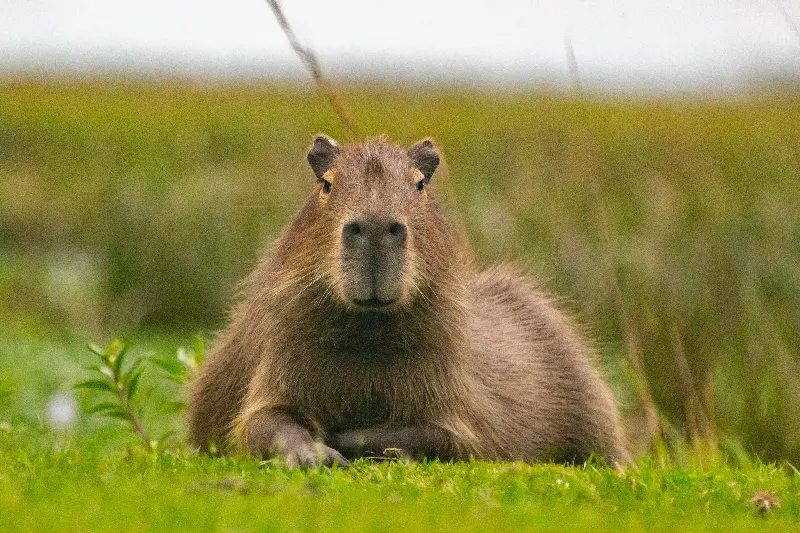
Hidden among the lush wetlands and riverbanks of South America lives a mammal that’s as curious as it is charming. Standing at about two feet tall and weighing up to 150 pounds, the capybara is the world’s largest rodent—but don’t let that title fool you.
These gentle giants have a knack for making unlikely friends and winning the affection of almost every creature they meet, humans included. Their story is one of peaceful coexistence and biological wonders that defy the typical "rodent" stereotype.
CAPYBARA 101: GIANT OF THE RODENT WORLD
When we think of rodents, most of us picture small, skittish animals like mice or squirrels. The capybara (Hydrochoerus hydrochaeris) breaks that mold entirely. Native to countries like Brazil, Venezuela, and Colombia, these animals are true masters of the water.
Their semi-aquatic lifestyle is a core part of their identity:
- Webbed Feet: Perfect for paddling through murky marshes and slow-moving rivers.
- Streamlined Shape: Their ears, eyes, and nostrils are positioned on top of their heads, allowing them to stay mostly submerged while remains alert.
- Free-Divers: Capybaras are impressive swimmers who can stay underwater for up to five minutes to dodge predators or simply cool off.
Despite their intimidating size, capybaras possess incredibly mellow personalities. They are highly social, often gathering in groups of 10 to 20, though massive herds of 100 or more can form during the dry season. Scientists believe these strong social bonds are the primary reason they thrive so well in both the wild and human care.

THE CAPYBARA’S SOCIAL CIRCLE: FRIENDS WITH EVERYONE
One of the most remarkable traits of the capybara is its zen-like tolerance for other species. It is not uncommon to see photos of capybaras acting as a "living sofa" for various animals, including:
- Monkeys and birds
- Turtles and rabbits
- Even baby crocodiles
In the wild, their calm nature allows many species to coexist peacefully. This temperament translates beautifully to domestic settings; in farms and zoos, capybaras frequently develop close bonds with cats, dogs, and goats.
This "interspecies magnetism" has turned them into global superstars. In Japan, they are so adored that some hot spring resorts provide onsen baths specifically for their capybara residents, complete with floating yuzu fruits for a spa-like experience.

LIVING THE GOOD LIFE: HABITS AND DAILY ROUTINE
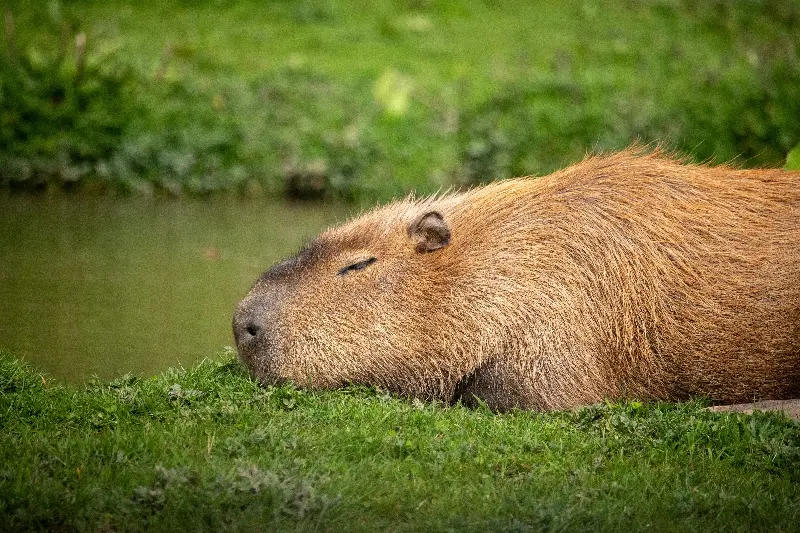
A capybara’s day is remarkably disciplined in its pursuit of relaxation. As strict herbivores, they spend significant time foraging for grasses, aquatic plants, and fruit. An adult can consume up to eight pounds of grass in a single day, which serves a dual purpose: nutrition and dental hygiene. Because their teeth grow continually, the constant grinding against tough fibers keeps them at a healthy length.
Their survival strategy includes some fascinating (if slightly odd) behaviors:
- Crepuscular Activity: They are most active during dawn and dusk to avoid the scorching midday sun.
- Coprophagy: Like rabbits, capybaras eat some of their own droppings to extract maximum nutrients from their fibrous diet.
- Mud Bathing: To protect their skin from sunburn and parasites, they often lounge in thick, cool mud.
While they have few natural "enemies," they must remain vigilant against jaguars, caimans, and anacondas. When danger nears, they emit a sharp, dog-like bark to warn the group before slipping silently into the water.
KEEPING THE PEACE: THE ROLE OF THE CAPYBARA IN ITS ENVIRONMENT
Capybaras are more than just friendly faces; they are essential ecosystem engineers. As they graze, they act as natural lawnmowers, keeping aquatic vegetation from overgrowing. They also facilitate biodiversity by:
- Seed Dispersal: Spreading plant life through their droppings across vast distances.
- Creating Pathways: Their heavy bodies create tracks through thick brush that smaller mammals and frogs use as "highways."
- Food Web Stability: Providing a critical food source for the rainforest’s top predators.