


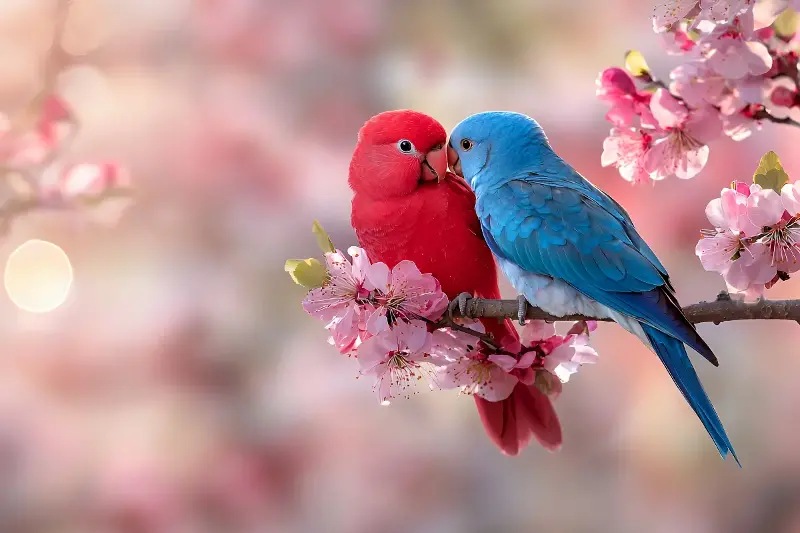
High above in the sky, perched on your garden fence, or playing in the surf, birds have always intrigued humans with their song, color, and flight. But behind those watchful eyes and feathery wings lies a world of remarkable intelligence.
Recent research in wildlife and zoology has cast a spotlight on birds’ incredible cognitive abilities, revealing secrets that are as astonishing as they are enlightening. From memory feats that rival the best mammals to clever tool use, birds are rewriting what we know about animal minds.
Birds Understand Cause and Effect
For a long time, the ability to understand cause and effect was considered a trait exclusive to primates. However, birds have proven themselves to be brilliant problem-solvers.
- The Aesop’s Fable Test: In a famous study, the New Caledonian crow dropped stones into a water-filled tube to raise the water level and reach a floating treat.
- Logical Anticipation: This showed that the crow could anticipate the result of its actions—a high-level cognitive skill.
- Adaptive Strategy: Rooks, Eurasian jays, and parrots have also solved tasks requiring a sequence of actions, showing they can adapt their strategies when the environment changes.
Masterful Memory Beyond Migration
Birds' memory skills are among the best in the animal kingdom, and it goes far beyond the instinct of migration. The Clark’s nutcracker provides a stunning example of spatial intelligence:
- The Autumn Cache: Every year, it hides up to 30,000 seeds across thousands of locations.
- Pinpoint Accuracy: Months later, even when the landscape is buried in snow, the nutcracker retrieves almost every seed, distinguishing spots just centimeters apart.
- Biological Adaptation: Interestingly, the brains of food-storing birds like chickadees actually physically grow in the autumn. The hippocampus—the area responsible for spatial memory—expands to handle the massive influx of data.

Sophisticated Social Smarts
Birds aren’t just clever; many are deeply social and use their brains to manage complex relationships. These "social smarts" allow them to navigate hierarchies and even engage in deception.
Signs of Self-Awareness and Empathy
- The Mirror Test: European magpies are among the few animals that can recognize themselves in a mirror. This suggests a level of self-awareness shared only by humans, dolphins, and elephants.
- Raven Deception: Ravens can play tricks on one another and understand when they are being watched, adjusting their behavior to hide food from potential thieves.
- African Grey Reasoning: These parrots have demonstrated reasoning skills and an understanding of concepts (like color, shape, and matter) comparable to those of a young child.
Birdsong: The Language of Genius
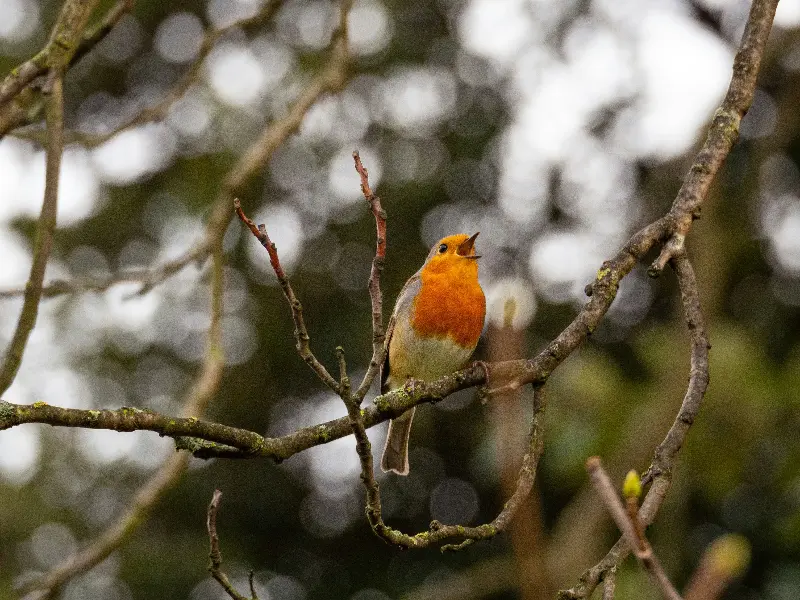
For many humans, waking up to birdsong is a simple pleasure. But for the birds, singing is a display of extreme mental complexity.
- Musical Improvisation: Some songbirds can learn hundreds of tunes, remember them for years, and even improvise new melodies.
- Master Mimicry: The Lyrebird of Australia can imitate almost any sound, from other bird species to the mechanical whir of a chainsaw.
- Neural Parallels to Speech: Learning birdsong requires memory, practice, and social interaction. Much like human babies, young birds go through a “babbling” phase, perfecting their tune through trial and error.
Birds Use and Invent Tools
Tool use was once thought to be the hallmark of human evolution, but it is surprisingly widespread in the avian world. Birds do not just find tools; they engineer them.
- New Caledonian Crows: These stars of the bird world craft hooks from twigs and shape leaves to fish insects out of bark. In laboratory settings, they have even been observed bending wires to create hooks—a feat that requires understanding how unfamiliar materials can be manipulated to solve a problem.
- The Egyptian Vulture: These birds use stones to crack open large eggs that are too tough for their beaks.
- Woodpecker Finches: Living in the Galápagos, these birds use cactus spines as specialized probes to extract grubs from wood.
Reimagining the "Bird-Brain"
As science uncovers more about the avian mind, our sense of wonder only grows. Whether it’s their inventive tool use, extraordinary memories, or intricate songs, birds continue to challenge our assumptions about the natural world.
The next time you watch a bird in your backyard or at the park, remember: you aren't just looking at a beautiful creature of flight—you are looking at one of nature’s most extraordinary thinkers. Being called "bird-brained" might just be the highest compliment you could receive.