


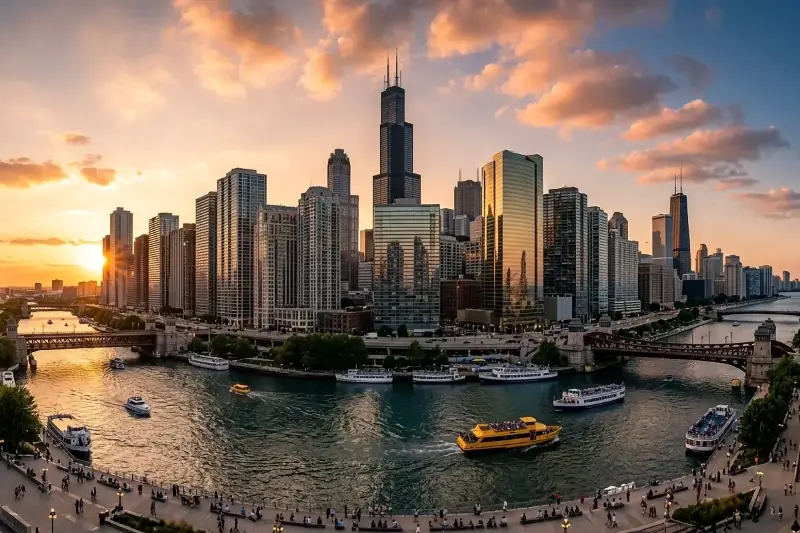
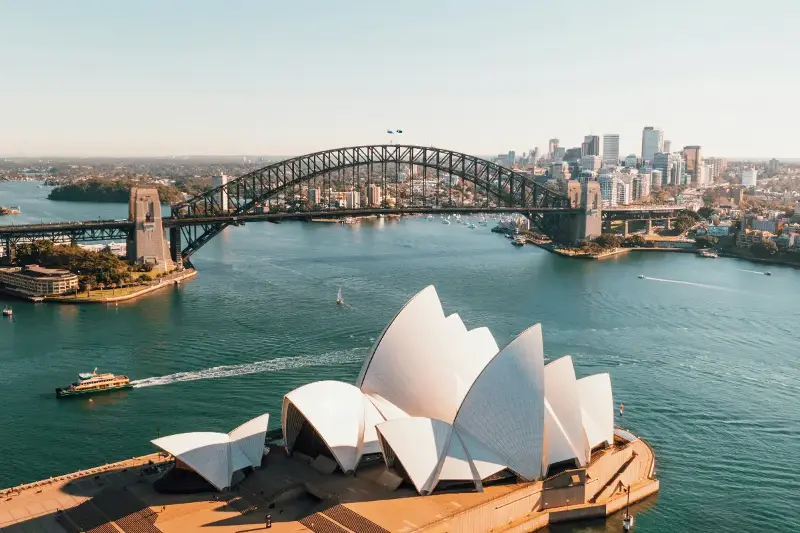
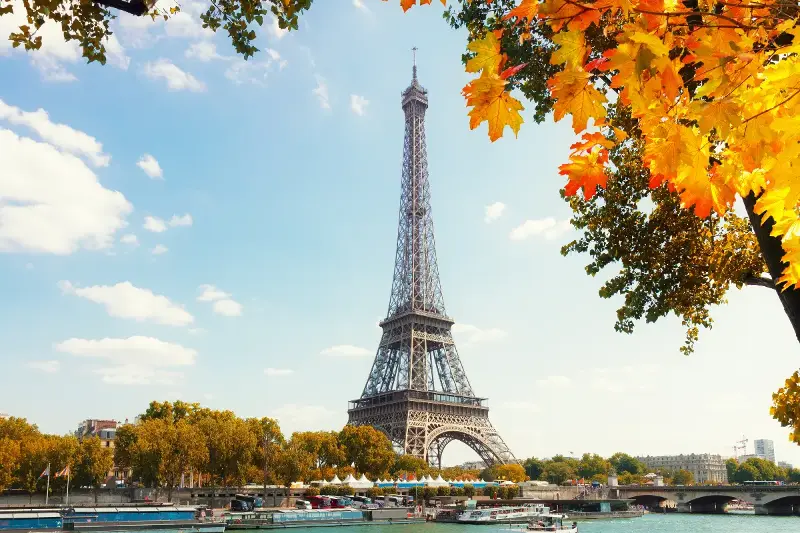
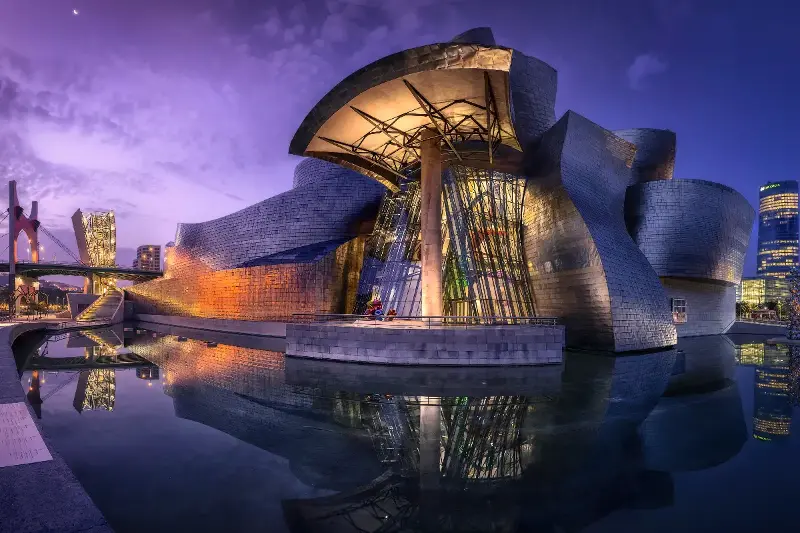
Cities are often remembered through a single iconic image: the sweep of the Sydney Opera House sails, the lattice of the Eiffel Tower, or the silver curves of the Guggenheim Museum Bilbao. These structures are far more than landmarks for postcards. They actively influence transport routes, tourism patterns, public spaces, local pride, and even the way residents describe their own neighborhoods.
When architecture is planned as part of the wider urban fabric, a building becomes a vital meeting point rather than an isolated object. The most successful examples combine visual ambition with practical benefits: they create plazas, revitalize waterfronts, connect districts, and give people reasons to walk, gather, and stay.
Buildings That Reframe City Identity
The Sydney Opera House is one of the clearest examples of architecture transforming a city’s global identity. Designed by Danish architect Jørn Utzon and opened in 1973, it sits at Bennelong Point on Sydney Harbour. Its distinctive shell-like roofs transformed the harbor into an instantly recognizable public image.
The building also works seamlessly as part of a larger civic landscape:
- Integrated transit: Visitors arrive by ferry, train, bus, bicycle, or on foot, making the area one of Sydney’s most active transport hubs.
- Civic gathering space: The broad forecourt hosts performances and public events.
- Accessible design: The surrounding promenade gives locals and visitors continuous access to vibrant harbor views.
Paris achieved a similar transformation decades earlier with the Eiffel Tower. Built for the 1889 Exposition Universelle, the iron structure was initially criticized by prominent artists. Today, the tower anchors the Champ de Mars and Trocadéro gardens, creating a broad public axis across the River Seine. It demonstrates how a bold structure can become woven into daily city life as a navigational point, gathering place, and enduring symbol.
Culture as an Urban Catalyst
Few projects demonstrate the connection between cultural architecture and urban renewal as clearly as the Guggenheim Museum Bilbao. Designed by Frank Gehry and opened in 1997, the museum features shimmering titanium panels along the Nervión River in northern Spain. Before its construction, Bilbao was largely an industrial port city seeking economic revitalization.
The museum became the catalyst for a much wider urban transformation:
- Riverfront restoration: The city invested in river clean-up and new public bridges.
- Infrastructure upgrades: A modern metro system designed by Norman Foster improved transit connections.
- The "Bilbao Effect": The project proved that a striking cultural building can stimulate broader economic growth when supported by long-term urban planning.
Public Space Beyond the Building
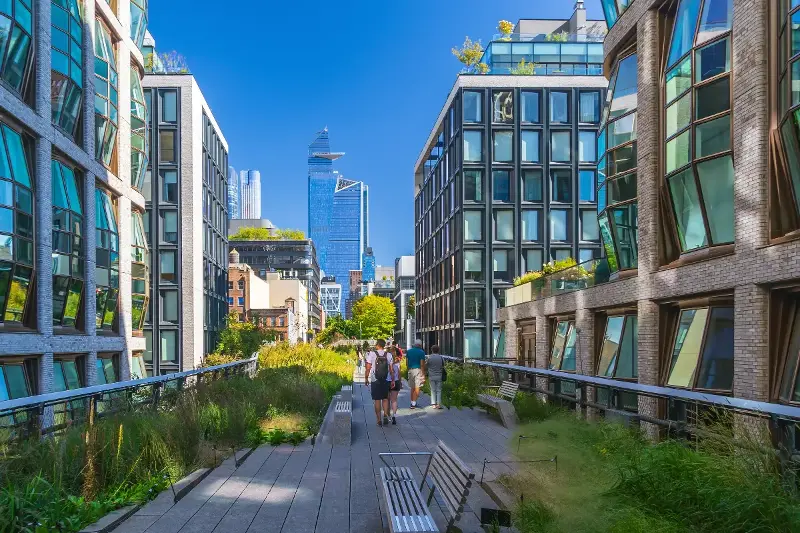
In New York, the High Line redefined what urban infrastructure could become. The elevated railway on Manhattan’s west side was originally built in the 1930s to carry freight. After falling out of use, community advocates helped preserve the structure, reopening the first section as a public park in 2009.
Combining wild-looking gardens, seating areas, art installations, and city views, the High Line turned a neglected industrial structure into a thriving linear park. Its success shows how adaptive reuse can preserve history while creating vibrant, walkable green space for residents.
Nature, Technology, and Shared Streets
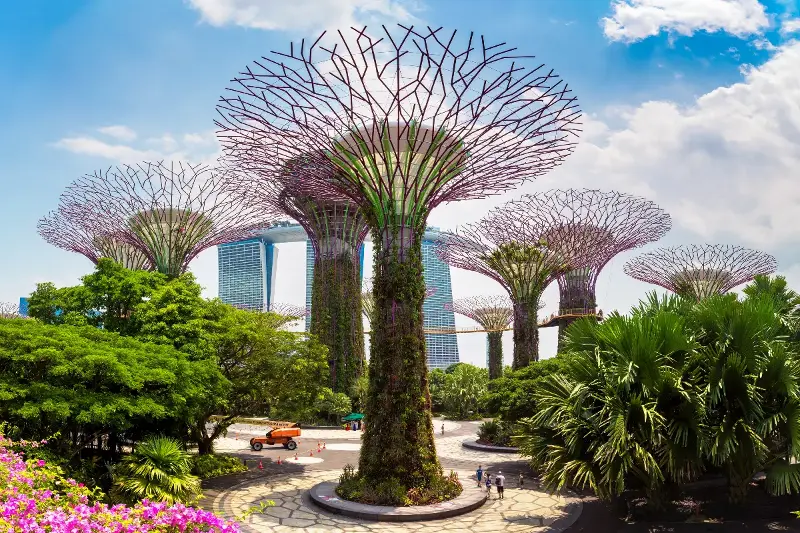
Singapore’s Gardens by the Bay offers a futuristic vision of urban design. Opened in 2012 on reclaimed land beside Marina Bay, the 101-hectare project integrates environmental education, public recreation, and sustainable engineering. Its iconic Supertrees—vertical garden structures ranging from 25 to 50 meters tall—serve multiple functional roles:
- Solar energy generation: Select trees are equipped with photovoltaic cells.
- Resource management: Structures harvest rainwater and assist with conservatory ventilation.
- Public engagement: The grove hosts nightly light displays, turning sustainable infrastructure into a shared cultural experience.
Architecture as Public Art
The most memorable city structures do not succeed on unusual shapes alone. They flourish when they invite people into the story of the city: to walk beside a river, pause in a square, travel through a renewed district, or see familiar streets from a fresh perspective. Architecture becomes public art at its most powerful when it gives a city a recognizable face and provides its community with a place to belong.