


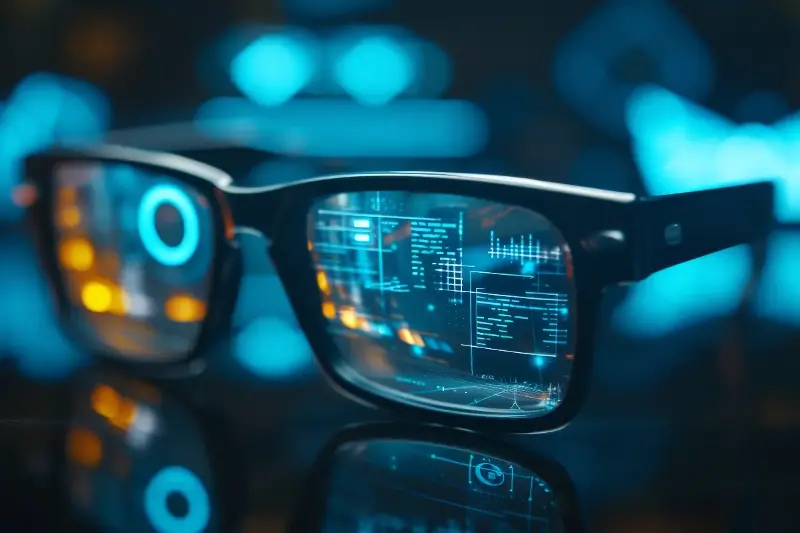
Imagine looking out of your window and instantly reading the weather forecast directly on the sky. Picture strolling through a new city with turn-by-turn navigation gently projected in front of your eyes, or having live translations appear during a conversation in a foreign language. These visions are not scenes from a science fiction movie, but glimpses into our everyday future, thanks to the rapidly evolving world of Smart Glasses and Augmented Reality (AR). This duo of technologies is not only reshaping how we interact with information but transforming our work, social lives, and even play, right before our very eyes.
THE EVOLUTION OF SMART GLASSES: FROM SCI-FI TO REALITY
Smart glasses have come a long way since the early prototypes that first caught the public imagination. Back in 2013, Google Glass hit the headlines, drawing attention for its futuristic design and bold vision. While it struggled with widespread adoption, it successfully paved the way for a wave of innovation that continues to this day.
Modern smart glasses are lighter, sleeker, and much more practical. Major brands—including Meta (with its Ray-Ban Stories), Snap Spectacles, and Xiaomi—are investing heavily in refining these devices for everyday use.
- Design: Unlike their bulky ancestors, today's glasses often resemble regular eyewear.
- Integration: Microphones, speakers, and cameras are now seamlessly built into the frames.
- Optics: Some use discreet heads-up displays, while others project information onto lenses using advanced waveguide technology.
One particularly remarkable advance is the improvement in processing power. Breakthroughs in miniature electronics now allow for extended use, ensuring the devices can finally keep up with the demands of a full day.
AUGMENTED REALITY: BLENDING DIGITAL WITH THE PHYSICAL
The true potential of smart glasses comes to life through Augmented Reality. AR is not about replacing the real world like virtual reality; rather, it overlays digital information onto your actual surroundings. Think of it as a digital companion, adding helpful, interactive layers to what you already see.
Some of the most exciting AR applications include:
- Real-time language translation during face-to-face conversations.
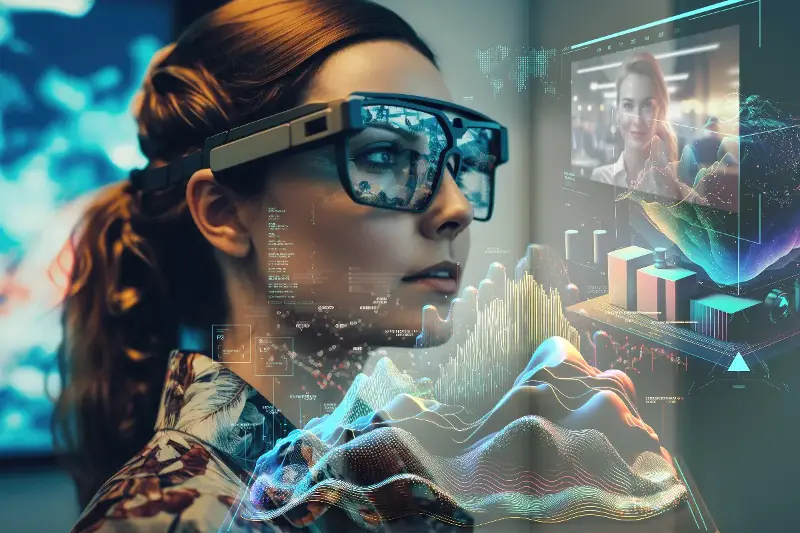
- Fitness tracking that displays your heart rate in your line of sight.
- Holographic anatomical diagrams for medical students to study complex structures.
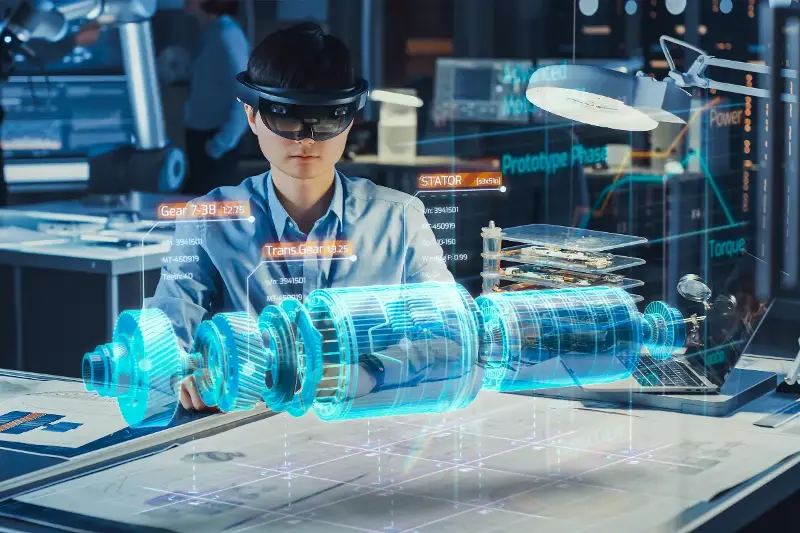
- Visualized engineering, allowing builders to see a finished product before it's built.
The retail industry is also embracing this shift. Try-on experiences once confined to fitting rooms are moving into living rooms. With a simple glance, you can see how new sunglasses look on your face or virtually place a new sofa in your home before clicking "buy".
EVERYDAY IMPACT: WORK, PLAY, AND CONNECTION
Smart glasses and AR are making a tangible difference in fields as varied as healthcare, logistics, and entertainment. For surgeons, a pair of AR glasses can display a patient’s vital statistics or scan results during an operation, allowing them to keep their focus exactly where it matters most.
In the industrial sector, field technicians and warehouse workers use AR overlays to:
- Receive step-by-step hands-free instructions.
- Locate specific tools or packages instantly.
- Identify safety hazards in real-time.
In the gaming world, the concept of "playing in your environment" comes to life. AR-based games overlay digital creatures and challenges onto real streets. Imagine cooperative puzzle-solving adventures that turn your neighborhood into an interactive scavenger hunt. Furthermore, communication is becoming frictionless. Many devices already allow for hands-free calls and video recording, bringing us closer to a world where information is always accessible yet never intrusive.
MAJOR PLAYERS AND THE PROMISE OF THE FUTURE
Tech giants and startups alike are racing to be the first to bring truly mainstream smart glasses to consumers. Meta’s upcoming AR glasses promise a blend of social connectivity with stylish aesthetics. Meanwhile, Apple is rumored to be working on its own wearables that could redefine the digital lifestyle accessory.
While challenges like privacy, battery life, and long-term comfort remain, the pace of development is relentless. As voice assistants get smarter and gesture controls become more intuitive, it is only a matter of time before smart glasses become as common as smartphones.
FASCINATING FACTS: DID YOU KNOW?
- Longevity: Some smart glasses can now achieve up to 24 hours of battery life with periodic use, making them suitable for all-day wear.
- Market Growth: The global AR smart glasses market is projected to surpass $33 billion by 2027.
- Safety: AR navigation promises to eliminate phone distractions by keeping a driver's or walker's eyes up and on the road.
- Accessibility: For those with vision impairments, special smart glasses can enhance contrast and identify objects, offering a new level of independence.
As smart glasses continue to blur the lines between the digital and physical, our relationship with technology is shifting from screens in our hands to experiences all around us. The world is no longer just in front of our eyes—it is enriched and reimagined through the magic of AR.