


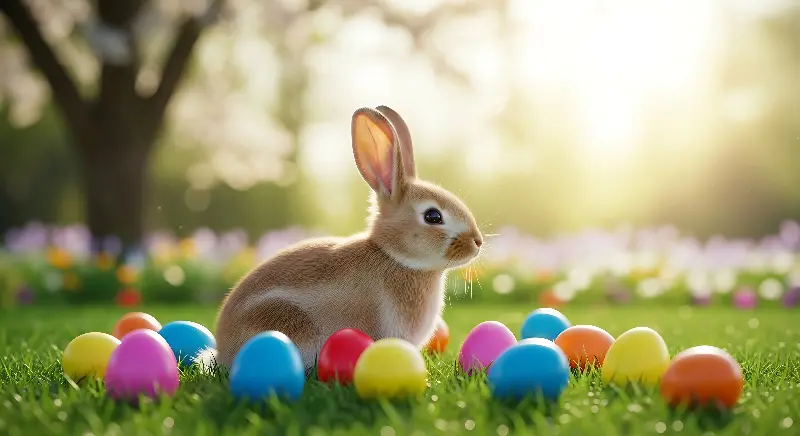
Easter, a holiday celebrated by millions around the globe, is often associated with images of colorful eggs, cheerful rabbits, and joyful family gatherings. Yet, beneath the modern festivities lies a history woven with fascinating ancient customs, religious influences, and mysterious symbolism. Uncovering the mystical origins of Easter reveals a journey through time that connects ancient earth-based traditions to the vibrant celebrations we know today.
ANCIENT ROOTS AND PAGAN BEGINNINGS
Long before Easter became synonymous with Christianity, springtime rituals honoring rebirth and renewal had already captured the imagination of ancient societies. Many historians trace the roots of Easter to pre-Christian festivals such as the celebration of Ostara or Eostre.
- The Goddess of Dawn: Eostre was a deity of fertility and renewal in Anglo-Saxon and Germanic lore.
- The Transformation Legend: According to folklore, Eostre transformed a bird into a hare, leading to the enduring symbol of a creature famous for its association with eggs.
- The Vernal Equinox: For early cultures, the end of winter marked a time to honor the return of sunlight. Rituals included planting seeds, lighting bonfires, and exchanging colored eggs—universal symbols of hope.
From the Egyptian festivals honoring Isis and Osiris to the Persian Nowruz, the arrival of spring has been celebrated for millennia as a literal and spiritual "waking up" of the world.
THE CHRISTIAN TRANSFORMATION
The mystical origins of Easter took on new layers of meaning with the rise of the Christian faith. In the earliest centuries AD, the church sought to commemorate the resurrection of Jesus Christ, which occurred around the Jewish festival of Passover (Pesach).
The timing was more than coincidental; Passover is a springtime celebration of liberation and new life. As Christianity spread through Europe, the church found that fusing its central message with familiar spring festivities helped bridge the gap with local populations:
- Etymology: The word "Easter" is derived from the Anglo-Saxon term Eosturmonath—the month of the goddess Eostre.
- The Egg Metaphor: Christian missionaries repurposed the egg, already a powerful symbol of life, as a metaphor for Christ’s empty tomb and the promise of eternal life.
- A Moveable Feast: Unlike fixed holidays, Easter’s date is determined by a mix of solar and lunar cycles. It falls on the first Sunday after the first full moon following the vernal equinox, a calculation established by the Council of Nicaea in 325 AD.
SYMBOLS, MYSTERIES, AND SURPRISING CUSTOMS
Perhaps nothing is more synonymous with the holiday than egg decorating, a practice that actually predates the Christian era by 60,000 years.
- Pysanky: In Eastern Europe, the intricate art of pysanky involves etching and dying eggs with elaborate symbols to ward off evil.
- The Crimson Egg: In Greece and Russia, eggs are often dyed a deep red to represent the blood of Christ.
- The "Osterhase": The Easter Bunny is a 17th-century German addition. Children believed a magical hare would lay colored eggs for those who were good—the direct precursor to today’s egg hunts.
Not all traditions are strictly "sweet." In Sweden, children dress as Easter witches and go door-to-door for treats in a Halloween-like twist. In Florence, the Scoppio del Carro (Explosion of the Cart) involves a wagon filled with fireworks to ensure a bountiful harvest.