


The rhino, with its prehistoric appearance and formidable size, has long captured the human imagination. But beyond their physical grandeur, rhinos are a marvel of the natural world with a myriad of fascinating traits and a history steeped in mystery and intrigue.
The Rhino Lineage
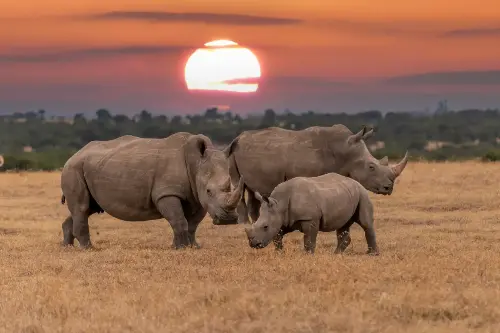
Delving into the origins of these creatures, rhinos belong to a group of mammals known as Perissodactyla, or odd-toed ungulates. Their lineage stretches back over 50 million years, with ancestors that were once widespread across North America and Europe. Today, there are five species of rhinos, two African – the black and white rhinos – and three Asian – the Indian, Javan, and Sumatran. Each species offers unique insights into their evolution and behavioural ecology.
Rhinos and Their Charge Myths
In the realm of rhino mythology, one of the most popular beliefs is that these animals are quick to anger and will charge with great ferocity. While it is true that they can charge at high speeds, rhinos are generally non-aggressive creatures. Their poor eyesight means they occasionally charge out of confusion. However, they prefer to avoid confrontation whenever possible. The real enigma may lie in their gentle nature juxtaposed against their imposing physicality.
The Horns and their Misunderstood Value
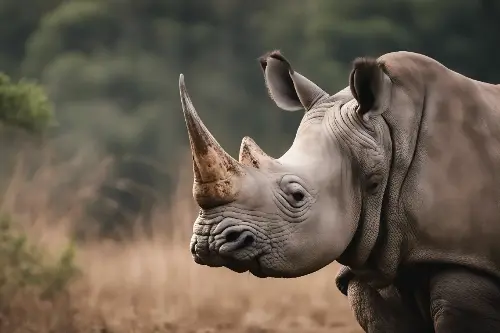
A rhino's horn is its most iconic feature, but contrary to popular belief, it is not made of bone; rather, it is composed of keratin, the same material that makes up human hair and nails. Historically, some cultures believed that rhino horns could purify water or cure illnesses, which fuelled unsustainable hunting. But science has dispelled these notions, showing no medicinal property inherent in rhino horn.
Rhinos and their Symbiotic Relationships
These majestic beasts are integral to their ecosystems, performing vital roles that sustain the environmental balance. One such symbiotic relationship is with the oxpecker bird, which feeds on ticks and other parasites found on the rhino's skin. This natural pest control benefits both parties and showcases the interdependent nature of our planet's biodiversity.
The Fascinating Behaviour of Rhinos
Behaviorally, rhinos are intriguing creatures. African rhinos, both black and white species, have a complex social structure. White rhinos are more gregarious and often found in small groups, while black rhinos are more solitary but with a nuanced communication system involving scent markings and infrasound. Asian rhinos, by contrast, are generally solitary except during breeding or when mothers are raising their young.
Breeding Habits and the Fight for Survival
Rhinos have a protracted breeding cycle and low birth rates, which unfortunately contributes to their vulnerability as a species. A female rhino typically has a gestation period of around 16 months and will only give birth to one calf every two to five years. This slow reproductive rate is one of the biggest challenges in the conservation efforts to save these magnificent creatures from extinction.
Rhino Conservation: A Ray of Hope
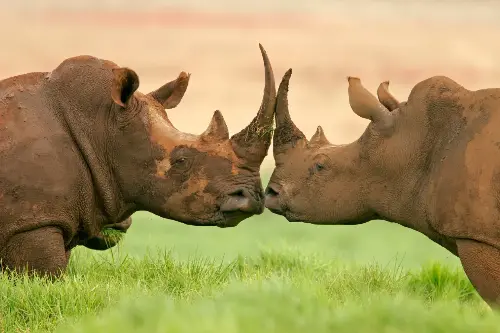
Despite the array of threats facing rhinos – from poaching to habitat loss – the conservation efforts have been making strides in protecting these giants. Strict anti-poaching laws, community-based conservation programmes, and initiatives like the translocation of individuals to boost genetic diversity are fighting the tides that threaten their existence. Every victory in this field is a testament to what concerted human effort can achieve in the name of preserving our natural heritage.
Understanding Rhino Communication
Beyond their solitary nature, rhinos are communicators. With a series of grunts, growls, and squeaks, they convey a range of emotions and messages. Remarkably, rhinos use dung to communicate. Each individual's dung carries a unique scent that conveys its age, sex, and breeding readiness. These 'rhino latrines' serve as social hubs, equivalent to a community bulletin board where information is shared.
Adaptations to Habitat
Each rhino species has adapted brilliantly to its respective habitat. The black rhino’s hooked lip is perfectly designed for browsing on leaves and branches, while the white rhino’s wide mouth is suited for grazing. In Asia, the Indian rhino's single horn and armour-like skin depict an evolutionary path tailored to its marshy environs, steering through tall grasses and dense forests. These adaptations highlight nature's creativity in ensuring the survival of its species.
The Secret Life of Rhinos
Rhinos, though seemingly solitary, have a complex inner life. Their day is structured around foraging, wallowing in mud to cool off and protect from the sun and insects, and resting during the hottest parts of the day. Night-time often brings a burst of activity, demonstrating a nocturnal side to their existence.
In a world where the need for wildlife conservation has never been more urgent, rhinos stand as powerful symbols of our global heritage. Their continued presence on our planet hinges on our capacity to appreciate and protect these living dinosaurs, ensuring that the rhino mystique endures for generations to come. The quest to uncover more intriguing facts about these majestic giants only fosters greater respect and an unwavering dedication to their conservation.