


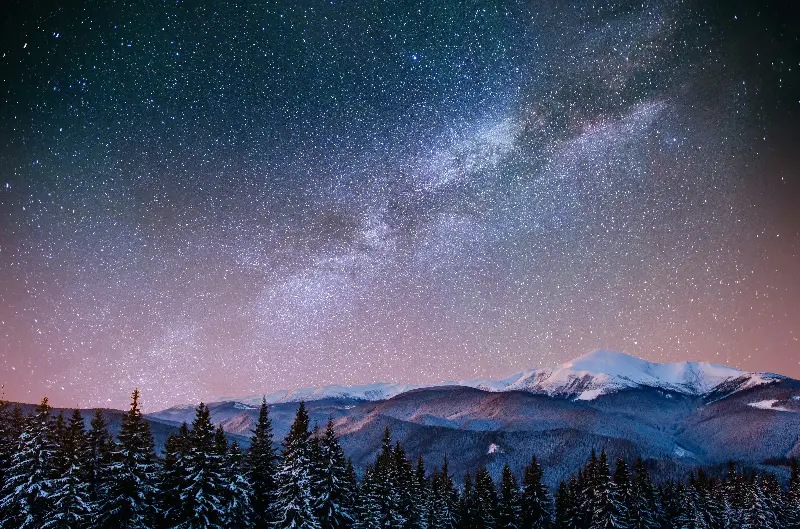
Beneath the gentle glow of a clear night sky, most of us have at least once gazed upwards, marveling at the silvery river of stars that is the Milky Way. What many don’t realize, however, is that the glittering band we see is just the beginning—a mere surface reflection of the wild, mysterious heart of our galaxy. At the very center of the Milky Way, beyond the stars our eyes perceive, lies a region teeming with cosmic wonders, extreme forces, and staggering complexity.
A COSMIC COMMOTION IN THE CROWDED CORE
At first glance, the center of the Milky Way might seem like an ordinary patch of sky. Yet, peer deeper with powerful telescopes and you’ll uncover a frenzy of movement and energy. The central bulge, as astronomers call it, is densely packed with stars, cosmic dust, and exotic phenomena.
Unlike the relatively calm neighborhood our solar system inhabits, the Milky Way’s heart is a high-density "metropolis" featuring:
- Extreme Density: Over ten million stars crammed within just a few dozen light-years.
- Stellar Diversity: A mix of brilliant blue giants and ancient, heavy relics formed long before our sun.
- Intense Activity: A constant churn of stellar winds, bursts of gamma rays, and gravitational tugs.
If Earth were relocated to this region, our night sky would be so saturated with light that "night" as we know it would cease to exist; the sky would blaze with hundreds of stars visible to the naked eye.
SAGITTARIUS A*: THE SUPERMASSIVE MYSTERY
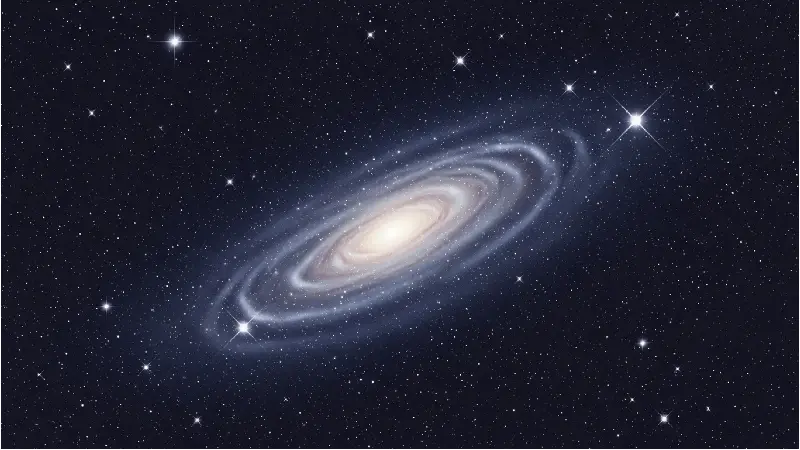
No discussion of the galaxy’s core would be complete without mentioning its most famous resident: Sagittarius A* (Sgr A*). This supermassive black hole is estimated to be about four million times the mass of our sun. Its gravity is so immense that not even light can escape its grip, making it invisible to direct observation.
Despite its invisibility, its presence is undeniable due to the behavior of surrounding objects:
- The S-Star Ballet: Stars nicknamed "S-stars" whip around an apparently empty point at breakneck speeds, some reaching over 7,000 kilometers per second.
- Relativity Testing: This extreme environment serves as a natural laboratory to test the limits of Einstein’s theory of general relativity.
- The Event Horizon: While the Event Horizon Telescope captured the silhouette of the M87 black hole in 2019, astrophysicists are currently refining the data to capture a definitive "portrait" of our own Sgr A*.
SHROUDED IN VEILS: THE CHALLENGE OF OBSERVATION
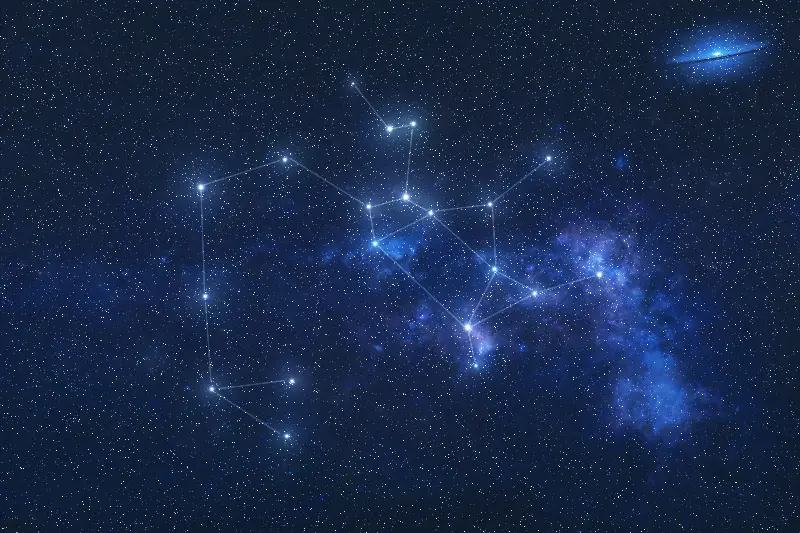
Why haven’t we seen this galactic drama unfold with our own eyes? The answer is interstellar extinction. Dense clouds of dust and gas block most visible light, acting as a cosmic fog. To bypass this, astronomers utilize specific wavelengths:
- Infrared Wavelengths: Capable of piercing through dust to see heat signatures of hidden stars.
- Radio Waves: Revealing the intricate magnetic filaments that stretch for tens of light-years.
- X-Rays: Detecting high-energy events like material being devoured by the central black hole.
NEWBORN STARS AND VIOLENT ENDINGS
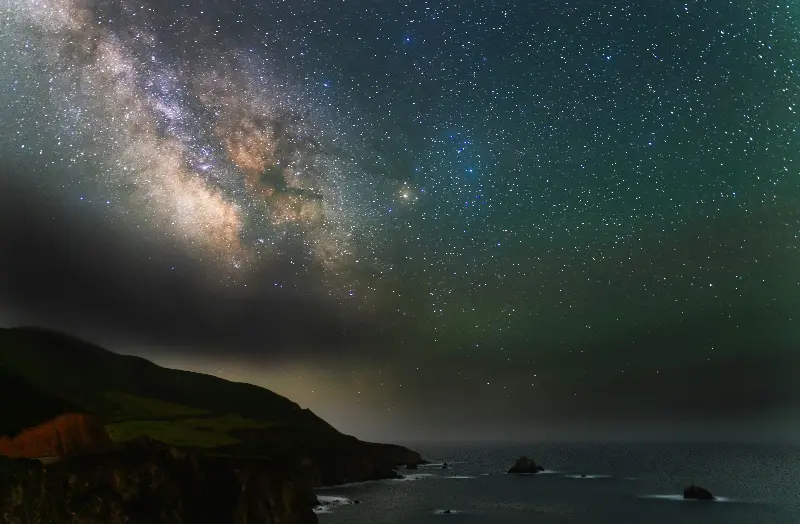
One might expect the galaxy’s center to be forever locked in chaos, but paradoxically, it is a place of constant rebirth. Massive clouds of gas collapse under gravity to ignite stellar nurseries. These colossal newborns burn hot and fast, living brief but intensely luminous lives.
However, life at the core is precarious. As quickly as these stars are born, many meet violent ends through supernova explosions. These events are so energetic they can:
- Briefly outshine all other stars in the galaxy combined.
- Forge heavy elements like gold and platinum.
- Seed the cosmos with the fundamental building blocks of planets.
THE GALACTIC HEARTBEAT AND FUTURE FRONTIERS
The galactic center may harbor secrets that could redefine physics. Astronomers have detected mysterious radio signals and peculiar X-ray flares echoing from the depths. Some theories even suggest the presence of dark matter clumps or boson stars—hypothetical objects made from exotic quantum particles rather than normal matter.
The heart of the Milky Way remains one of the grandest frontiers in modern astronomy. As our telescopes sharpen and technology advances, we move ever closer to decoding the epic story unfolding beyond the stars—a story written in starfire, cosmic winds, and the shadowy silhouette of the black hole that silently holds our galaxy together.