


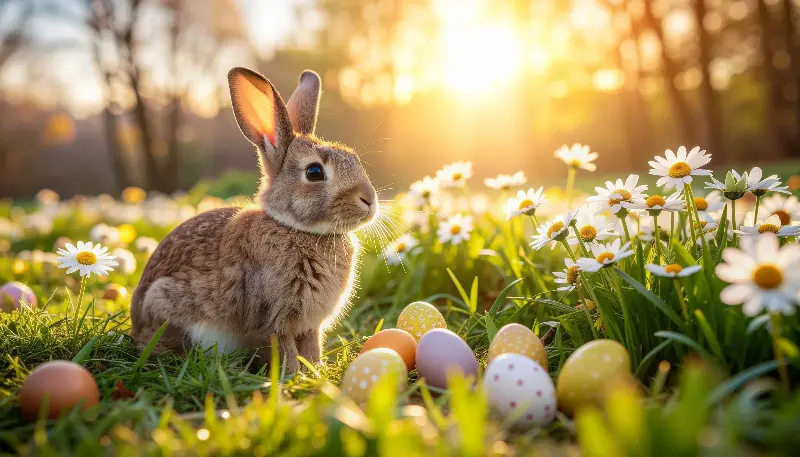
When spring arrives each year, so do festive images of fluffy rabbits and brightly colored eggs, filling stores, gardens, and social media feeds. While chocolate bunnies and egg hunts have become beloved hallmarks of the season, their connections to the religious and seasonal roots of Easter aren’t always clear.
Where did these quirky symbols come from? How did rabbits and eggs come to represent an ancient celebration? Let’s delve into the fascinating journey of how these icons blossomed into staples of Easter tradition.
THE REBIRTH OF NATURE: EASTER’S ANCIENT ROOTS
Easter’s origins are deeply entwined with the rites of spring—a time when nature shakes off winter’s chill. Many cultures have long commemorated this season of renewal. For ancient communities, the emergence of flowers and baby animals seemed a kind of miracle.
- Spring Equinox: Long before Christian traditions took shape, pagans celebrated the equinox to honor fertility and new life.
- Abundance: These rites signaled the end of winter scarcity.
- Potent Symbols: No symbol was more powerful than the egg, embodying birth, or the rabbit, renowned for its legendary fertility.
FROM PAGAN ROOTS TO CHRISTIAN TRADITION
As Christianity spread throughout Europe, local customs were woven into the fabric of religious festivals. Easter, marking the resurrection of Christ, aligned perfectly with pre-existing celebrations of life’s return.
The egg’s symbolic meaning of resurrection and rebirth made it a perfect fit for the central message of the holiday.
- Early Traditions: Christians in Mesopotamia are believed to have dyed eggs red to commemorate the blood of Christ.
- The Goddess Eostre: The word Easter itself is often connected to the Germanic goddess Eostre. Legend says her sacred animal was the hare, a creature believed to possess magical fertility.
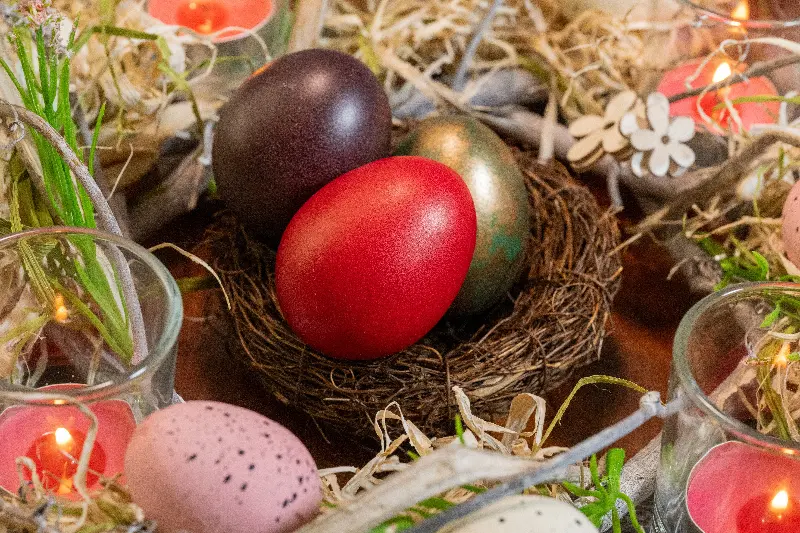
THE EASTER BUNNY: LEAPING INTO FOLKLORE
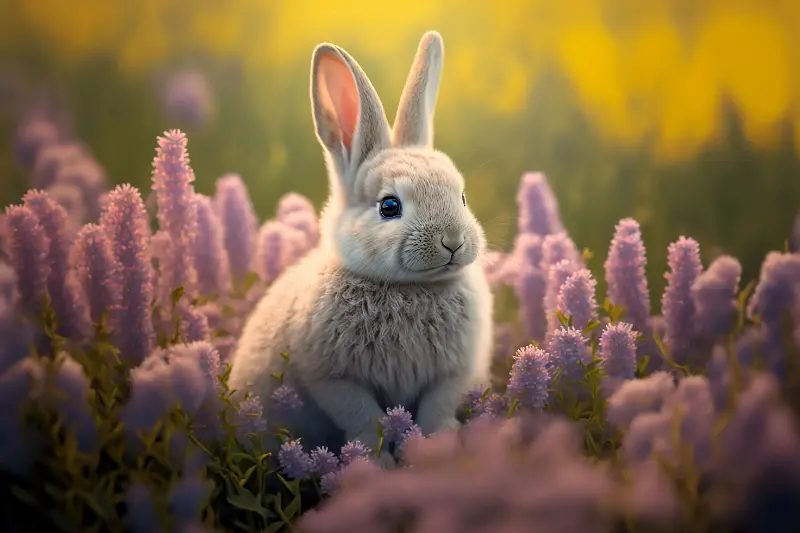
The friendly Easter bunny hopped into the celebration relatively late, traveling to America with German immigrants in the 1700s. Their tradition featured the “Osterhase,” a mystical hare who would lay colored eggs for well-behaved children.
- Nest Building: Children would prepare small nests in their homes, hoping to wake up to a bounty of eggs.
- Evolution: Over time, the "hare" gradually became the "rabbit," likely because rabbits were more common in the United States.
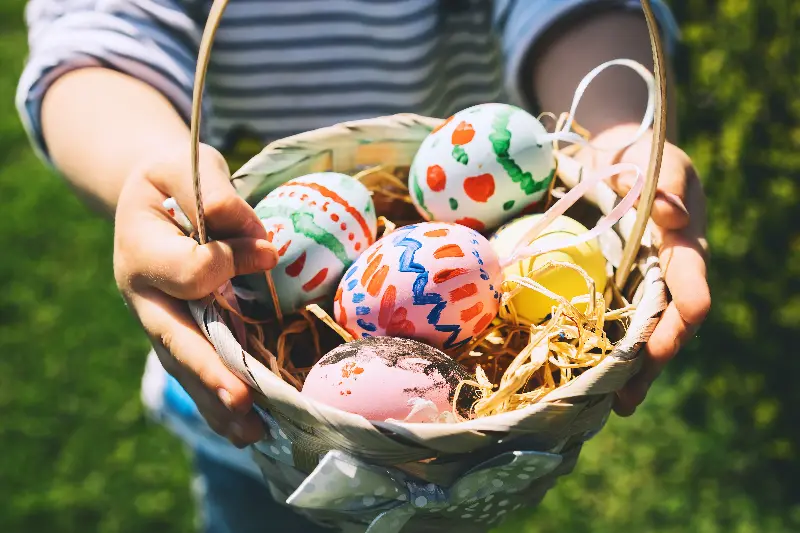
- The Hunt: This quirk of European folklore evolved into modern Easter egg hunts, where children dash across lawns in search of hidden treasures.
EGGS: SYMBOLISM, ARTISTRY, AND FUN
Eggs have played a remarkable role in springtime for millennia. Beyond fertility, they became prominent in Christian observances due to Lenten restrictions.
- Breaking the Fast: During medieval Europe, eggs were forbidden during Lent. When the fast ended at Easter, these stored eggs were the first festive treats consumed.
- Pysanky Art: In Ukraine, intricate pysanky eggs are created using wax-resist techniques, resulting in dazzling patterns where every color carries a unique meaning.
- Playful Contests: Today, egg rolling and "egg tapping" contests remain sources of joy that blend religious custom with lighthearted competition.
CHOCOLATE, COMMERCE, AND MODERN TRADITIONS
No discussion of Easter is complete without a nod to the sweet transformation of the 19th century. European chocolatiers began producing hollow chocolate eggs as novelties, and the trend exploded.
- Confections: Milk, white, and dark chocolate eggs, often wrapped in ornate foil, became must-have items.
- Chocolate Bunnies: These soon joined their egg-shaped counterparts to dominate Easter baskets globally.
- Modern Essence: While commercialization has increased, the core remains: celebrating new beginnings, joy, and togetherness.

WHY THESE SYMBOLS ENDURE
The popularity of rabbits and eggs tells a story spanning thousands of years. At their heart, both share a universal resonance with the hope and promise of spring—themes that anyone can appreciate, regardless of faith.
Whether you see the egg as a sign of resurrection or a nod to the mysteries of nature, its presence unites people across the globe. Rabbits, with their youthful energy, remind us to embrace playfulness and renewal. From ancient rituals to glossy chocolate treats, these icons prove that traditions adapt and survive to bring people together every spring.