


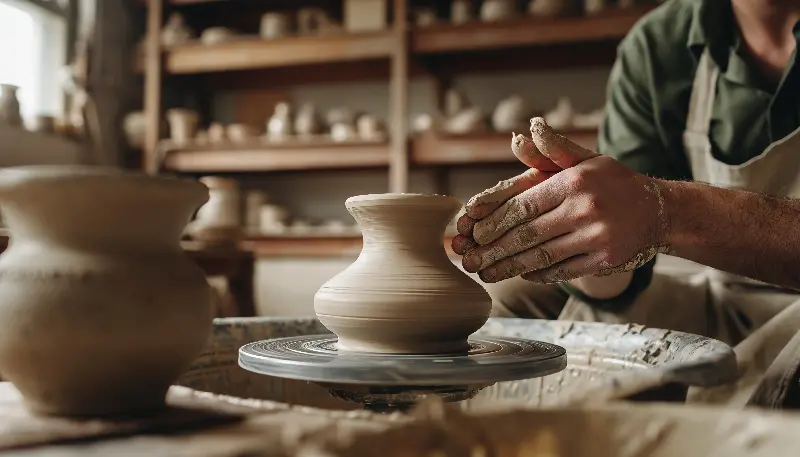
Sometimes, when life feels a little overwhelming, the answers to serenity aren’t found in quiet rooms or meditation alone. They lie in our hands—quite literally. There is a reason why pottery wheels, with their hypnotic whir and soft clay, have become a quiet revolution in mental health and self-care.
It is not just about the messiness or the final product; at its core, clay work is a gentle, tactile journey that soothes the mind and heals the spirit. By engaging with the earth in such a direct way, we tap into an ancient form of sensory relief that modern life often lacks.
THE POWER OF TOUCH: HOW CLAY GROUNDS US
Human beings have an ancient, primal connection to the earth, and clay is one of its purest forms. When your hands sink into a chunk of cool, pliable clay, something remarkable happens to your nervous system. The texture, temperature, and resistance of the material invite you into the present moment, pulling your mind away from digital noise or repetitive worries.
- Tactile Mindfulness: This is a technique therapists increasingly recognize as essential for mental well-being.
- Cortisol Reduction: Engaging the sense of touch during creative activities has been scientifically shown to lower the body’s primary stress hormones.
- Anchoring the Senses: The rhythmic movements—pressing, shaping, and smoothing—require just enough attention to anchor you without causing mental fatigue.
There is little space for anxiety when you are focused on centering a wobbly bowl or coaxing a delicate vase from a heavy lump. Even the mistakes become part of the experience, encouraging acceptance rather than frustration.
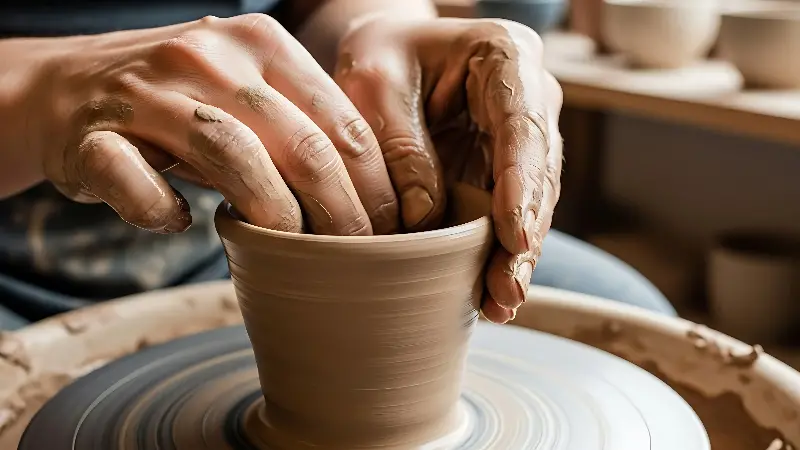
CREATIVE FLOW: ENGAGING THE MIND AND FREEING THE HEART
When you engage with the pottery wheel, your hands and mind enter what experts call a "flow state." This is a heightened state of focused immersion where time seems to melt away and your worries fade into the background.
What makes pottery specifically therapeutic?
- Active Meditation: Unlike sitting in silence, your body is busy, which helps quiet a "noisy" brain.
- Forgiveness of the Medium: Each time the clay collapses, it is an invitation to adapt, learn, and try again.
- Resilience Building: The process nurtures self-compassion, teaching us that imperfection is not failure—it is simply a part of the creative journey.
As you throw, pull, and shape the spinning clay, there is no room for negative self-talk. You are too busy collaborating with the physical laws of centrifugal force and gravity.
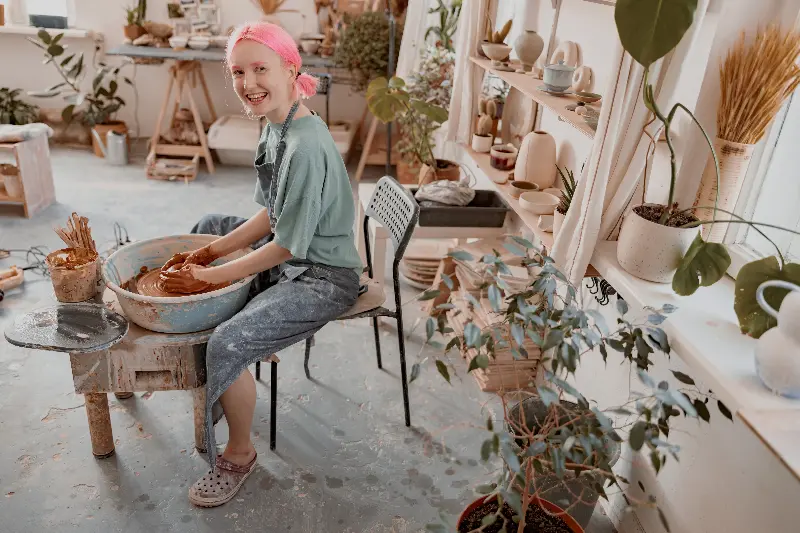
THERAPEUTIC BENEFITS BEYOND THE STUDIO
Pottery wheel therapy isn't just about making beautiful kitchenware. The skills cultivated at the wheel have impressive ripple effects on our cognitive health. Studies suggest that regular participation in ceramic arts improves:
- Hand-Eye Coordination: The precision required strengthens motor pathways.
- Concentration and Memory: Following the multi-step process of firing and glazing aids cognitive retention.
- Emotional Regulation: The patience required for drying and firing clay translates to increased patience in daily life.
Moreover, pottery has long been found to ease symptoms in individuals living with post-traumatic stress disorder and certain types of chronic pain. The satisfaction of creating something tangible from raw earth instills a sense of accomplishment and control, acting as a powerful counterweight when life feels unpredictable.

A SOCIAL CLAY COMMUNITY: CONNECTION THROUGH CREATION
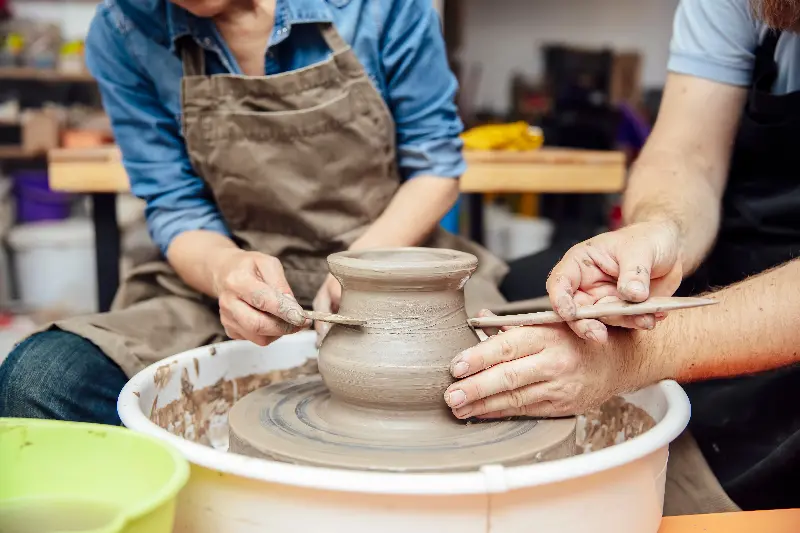
While pottery can be a solitary pursuit, many find healing in the shared experience of community studios. Surrounded by others on their creative journeys, social barriers tend to drop. Whether you are laughing about a collapsed mug or admiring a fellow student’s unique glaze, the pottery wheel becomes a catalyst for genuine human connection.
Group pottery sessions often function as informal support groups. The shared silence, punctuated only by the soft hum of spinning wheels, creates a safe environment for vulnerability and authentic conversation. Over time, this camaraderie can ease social anxiety and remind us that, like clay, we can support and shape each other through difficult transitions.
ART THAT LASTS: HOLDING HEALING IN YOUR HANDS
Unlike other forms of therapy that are purely conversational, pottery yields a result you can hold—a mug, a bowl, or a sculpture. The power of this tangible artifact cannot be underestimated. Physical objects made by your own hands become totems of perseverance.
Each fingerprint in the glaze and each curve in the handle is a reminder of your ability to create beauty and order, even during life’s most chaotic chapters. Using your pottery daily—drinking from a mug you centered yourself—serves as an everyday mindfulness cue that your healing is an ongoing, beautiful process.
In a world saturated with digital distractions, clay brings us back to our senses. Whether you are seeking relief from anxiety or just a fresh way to express yourself, the humble clay offers a place to shape not just art, but lasting inner peace.