


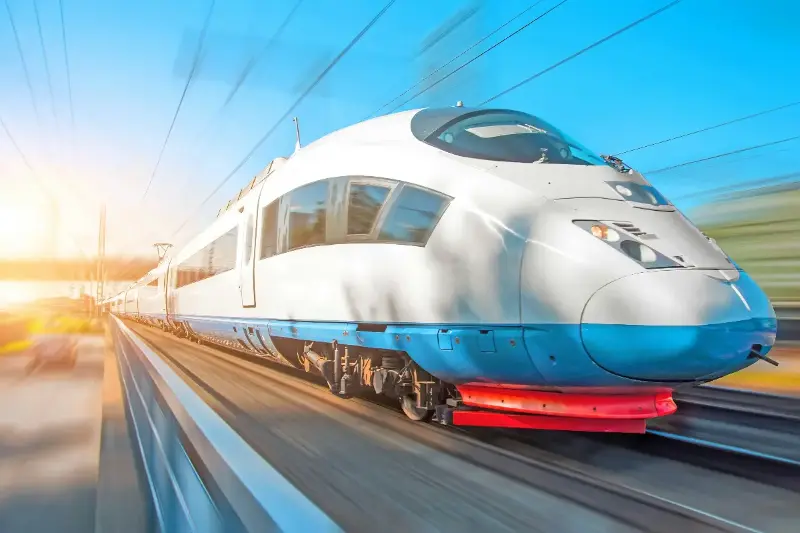
For many people, the sight of a sleek train gliding along the tracks at 300 kilometers per hour is a clear reminder that the future is already here. High-speed rail has revolutionized how we think about travel, time, and human connection. But what lies beneath this world of sheer velocity? Let’s step inside the cabin of these engineering wonders and discover the innovative technology that defies imagination.
THE BIRTH OF THE SPEED REVOLUTION
High-speed trains are not a recent discovery; their journey began in the mid-20th century. Japan’s famous Shinkansen, or “bullet train,” made its debut in 1964, forever changing global rail transportation. Its success inspired nations across Europe and Asia to invest in rapid railways. Today, systems like France’s TGV, China’s CRH, Germany’s ICE, and Spain’s AVE stand as engineering masterpieces that dash across continents at breathtaking speeds.
Achieving 300km/h requires an intricate blend of brilliance and constant innovation. Engineers have been forced to rethink every detail, from aerodynamics to advanced onboard systems, to ensure stability and efficiency.
AERODYNAMICS: THE ART OF SLICING THROUGH AIR
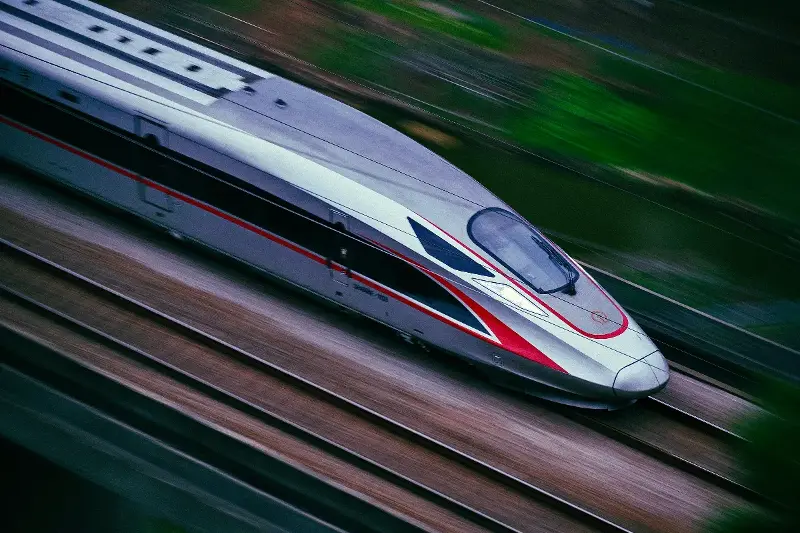
When a train hits 300km/h, air resistance becomes a formidable hurdle. To combat this, the nose of a high-speed train is often stretched and tapered, resembling the streamlined muzzle of a jet.
- Biomimicry: In Japan, the design of the Shinkansen’s nose was inspired by the kingfisher bird. Engineers modeled the train after the bird’s beak, which allows it to dive into water without making a splash, effectively slashing tunnel noise and improving efficiency.
- Surface precision: Every detail is tightly controlled. Protruding elements are eliminated, and spaces between carriages are covered to prevent turbulence and drag.
CUTTING-EDGE MATERIALS AND STRUCTURE
At extreme velocities, trains must be exceptionally lightweight yet incredibly strong. Manufacturers utilize aluminum alloys, fiber-reinforced plastics, and specialized ceramics to construct the train bodies.
One of the most impressive innovations is the active suspension system. These systems keep the train steady and level, preventing sway even when rounding sharp curves at high speeds. Some advanced models even use computers to dynamically adjust the tilt of carriages, providing a smooth, stable ride for every passenger.
TRACK TECHNOLOGY: RAILS OF PRECISION
The tracks themselves are marvels of science. High-speed railways use specially welded rails that eliminate the familiar rhythmic “clack-clack” sound, enabling flawless, vibration-free travel.
- Concrete stability: Traditional stone ballast is often replaced by engineered concrete slabs, which offer superior stability and require less maintenance.
- Real-time monitoring: Advanced signaling systems constantly monitor rail conditions and train positions, adjusting in real-time to ensure maximum safety.
POWERING THE SPEED: ELECTRIC WONDERS
Virtually all high-speed trains are powered by electricity delivered through overhead lines known as catenaries. Streamlined pantographs—the spring-loaded arms reaching toward the wires—feed massive amounts of energy to the motors. While the power consumption is immense, it is managed with surprising efficiency.
Through regenerative braking, these trains can actually feed power back into the electrical grid when slowing down. This makes high-speed rail one of the most environmentally friendly ways to travel across long distances.
PASSENGER EXPERIENCE: COMFORT AT 300KM/H
Despite the intense technology beneath their floors, passengers often describe the ride as "floating." The cabin experience is designed for maximum comfort:
- Near-silent interiors: Even at top speed, the environment is quiet enough for phone calls or peaceful relaxation.
- Modern amenities: From wireless internet and digital ticketing to first-class suites and family compartments, efficiency no longer requires sacrificing personal comfort.
A GLIMPSE INTO THE FUTURE
The race for velocity continues. Japan is currently testing magnetic levitation (maglev) trains capable of exceeding 600km/h, while China continues to expand the world’s largest high-speed network. High-speed rail stands at the crossroads of imagination and engineering, shrinking continents and bringing people closer together. It is about redefining the meaning of possibility, ensuring that the journey is just as thrilling as the destination.