



The global football landscape has reached a monumental milestone as the final whistle blew on the last of the intercontinental play-offs. After years of grueling qualification rounds across every corner of the globe, the field for the 2026 World Cup is officially set. This summer, 48 nations will descend upon North America for a tournament that promises to be the largest and most ambitious sporting event in history. With the expansion from 32 to 48 teams, the tournament’s reach has never been broader, welcoming debutants and returning legends alike to the world’s most prestigious stage.
Dramatic Play-offs Seal The Final Spots
The concluding chapters of the qualification story were written with equal parts heartbreak and triumph. Perhaps the most staggering narrative remains the continued absence of Italy. The four-time world champions suffered a devastating defeat to Bosnia & Herzegovina, marking the third consecutive time the Azzurri have failed to reach the World Cup finals—a statistical anomaly that has sent shockwaves through European football. While Italy mourns, Bosnia & Herzegovina celebrates a historic achievement, joined by other European powerhouses such as Sweden, Turkey, and the Czech Republic, all of whom secured their tickets in the final hours of regional play.

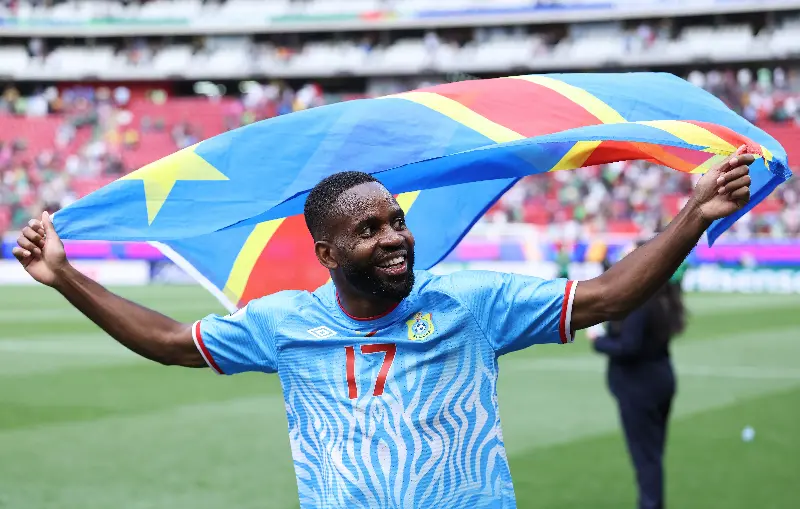
The intercontinental play-offs provided their own brand of magic. In a showcase of African resilience, the Democratic Republic of Congo delivered a masterclass against Jamaica. The victory was a landmark moment for the nation, as they secured their first-ever qualification for the World Cup finals, proving that the expansion of the tournament is successfully opening doors for rising footballing powers.
Iraq Makes History As Asian Representation Grows
Hours after the celebrations in Kinshasa, the focus shifted to the Iraqi national team. Under the shrewd tactical leadership of coach Graham Arnold, Iraq pulled off a stunning 2-1 upset against South American representatives Bolivia. The victory was secured through a gritty performance that saw the Lions of Mesopotamia qualify for the World Cup for only the second time in their history, following their 1986 debut in Mexico.
With this result, Iraq becomes the ninth Asian representative in the tournament, a record-breaking figure for the continent. They join an elite group of Asian nations including Australia, Iran, Japan, South Korea, Saudi Arabia, Qatar, Jordan, and Uzbekistan. This surge in representation underscores the rapid development of football across the Asian confederation and sets the stage for a highly competitive showing this summer.

A New Format For A New Era
The 2026 edition marks the dawn of a new era for FIFA. For the first time, the tournament will feature 48 teams instead of the traditional 32. This expansion has led to a complete restructuring of the group stages. The nations have been divided into 12 groups of four teams each. The competition will follow a round-robin format within these groups, with the top two teams from each group and the eight best third-placed teams advancing to the knockout rounds.
The scale of the event is unprecedented. Co-hosted by the United States, Canada, and Mexico, it is the first time the tournament has been shared across three nations. Fans can expect a marathon of football, as the total number of matches has ballooned to 104. The Democratic Republic of Congo finds itself in a challenging Group K alongside Portugal, Uzbekistan, and Colombia, while Iraq faces a daunting Group I featuring France, Senegal, and Norway.
The Global Lineup Confirmed
The 48 teams representing the world this summer are a diverse mix of traditional giants and ambitious newcomers:
- North America & Caribbean (Hosts & Qualifiers): United States, Mexico, Canada, Haiti, Curacao, and Panama.
- Asia: Australia, Iran, Japan, South Korea, Saudi Arabia, Qatar, Jordan, Uzbekistan, and Iraq.
- Europe: England, France, Croatia, Portugal, Norway, Germany, Netherlands, Belgium, Austria, Switzerland, Spain, Scotland, Bosnia & Herzegovina, Turkey, Czech Republic, and Sweden.
- Africa: Algeria, Tunisia, Egypt, Ghana, Morocco, Cape Verde, Ivory Coast, Senegal, South Africa, and the Democratic Republic of Congo.
- South America: Argentina, Brazil, Ecuador, Uruguay, Colombia, and Paraguay.
- Oceania: New Zealand.
As the host nations prepare their stadiums and cities for the influx of millions of fans, the sporting world waits with bated breath. From the opening match at the legendary Estadio Azteca to the grand finale on North American soil, the 2026 World Cup is ready to write its first chapter in the history books of the beautiful game.