


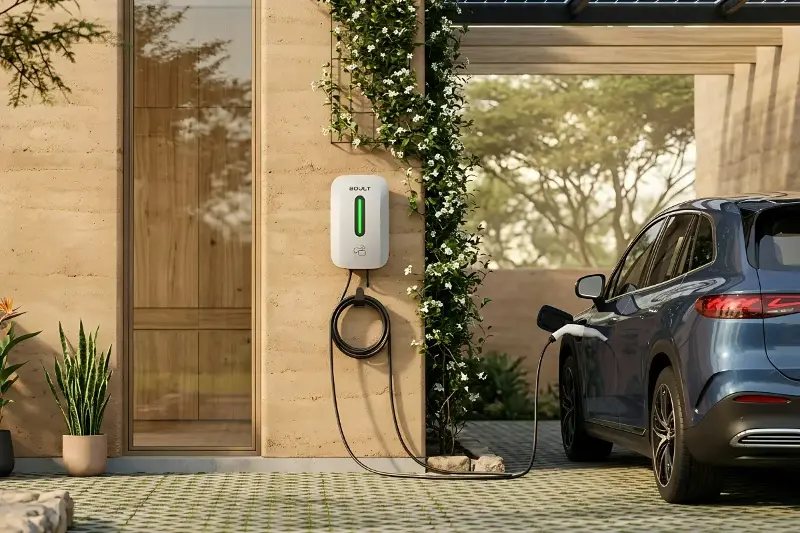
For anyone joining the electric vehicle (EV) revolution, one of the first questions is, “How do I charge at home—and how long will it take?” While the excitement of zero-emission driving often takes center stage, the practical details of home charging are the true foundation of a seamless ownership experience. Choosing the right setup influences your convenience, daily routine, and long-term costs. Let’s demystify the plugs, power levels, and standards to help you power up with confidence.
UNDERSTANDING CHARGING LEVELS: PLUG INTO THE BASICS
Charging at home is not a one-size-fits-all situation. Your choice depends on your daily driving habits and electrical capacity:
- Level 1 Charging: This utilizes a standard household wall socket. Think of it as the slow-and-steady approach. It adds roughly 3 to 5 miles of range per hour, making it suitable for plug-in hybrids or drivers with very short daily commutes.
- Level 2 Charging: This is the gold standard for most EV owners. It requires a 240-volt circuit—similar to what a heavy-duty home dryer uses. With speeds providing between 15 and 40 miles of range per hour, it allows most drivers to recover a full battery overnight.
KNOW YOUR PLUGS: NACS AND THE EV LANDSCAPE
The industry is currently undergoing a significant shift toward a unified ecosystem. In North America, the North American Charging Standard (NACS) has emerged as the definitive default for modern vehicles.
- The Transition: While many older vehicles rely on the J1772 connector, most new models now feature native NACS ports. This standard is preferred for its compact size, superior ergonomics, and high-power capability.
- Compatibility: If you have an older vehicle with a different plug, don’t worry. Reliable, certified adapters are readily available to bridge the gap between legacy hardware and modern NACS stations. When purchasing a home charger, look for "future-proof" options that offer native NACS support or modularity.

POWER RATINGS: AMPS AND KILOWATTS EXPLAINED
To optimize your setup, it is important to understand the maximum power your charger can deliver, measured in kilowatts (kW).
Most residential Level 2 chargers range from 16 amps (3.8 kW) to 48 amps (11.5 kW). However, remember that your vehicle’s onboard charger is the ultimate hardware bottleneck; if your car only accepts 7.2 kW, installing a more powerful unit won’t increase your charging speed.
It is wise to check your home’s electrical panel capacity. A professional load calculation is essential to ensure your panel can handle the new demand without interfering with other major household appliances.
SMART CHARGERS: THE BRAINS OF EFFICIENT CHARGING
The latest innovation in home energy is the “smart” charger. These devices connect to your Wi-Fi, offering advanced features that go beyond simple power delivery:
- Energy Management: Schedule your charging sessions to coincide with off-peak electricity rates to significantly lower your costs.
- Grid Integration: Some units can communicate with the energy grid, automatically adjusting your power draw to support stability during high-demand periods.
- System Updates: Smart chargers receive firmware updates, ensuring they stay compatible with new vehicle technology and evolving safety protocols.
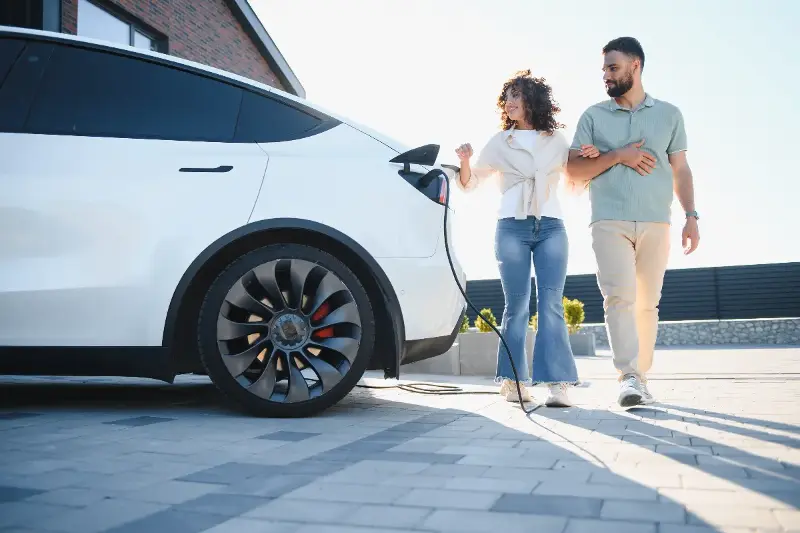
REDEFINING THE ROUTINE: MATCHING YOUR LIFESTYLE
Charging at home is about convenience, not speed. Because your car is parked for many hours each night, you don't necessarily need the absolute fastest charger on the market. Instead, prioritize reliability and lifestyle integration. If your household operates two EVs, consider a dual-port charger or a load-balancing system to ensure both vehicles are ready to go every morning.
INSTALLING THE RIGHT SYSTEM: SAFETY FIRST
Safety should never be an afterthought. Whether you are opting for a simple wall-mounted unit or a sophisticated smart system, follow these core principles:
- Professional Installation: Always hire a licensed electrician. They will ensure your setup meets local building codes, verify proper grounding, and install necessary surge protection.
- Weatherproofing: If you are installing your charger outdoors, ensure the hardware is specifically rated for exposure to the elements.
- Ongoing Maintenance: Periodically inspect your cables for wear, keep ventilation paths clear, and avoid the use of extension cords, which can pose a fire risk.
The journey to electric mobility is meant to be simple. By focusing on smart, safe, and future-proofed home charging, you can ensure that every morning brings you a full "tank" and a step toward a more sustainable future.