


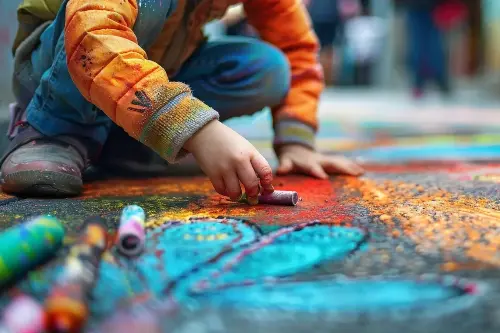
As one traverses the urban landscape, it's common to witness the grey of concrete splattered with vibrant advertisements and street signs. However, amidst the hustle and bustle, the simple charm of a child’s chalk creation on the pavement offers a respite from the monotonous city texture. These kaleidoscopic expressions, crafted by little hands, transport onlookers into a world alive with imagination and innocence.
On the Pavements: A Canvas of Possibilities
The streets become a child's canvas, embracing fleeting masterpieces that breathe life into the routine. With every stroke of chalk, children lay down their fantasies in a spectrum of hues. Dragons take flight beside enchanted gardens, while spaceships hover over chalk-drawn galaxies. These creations do not discriminate; every child is an artist, every pavement their gallery. In this unassuming medium, we see the purity of storytelling uninhibited by structured art lessons or fears of imperfection. It's a testament to creativity that requires no expensive supplies or specialised training – just a willingness to kneel on the ground and let the mind roam free.
Animating the Concrete: The Role of Chalk Art in Child Development
Beyond mere play, chalk art is a key player in a child’s development. It helps fine-tune motor skills as a child grasps the chalk, learning pressure control and developing hand-eye coordination. As they draw, they make decisions about colours and space, exercising cognitive skills such as planning and problem-solving. Additionally, chalk art is a language without words, an outlet for emotions and experiences that they may not yet know how to express verbally. The temporary nature of chalk teaches children about the impermanence of things, allowing them to embrace the moment and find joy in the process rather than just the result.
Building Bridges: How Chalk Art Connects
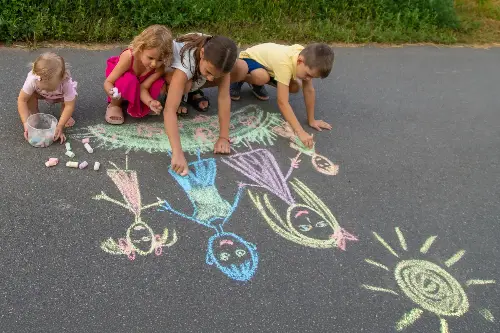
Chalk creations on urban streets construct unseen bridges in communities. Passersby, who might usually hurry along their way, often pause to admire the carefree talent on display. Sometimes, they even join in, sparking conversations and fostering a sense of belonging. Children in turn learn about sharing and teamwork as they collaborate on chalk murals, negotiating space and theme. What's more, these chalk drawings can become a shared project for families, encouraging parents and children to spend quality time together, away from screens and the sedentary indoors.
Washing Away: The Ephemerality of Chalk Art
The transient beauty of these chalk masterpieces offers a profound reflection on the nature of life and art. Soon after their creation, a downpour may wash the drawings away. However, far from being a cause for sadness, this cycle of creation and natural removal serves as an important life lesson for children. It teaches them the art of letting go, reinforcing that the value lies in creation, the joy of the moment, and the knowledge that they can always start anew with a fresh canvas beneath their feet.
Colourful Streets, Brighter Futures
Perhaps the most heartwarming aspect of children's chalk creations is their reminder of the simple pleasures in life. In a time when society often lionises technology and complexity, there is something incredibly refreshing about the simplicity and accessibility of chalk art. It invites us to slow down, look down, and appreciate the colourful exuberance of young minds at play. As these little artists splatter the urban grey with their vibrant dreams and stories, they unwittingly remind adults of the time when their own imaginations knew no bounds.
As vibrant chalk sketches fade with the footprints of time, one can't help but anticipate the fresh wave of creative wonder that the next bright day will bring to the streets. These urban canvases remind us to appreciate the present, unleash our creativity, and view the world with a child’s bright optimism. Let us all draw inspiration from these temporary wonders and remember to add a little colour to our own daily lives. In the kaleidoscope of a child's chalk art, we find the unspoken truths about the beauty of spontaneity, the importance of play, and the infectious joy of colouring outside the lines.