



Picture this: you’re lost in a meeting, your mind wandering as your pen absentmindedly scrawls loops, swirls, or miniature stick-figure adventures across the margin of your notebook. Maybe you think you’re just killing time or fidgeting to stay awake.
However, science suggests that what you’re doing—doodling—might actually be one of the simplest and most powerful gateways to unlocking a wellspring of creativity that lies just beneath the surface of your everyday thoughts. Far from a distraction, those scribbles are a specialized form of cognitive processing.
THE SECRET SCIENCE BEHIND DOODLING
Doodling, once dismissed as a sign of inattention, is now recognized by psychologists and neuroscientists as an underrated tool for creative thinking. When you doodle, your brain enters a unique “default mode network”, activating areas associated with free association, imagination, and memory.
The data supporting this is compelling:
- Information Retention: According to research published in the journal Applied Cognitive Psychology, doodlers can retain up to 29% more information than non-doodlers during a monotonous task.
- Engagement Levels: This increased retention comes from the way doodling allows the mind to wander just enough to keep it engaged without becoming overwhelmed.
- Mental De-cluttering: Doodling acts as a "pressure valve," clearing away mental static and making space for unfiltered, original ideas to flow.
Unlike structured drawing or painting, doodling is spontaneous and unplanned. This lack of boundaries is essential for creative breakthroughs, as it bridges the gap between logic and intuition.

FROM BOREDOM TO BRILLIANCE: HOW DOODLING SPARKS GENIUS
Many of history’s most creative minds have been secret (or not-so-secret) doodlers. Leonardo da Vinci’s notebooks are filled with sketches alongside his scientific theories. Steve Jobs was notorious for scribbling abstract shapes while brainstorming Apple’s next big thing.
Doodling isn’t about producing art for a gallery; it’s about making sense of a swirling internal world. It allows you to:
- Bypass the Inner Critic: While words can be limiting and self-edited, doodles are too rough and quick to provoke self-judgment.
- Connect Disparate Ideas: Sketching helps you see patterns and "find threads" in a tangled ball of thoughts.
- Externalize the Subconscious: It gives your subconscious license to experiment wildly, leading to surprising insights.
THE PSYCHOLOGICAL PERKS: MORE THAN JUST A CREATIVE OUTLET
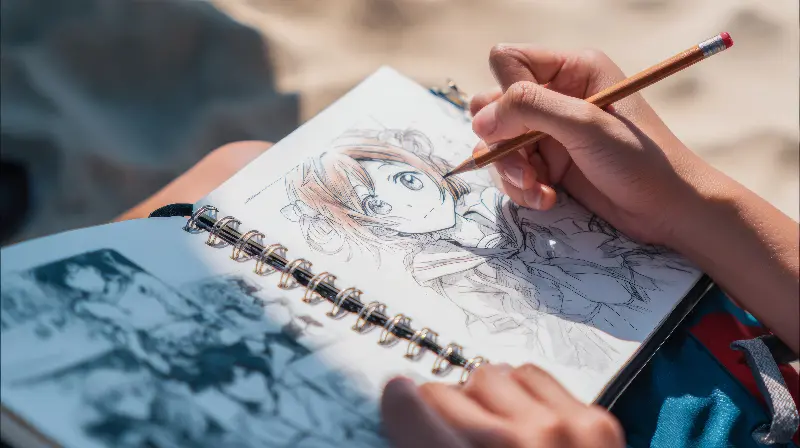
Beyond its creativity-boosting potential, doodling carries a host of hidden psychological benefits. For one, it reduces stress and provides a meditative break in a busy day. Clinical studies have shown that the repetitive, rhythmic movements involved in doodling can lower cortisol levels and initiate a calming effect, not unlike the benefits of mindfulness or deep breathing.
In group settings, doodling can even boost social cohesion:
- Visual Note-Taking: Some workplaces now encourage "sketchnoting" to make meetings more enjoyable and productive.
- Breaking the Ice: Sharing doodles fosters a sense of playfulness and brings unexpected humor to serious settings.
- Collaborative Energy: Group doodles can spark collective ideas, often leading to solutions for complex problems that linear discussion failed to solve.

BREAKING CREATIVE BARRIERS: TRY IT YOURSELF
You don’t need fancy equipment or artistic training to start. All you need is something to write with, something to write on, and a willingness to play. Here are a few tips to maximize your creative breakthroughs:
- Relax Expectations: You’re not making a masterpiece. Let your pen wander freely without judgment.
- The "Blind" Sketch: Try drawing with your eyes closed to bypass perfectionism and see what organic forms emerge.
- Hybrid Ideas: Combine words with images. Doodling around ideas or emotions you’re processing can yield powerful metaphors.
- Tactile Variation: Experiment with different materials—highlighters, colored pens, or even sticky notes—to shake up your perspective.
UNLOCKING HIDDEN GENIUS IN EVERYDAY LIFE
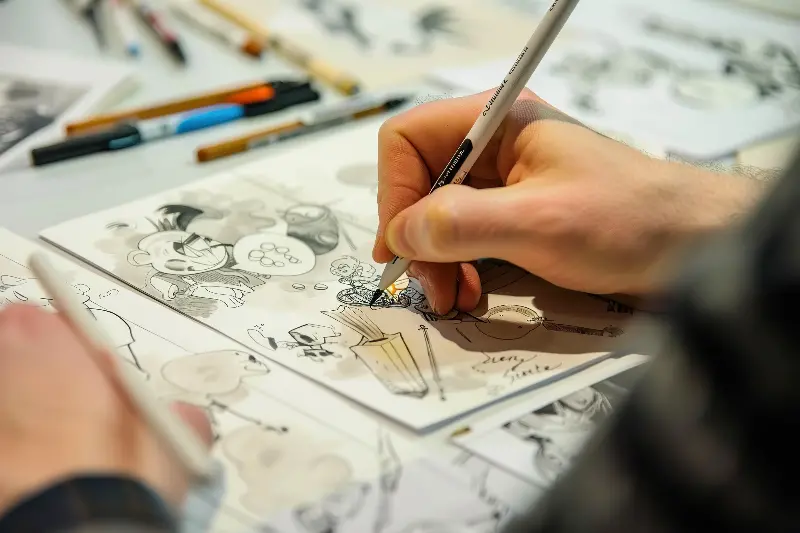
Doodling isn’t reserved for artists or inventors. Anyone—from students and professionals to daydreamers and multitaskers—can tap into the subtle genius that doodling unlocks. In a world increasingly dominated by screens and rigid productivity, doodling stands in gentle rebellion. It reminds us that creativity is not only about results, but about process—about getting lost, making mistakes, and discovering hidden corridors of thought.
The next time your hand itches to scribble during a phone call or meeting, don’t fight it. Consider it an exploration—not just of idle shapes on the page, but of the boundless, brilliant landscape inside your mind. Your doodles just might be the keys to unraveling your next big idea.