


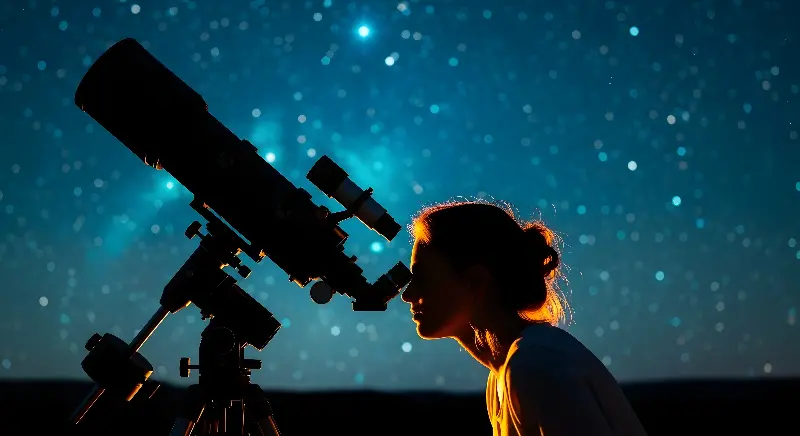
For thousands of years, humans have gazed upward, seeking meaning in the glittering patterns strewn across the night sky. While modern science might focus on stars as massive spheres of gas, our ancestors wove a rich tapestry of stories, myths, and cultural beliefs from these distant lights.
This “language of the stars,” born in wonder and curiosity, continues to echo through our civilizations—shaping the ways we see ourselves, our destinies, and even our relationships with each other. It remains a universal dialect that transcends borders and centuries.
THE STARS AS STORYTELLERS
Long before texts and written accounts, humans relied on storytelling to pass on knowledge and traditions. The stars provided a blank cosmic canvas for these tales. Every society, from the ancient Greeks to the Maya, drew lines between the stars and gave birth to constellations rich with gods, heroes, and monsters.
- Orion the Hunter: Instantly recognizable for his “belt,” this Greek figure represents the classic hero archetype.
- Baiame’s Canoe: In Aboriginal Australian traditions, these same stars tell an entirely different narrative, one deeply informed by their specific environment and lived experience.
- Mnemonic Devices: These stories were not mere entertainment; they encoded essential information regarding seasonal changes, agricultural cycles, and societal rules of conduct.
NAVIGATING BY NIGHT: GUIDANCE FROM ABOVE
Practical needs often intertwined with poetic beliefs. For countless generations, the stars served as navigational guides, lighting the way for traders and explorers across unknown territories.
- Polynesian Wayfinding: Master navigators read the night skies with incredible precision, memorizing star paths to chart courses across the vast Pacific Ocean. This was a living connection between past and future.
- The North Star (Polaris): A symbol of stability in many cultures. For enslaved Africans in the United States, “Follow the Drinking Gourd” was a coded phrase for following Polaris northward toward freedom.
In this way, the stars were not just markers in the sky—they were agents of hope and liberation, imbuing difficult journeys with purpose.

CHRONICLES OF CHANGE: TIMEKEEPERS IN THE SKY
Astronomy and timekeeping have always been intertwined. Ancient civilizations used the stars to anchor their existence to the rhythm of the universe:
- Ancient Egyptians: They constructed their calendar around the cycles of Sirius, whose reappearance heralded the life-giving flooding of the Nile.
- The Maya: Renowned for astronomical prowess, they calculated the movements of Venus to schedule religious festivals, believing planetary cycles influenced earthly affairs.
- Monolithic Observatories: Sites like Stonehenge or Chichen Itza’s El Caracol were aligned with solstices and equinoxes, allowing communities to anticipate the shifting seasons with religious reverence.
THE STARS IN LANGUAGE, ART, AND LOVE
Our celestial companions have profoundly shaped our creative expression. Phrases like “star-crossed lovers,” “shoot for the stars,” or “written in the stars” showcase how cosmic metaphors have permeated our collective imagination.
From Van Gogh’s swirling canvases to indigenous sand painters, artists have found inspiration in starlight, capturing its emotional resonance. In jewelry, textiles, and architecture, stars consistently stand for guidance, hope, and steadfastness.
MODERN SCIENCE MEETS ANCIENT WISDOM
Today, the language of the stars bridges the gap between scientific exploration and ancestral heritage. Ethnoastronomy is a growing field that studies the intersection of astronomical knowledge and cultural traditions.
- Preserving Lore: Scientists now collaborate with local elders worldwide to document indigenous sky lore.
- Maori Star Calendars: These efforts reveal how celestial knowledge is intertwined with deep environmental wisdom.
- Digital Stargazing: Technology now allows city dwellers to use planetarium apps, reviving the communal wonder that once flourished around ancient campfires.
No matter how technology advances, the basic human urge to find meaning in the heavens endures. The stars remind us of both our limitations and our possibilities. They encourage us to ask deep questions, to dream beyond the visible, and to reflect on the stories we inherit—and those we leave for future generations.
Maybe that’s the enduring magic of the language of the stars: across cultures and eras, they teach us to look up together, to wonder, to connect, and, ultimately, to hope.