


Look at the night sky, and you’ll witness billions of planets twinkling across the universe. Yet, as far as science can confirm, life—diverse, complex, and intelligent—thrives only on Earth. The secret to our planet’s uniqueness is a delicate blend of cosmic luck and extraordinary chemistry. What makes Earth the sole cradle of life in our solar neighbourhood, and possibly the entire galaxy? Let’s explore the science behind our planet’s one-of-a-kind status.
A Perfect Position in the Solar System
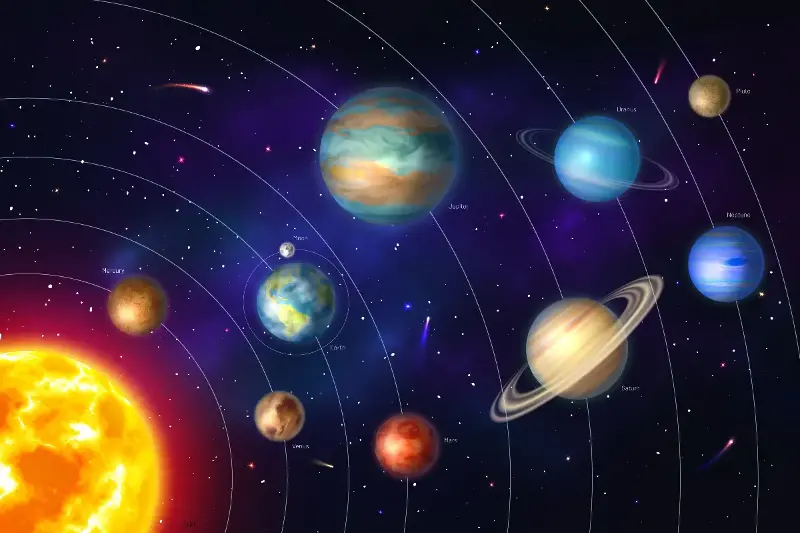
Earth owes much of its life-friendly character to location, location, location. Nestled within the ‘habitable zone’—also known as the Goldilocks Zone—Earth sits at just the right distance from the Sun. This region isn’t too hot, where water would boil away into space, nor too cold, where water would remain locked as ice. Our planet’s nearly-circular orbit ensures a stable climate, avoiding wild swings in temperature that could make survival difficult.
An often-overlooked hero is Jupiter, our solar system’s giant protector. Its immense gravity acts as a cosmic shield, deflecting or capturing many asteroids and comets that could otherwise bombard Earth. This relative stability has given life the time it needs to evolve and flourish.
Atmosphere: The Protective Blanket

Earth’s atmosphere is a marvel of natural engineering. Composed mainly of nitrogen (78%) and oxygen (21%), with a sprinkle of other gases, it provides exactly what life needs to thrive. The ozone layer, a thin veil high in the atmosphere, acts like sunblock, filtering out harmful ultraviolet rays that could damage DNA and inhibit life’s development.
The atmosphere also moderates climate, trapping just enough heat to avoid extreme temperatures—a phenomenon called the greenhouse effect. Without it, Earth’s surface would be a freezing wasteland with little chance for organisms large or small.
The Magic of Liquid Water

Water is essential to all known forms of life. On Earth, water exists in all three states: solid, liquid, and gas. In fact, it covers roughly 71% of the planet’s surface, forming oceans, lakes, rivers, and clouds. Earth’s practical average temperatures allow water to exist as a liquid, fostering vibrant ecosystems—from deep-sea vents teeming with bizarre creatures to rainforests exploding with diversity.
Other planets, like Mars and Venus, show evidence of ancient water flows, yet lack conditions for liquid water today. On Earth, a moderate climate, sufficient atmospheric pressure, and the planet’s mass all join forces to keep water in its life-giving form.
A Dynamic and Nutritious Crust

Earth’s outer layer is anything but static. Thanks to plate tectonics, continents drift, mountains rise, and volcanoes erupt. These processes might seem chaotic, but they are crucial for recycling nutrients essential for life. Volcanoes release carbon dioxide, contributing to plant photosynthesis. Meanwhile, weathering and erosion redistribute minerals and nutrients, fertilising both land and sea.
In contrast, planets without tectonic activity quickly lose any surface diversity, often ending up barren and inhospitable. Earth’s dynamic crust sustains soil fertility and the cycle of life for millions of species.
The Right Ingredients for Life

Another aspect of our good fortune is Earth’s rich elemental composition. The crust contains abundant carbon, hydrogen, nitrogen, oxygen, phosphorus, and sulphur—elements that form the backbone of all biological molecules. Not only are these elements present, but they also exist in accessible forms—dissolved in oceans, stored in soil, and circulating in the air.
Moreover, the planet’s magnetic field acts as a shield against harmful cosmic and solar radiation. Born from the movement of molten iron in Earth’s core, this magnetic field keeps our atmosphere intact and ensures surface conditions remain favourable for living organisms.
The Role of Time and Stability
Life as we know it didn’t arise overnight. Earth’s four-and-a-half billion-year age has granted life the stability and opportunity to develop from simple microbes into dinosaurs, forests, whales and, eventually, humans. Catastrophes like meteor impacts and ice ages have certainly shaped our planet’s history, but periods of calm between events have allowed for recovery, adaptation, and diversification.
While our planet’s uniqueness is a product of cosmic happenstance and intricate natural processes, it underscores both our good fortune and our responsibility. The precise conditions that allow life to flourish on Earth—from its perfect orbit and protective atmosphere to its abundance of water and essential nutrients—are exceedingly rare, as far as we can tell.
As science continues to search for life elsewhere in the cosmos, understanding what makes Earth special inspires not only awe, but a profound sense of stewardship for our one-of-a-kind world. Our planet is more than a place—it’s a miracle of chemistry and chance, a blue oasis thriving in an endless sea of possibilities.