


The original Space Race of the mid-20th century was a remarkable period in human history, defined by a fierce competition between the United States and the Soviet Union, with milestones that included the first human in space and the landing on the Moon. But today's endeavours into the cosmos push far beyond those early achievements, transcending competition to embrace global cooperation and a thirst for knowledge that unites nations, scientists, and ordinary people in pursuit of answers to humanity's greatest questions.
The New Players in Space Exploration
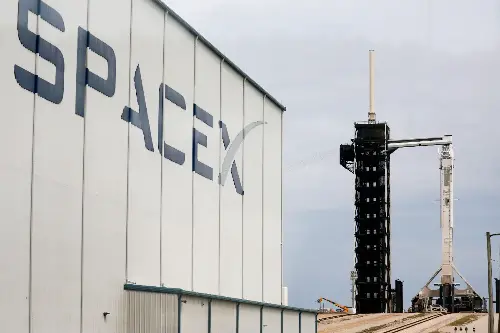
Gone are the days when space exploration was the exclusive realm of superpowers. A plethora of new actors have entered the scene, making the landscape more diverse and innovative. Private companies like SpaceX, Blue Origin, and Virgin Galactic have revolutionised the economics of space travel with reusable rockets and space tourism initiatives, expanding access to space and igniting public interest and participation.
Moreover, countries previously absent from the space community are now contributing to its expansion. From the United Arab Emirates' Mars mission to India's lunar probe, the democratisation of space exploration means that it's no longer a race dominated by the few, but a collective journey shared by many.
Interplanetary Exploration: Mars and Beyond
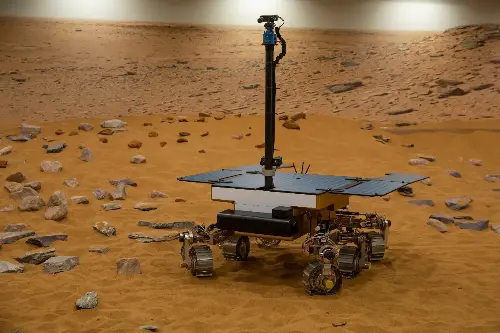
The fascination with the Red Planet has resulted in relentless pursuit. NASA's Perseverance rover and China’s Tianwen-1 are both part of a wave of missions aiming to uncover Mars' past climate and potential for past life, while also preparing for eventual human exploration. The European Space Agency's ExoMars programme further exemplifies international collaboration in the quest to understand our neighbour in the solar system.
Human missions to Mars are on the horizon, with ambitious plans by NASA and SpaceX suggesting that boots could be on Martian soil within the next decade. These missions are poised not just to expand human presence in space but to test our capacities for long-term survival beyond Earth, paving the way for exploration of more distant worlds and potentially establishing interplanetary habitats.
Standing on the Shoulders of Giants: The International Space Station and its Legacy
The International Space Station (ISS) represents one of the greatest testaments to international cooperation. Orbiting Earth since 1998, it has been home to astronauts from 19 countries, hosting scientific research that benefits humanity in diverse fields like medicine, environmental science, and materials engineering. Research aboard the ISS has led to advances in treatments for diseases, improved understanding of climate change, and the development of new technologies.
AI and Robotics: Automation’s Role in Space Exploration
Artificial intelligence (AI) and robotics are playing ever-increasing roles in our galactic ventures. AI-driven analysis of satellite data helps us combat climate change back on Earth, while autonomous rovers traverse extraterrestrial terrains, allowing us to explore areas previously considered unreachable. Robots built by humans are laying the groundwork for future colonies, performing tasks too dangerous or mundane for astronauts.
Moreover, as missions become more complex and travel further from Earth, AI will become crucial in managing spacecraft systems, analysing scientific data, and making real-time decisions — responsibilities vital to the success of long-duration space travel.
Unlocking the Mysteries of the Universe
Human space exploration serves a deeply rooted curiosity about the universe. Projects like the James Webb Space Telescope, set to launch in 2021, will probe the cosmos in unprecedented detail, looking back over 13 billion years to understand the formation of stars, galaxies, and even the possible signatures of life on planets orbiting distant stars.
The vastness of space holds endless secrets, from the enigmatic dark matter and dark energy shaping the universe to the potential for life on worlds not yet explored. Our venture into space is more than a collection of technical achievements; it is a comprehensive search for knowledge that might redefine our place in the cosmos.
Conceptualising the Economic and Technological Benefits
Venturing beyond our planet also drives innovation that enriches our daily lives. The technology developed for space missions leads to spin-offs that contribute to the economy and societal advancement. From satellite communication that powers our global connectivity to medical technologies derived from space research, the ripple effects of space technology pervade our society.
Moreover, the space industry continues to create jobs, stimulate education in science, technology, engineering, and mathematics (STEM) fields, and challenge us to think creatively about solving complex problems.
Looking to an Interconnected Future
As we look to the stars, humanity's greatest adventure is unfolding not as a competition, but as a collective endeavour that resonates with a shared human spirit. The vision for the future of space exploration is global in scope, promising a tapestry of partnerships blending science, technology, economy, and diplomacy.
So as we reach for the heavens, venturing further into space than ever before, we do so with the knowledge that this journey is more than the sum of its parts. It’s a mosaic of dreams, efforts, and aspirations — a testament to what humanity can achieve when we transcend boundaries and explore as one.