



Family meals have long been hailed as a cornerstone of strong bonds and healthy development. Yet, in a digital age where smartphones buzz beside dinner plates and streaming services serenade us from the living room, genuine conversation is in danger of extinction.
How can families rediscover the magic of real connection? It doesn’t take a radical overhaul—just a little intention, creativity, and a commitment to leaving those devices out of arm’s reach.
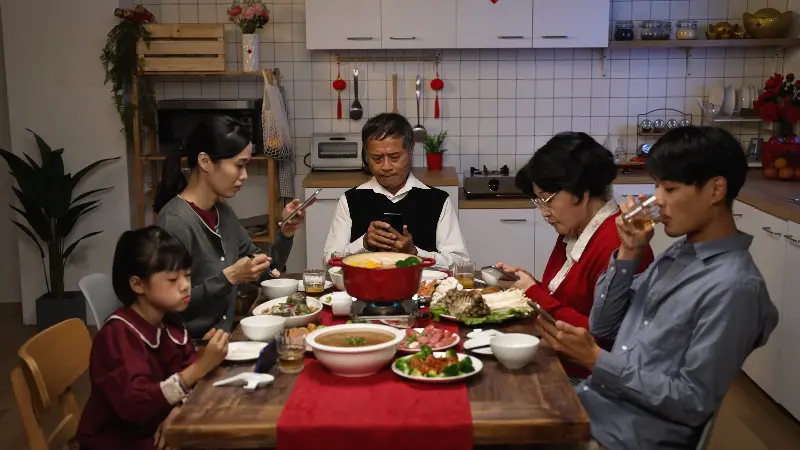
The Quiet Crisis: How Devices Disrupt Family Dinners
Modern technology has woven itself into the fabric of daily life, often without us realizing the scale of its impact. Recent data from 2026 reveals that the average person now checks their phone nearly 186 times per day—roughly once every five minutes while awake.
During mealtimes, the statistics are just as startling:
- Prevalence: Over 56% of people admit to using their phone while eating dinner.
- The "Presence of Absence": Even if a phone is face-down on the table, its mere presence reduces cognitive capacity and lowers the quality of social interaction.
- Distraction: Research shows that people who use devices during meals enjoy the experience significantly less than those who do not.
The subtle message sent when a phone sits on the table is clear: something or someone outside this room is more important than the people in it.
The Hidden Benefits Of Device-Free Meals
Why does face-to-face dialogue matter so much? Sociologists and psychologists agree that frequent, intentional family conversations help children develop a richer vocabulary, better emotional regulation, and higher self-esteem. Beyond emotional growth, there are tangible health and social perks:
- Academic Success: Children who engage in regular family talk are shown to perform better in school.
- Nutritional Health: Device-free meals lead to healthier food choices and a higher consumption of fruits and vegetables.
- Mindful Eating: Without screens, family members eat more slowly, which supports better digestion and a lower risk of metabolic issues.
- Resilience: Shared meals act as a "protective factor", making adolescents less likely to engage in risky behaviors or experience high levels of stress.
Setting The Table For Conversation
Transitioning to device-free meals may face resistance, especially from teens. The first step is making the "why" clear. Frame this as a chance to connect rather than a punishment.
Consider these practical strategies to reclaim your space:
- The Device Basket: Place a decorative box or basket near the door labeled "Devices Rest Here".
- The "Phone Stack": If eating out, have everyone pile their phones in the center of the table. The first person to touch their phone does the dishes (or pays the tip!).
- Mood Setting: Light a candle or play soft background music. These visual and auditory cues signal a shift from the daily chaos to a special time of family unity.

Conversation Starters That Spark Real Talk
If your family has fallen into the habit of silent eating, the transition back to talking can feel awkward. Move past the standard "How was school?" and try these open-ended prompts:
- "What was the most surprising thing that happened to you today?"
- "If you could have any superpower for just 24 hours, what would it be?"
- "What is one thing you’re looking forward to doing this weekend?"
- "If we could travel anywhere as a family this year, where would you pick?"
For younger children, use a "talking object" like a wooden spoon. Only the person holding the spoon can speak, ensuring everyone feels heard. For older kids, allow space for all opinions—even if they challenge yours—to keep the dialogue genuine.
When Technology Helps, Not Hinders
Interestingly, not all tech needs to be banished. What matters is intentionality. Some families dedicate a single "Tech Night" where they use a tablet to research a new recipe together or play a quick rounds of family trivia before the food is served. The goal is to use technology as a bridge for connection, not a wall for isolation.
Making New Traditions
Rediscovering conversation requires steady effort. Start small—even if you only commit to one device-free meal per week. Over time, these moments create traditions that outlast digital fads. Children remember these conversations long after they’ve grown, finding comfort in the knowledge that they once had your undivided attention.
In an age of endless screens, face-to-face conversation is a quiet act of rebellion. All it takes is the push of a "power off" button and a willingness to savor the company right in front of you.