


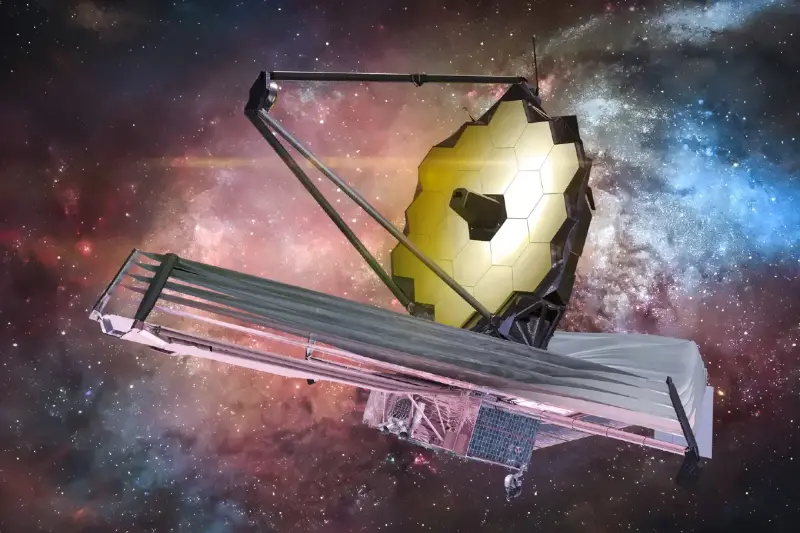
The universe has always been a canvas of infinite mysteries, stretching our imagination and curiosity about what lies beyond. For generations, astronomers have peered into the dark, starry sky through increasingly powerful telescopes. Yet, it was the launch and revelatory observations of the James Webb Space Telescope (JWST) that truly redefined how we see the cosmos, especially the most distant and ancient galaxies. Its journey is not just that of a machine, but a storybook of wonder, discovery, and human perseverance.
Peering Through Cosmic Time: A New Lens
The James Webb Space Telescope set a new standard for what we could see and learn about our universe. So, how did it achieve this unprecedented feat? Unlike its predecessor, Hubble, which mainly observed visible and ultraviolet light, JWST’s advanced instruments focus on infrared wavelengths. This ability to see the invisible allows Webb to slice through interstellar dust and peer into the farthest reaches of space—regions that have remained hidden for eons.
Thanks to its gigantic golden mirror (a staggering 6.5 metres across), JWST collects much more light than Hubble ever could. The result? We can now observe light that has travelled for over 13 billion years—almost as old as the universe itself. Imagine glimpsing cosmic landscapes formed just a few hundred million years after the Big Bang!
Surprising Galaxies: Beyond Our Wildest Theories
One of the most jaw-dropping revelations came almost immediately: JWST found galaxies that seemed too mature, bright and massive for their age in cosmic history. Previously, scientists expected early galaxies to be small and chaotic, but JWST’s sharp vision told a different story.
Some key findings that have rocked the astronomy world include:
- Galaxies with well-formed spiral structures less than a billion years after the Big Bang—much earlier than predicted.
- Signs of star formation at rates five times greater than scientists thought possible for that era.
- Chemical signatures indicating that heavier elements (like carbon and oxygen) formed sooner than previous data suggested.
Researchers had to reconsider long-held theories about how galaxies grow and evolve.
The Colourful Story of Cosmic Evolution
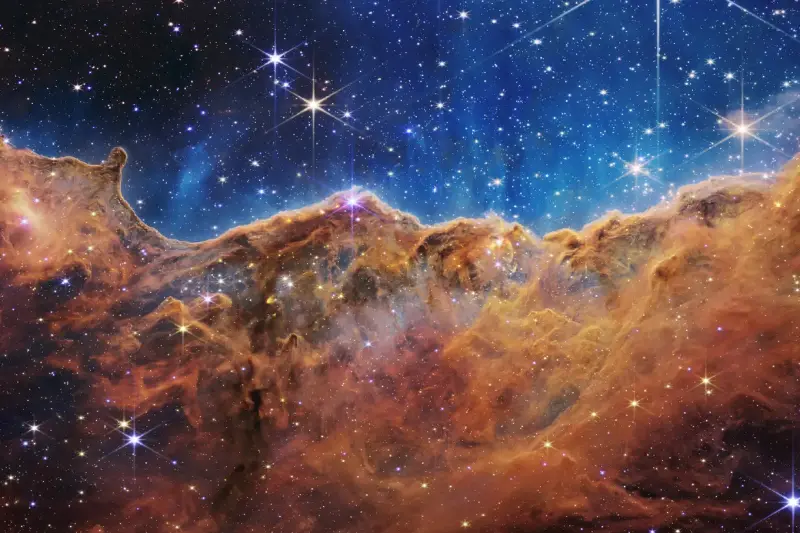
JWST’s infrared eyes also revealed cosmic nurseries—birthplaces of stars and planets—with astonishing clarity. Take the iconic Carina Nebula, for instance. Webb exposed jets of glowing gas, dense knots of dust, and embryonic stars in their first moments of life. These images were not just beautiful; they offered rare visual proof of how the ingredients of life spread through the cosmos.
In addition, the telescope’s deep-field snapshots introduced us to dozens of never-before-seen galaxies packed into minuscule patches of sky. Each pixel, a treasure trove of history, challenged astronomers to decode the processes that drive galactic assembly.
Changing the Course of Astronomy
The ripple effect of Webb’s findings cannot be overstated. Consider the following:
- Data from JWST has prompted revisions to cosmic timelines, changing our estimates of when the first stars and galaxies formed.
- The telescope's detailed spectroscopy unveiled the atmospheres of exoplanets with hints of surprising molecules, from water to carbon dioxide.
- Its rich archives now fuel a global race among researchers, as teams scramble to explain the jaw-dropping results.
Now, academic textbooks and even science museum exhibits across the world are being updated. Our very definition of what it means to be “early” or “mature” in cosmic terms is shifting before our eyes.
The universe, once an endless sea of questions, feels a little bit closer—yet, perhaps even more mysterious than before. As the James Webb Space Telescope continues to send back its golden glimpses of ancient starlight, one can’t help but wonder: What unimagined marvels are still waiting, quietly, in the depths of the universe for us to discover?