


One Galaxy, 800,000 Discoveries: What Scientists Found in the Deepest Cosmic Map Yet
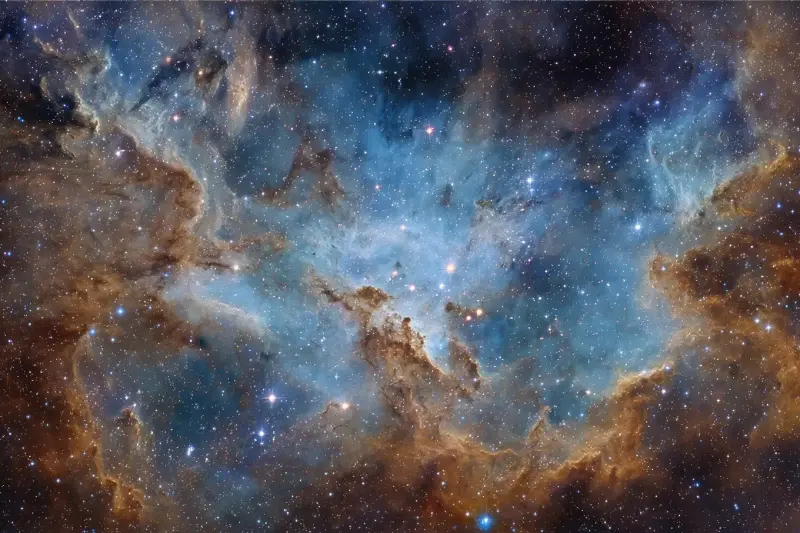
A cosmic cartographic breakthrough has just propelled humanity’s understanding of the universe to dazzling new heights. Scientists have completed the deepest cosmic map ever, carefully charting the sprawling arms of one galaxy to catalogue an astonishing 800,000 new astronomical discoveries. Behind these numbers lie mysteries unraveled, questions unleashed, and stories written in stardust—inviting you to journey far beyond our home planet.
A Galactic Cartography Unlike Any Before
It took hundreds of astronomers, the world’s most powerful telescopes, and years of meticulous observation to piece together this newly revealed map. The survey focused on a sprawling galaxy known as IC 342—sometimes called the “Hidden Galaxy” for its location partly obscured by our own Milky Way’s dust and gas. Yet, it’s one of the most massive and closest spiral galaxies to us, making it a prime target for this ambitious project.
Using cutting-edge instruments such as the Subaru Telescope in Hawaii and the European Space Agency’s Gaia satellite, researchers were able to capture intricate details stretching across more than 13 million light-years. Imagine—tracing starlight emitted before Earth even formed, now illuminating secrets written in celestial code.
800,000 New Finds—What Did Scientists Actually Discover?
So what hides within those 800,000 discoveries? Scientists found a spectacular cosmic menagerie, including:
- Tens of thousands of newborn stars, blazing bright against nebulae
- Dark, cool interstellar clouds—the cradles where new solar systems are born
- Exotic star clusters, each containing hundreds or thousands of suns
- Unusual supernova remnants, offering clues to the life and death of stars
- Dozens of potential rogue black holes drifting silently through the galaxy
In one delightful surprise, a peculiar grouping of stars was identified that scientists believe may have originated from a galaxy IC 342 “swallowed” in its distant past—a tantalising hint of ancient galactic cannibalism.
Peering Deeper: Techniques That Changed the Game
How was it possible to see so much so clearly? The cosmic map owes its clarity to a mix of smart methods:
- Multispectral Imaging: By scanning in visible, infrared, and radio wavelengths, astronomers defeated dust clouds that normally blur or hide cosmic details.
- Artificial Intelligence: Sophisticated machine learning algorithms sifted through petabytes of data, flagging features invisible to the human eye.
- Crowdsourced Classification: Thousands of “citizen scientists”—amateur enthusiasts worldwide—helped tag and classify patterns, accelerating discovery.
This combination of human curiosity and machine precision created a revelation: the universe is both stranger and more interconnected than we ever imagined.
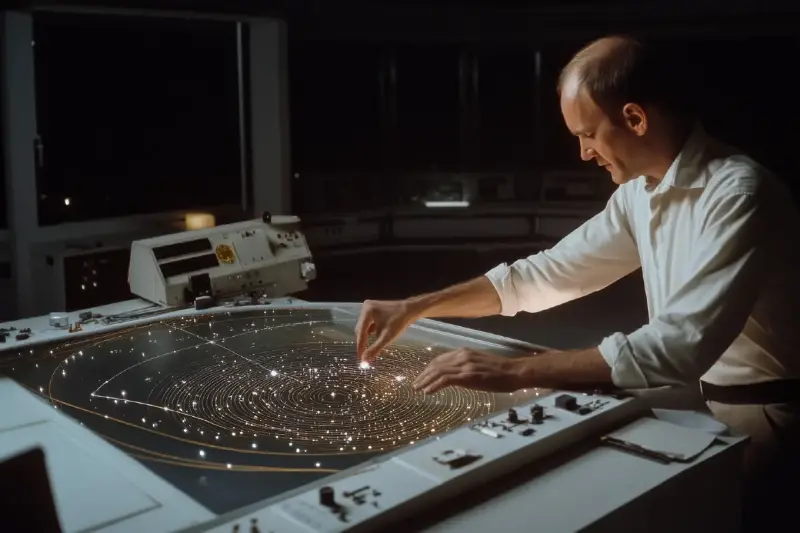
Why It Matters: The Cosmic Map’s Ripple Effects
Mapping IC 342 isn’t just an epic feat of science—it’s also a key to understanding our cosmic origins and perhaps even our future. This unprecedented trove of stellar data has the potential to:
- Reveal how galaxies evolve, merge, and grow across epochs
- Illuminate where and how stars—and planets like ours—are born
- Advance the hunt for life elsewhere, by identifying planetary nurseries
- Provide context for the Milky Way, deepening our sense of “cosmic neighbourhood”
By pulling back the veil on IC 342, astronomers are giving us a glimpse into the broader tapestry of the universe—a tapestry that, ultimately, we are all a part of.
As scientists continue decoding the vast legacy of discoveries within this new map, one can’t help but wonder what future stories might emerge. What secrets still wait, tucked between the swirling arms of distant galaxies, for the next great observer to unravel? The universe is vast, and with each new map, we come a little closer to understanding our place among the stars.