


Chennai, July 8 -- Highlights:
* Gut microbes can absorb PFAS from food and packaging
* PFAS disrupt bacterial metabolism, affecting gut balance
* This is the first evidence of industrial toxin buildup in the //human microbiome
There are trillions of bacteria living inside our gut-tiny but powerful organisms that silently influence our everyday choices. They don't just help digest our food; they shape our cravings. What we eat often reflects what these microbes are hungry for. In many ways, we eat to feed them ( ref1 ).
But in today's world, even the foods labeled "100% natural" are no longer truly clean. From farm to fork, plastics have seeped into everything -into the soil we grow from, the water we drink, the air we breathe, and even into our cooked meals.
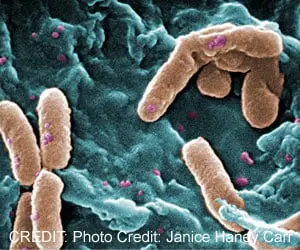
However, new research conducted at Cornell University has now shown us that our gastrointestinal bacteria might not only be eating the food we eat, they may also be eating the plastics . Taking up PFAS, the toxic forever chemicals in plastics and packaging, potentially serving as an initial barrier that may prevent these chemicals from ending up in our bloodstream.
What Are PFAS and Why Should You Care? PFAS (per- and polyfluoroalkyl substances) represent a category of human-made chemicals that are produced to make items heat-resistant, waterproof, greaseproof, and stainproof. They sound harmless until they are everywhere and finally inside your body, as well. That is why they are referred to as "forever chemicals." They have been associated with cancer, hormonal problems, liver impairment, and a poor immune system.
Your Gut Bacteria: The Unexpected Victims
PFAS accumulation doesn't just end with storage inside gut microbes; it actively disrupts their internal biology . The researchers found that the exposure to these so-called forever chemicals led to changes to genetic expression in the key metabolic pathways, such as those involved with the transport of nutrients across the cell membrane, the synthesis of energy (such as ATP), and amino acid biosynthesis , which are all critical to the growth and functionality of the microbes. This means that PFAS can impair how bacteria absorb nutrients, generate energy, and perform their usual supportive roles in the human gut.
Interestingly, this disruption was not consistent in all bacterial species. Whereas certain microbes Clostridium innocuum, Lachnoclostridium symbiosum, and Collinsella aerofaciens bioaccumulated PFAS to a considerable extent and exhibited pronounced metabolic responses to them, others were less affected or resisted accumulation altogether. These strain-specific differences suggest that a person's unique microbiome composition may influence how their body handles PFAS exposure , potentially offering some individuals more microbial protection or vulnerability than others.
It's Bigger Than Just Gut Health
So when PFAS start building up inside them, it's not just the bacteria that are affected; it could throw off the balance of our entire gut , leading to subtle but serious issues like inflammation, weakened immunity, or poor nutrient absorption. In short, when our microbes are struggling, so are we .
What Can You Do?
* Keep PFAS levels down by avoiding non-stick cookware, stain-resistant sprays, and fast-food packaging that is greasy.
* Install a water filter that is approved to filter out PFAS.
* Feed your gut with a variety of fiber-rich foods that nourish protective bacteria.
* Industries and governments should demand change to control and clean up PFAS.
Your gut bacteria aren't just there to digest your lunch; they're on the front lines of your health. But now, they're being infiltrated by chemicals they can't fight off. The science is clear: what we do to the environment is coming back to live inside us literally.
This new research is a wake-up call. Not just to protect your gut, but to protect the world it lives in. "Say No to Forever Chemicals!" Reference:
* Human gut bacteria bioaccumulate per- and polyfluoroalkyl substances- (https://pubmed.ncbi.nlm.nih.gov/40595288/)
Source-Medindia