



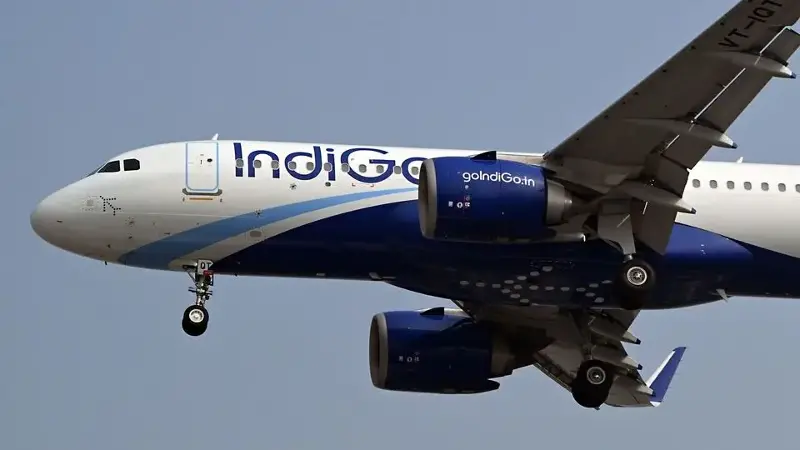
IndiGo’s operations were thrown into disarray on Wednesday as a growing pilot shortage and a surge in crew leave requests delayed flights by hours and crippled schedules across major hubs, including Bengaluru and Mumbai.
The disruption comes just weeks after stricter flight-duty and rest norms took full effect on 1 November.
“A multitude of unforeseen operational challenges including minor technology glitches, schedule changes linked to the winter season, adverse weather conditions, increased congestion in the aviation system and implementation of updated crew rostering rules (Flight Duty Time Limitations) had a negative compounding impact on our operations in a way that was not feasible to be anticipated,” IndiGo said in a statement on Wednesday evening.
India’s largest airline did not share the number of flight cancellations or delays, or the numbers of pilots that went on leave, but said in the statement that its network was affected “for the past two days”, adding that calibrated adjustments were being made and normalisation was expected in the next 48 hours.
In a separate statement, the aviation regulator, directorate general of civil aviation (DGCA) said it is currently investigating the situation and evaluating measures along with the airline to reduce cancellations and delays, in order to minimise inconvenience being caused to passengers.
“Indigo has been asked to report to DGCA, Headquarters, to present the facts leading to the current situation along with plans to mitigate the ongoing delays & cancellation,” the regulator's statement said.
As of fiscal year 2025 (FY25), IndiGo has 5,456 pilots, the biggest pool in India, data from the company’s annual report showed.
New flight duty time limitations (FDTL) norms from the regulator are designed to prevent pilot fatigue by regulating flight and duty hours in the interest of flight safety.
Recent revisions include weekly rest periods extended to 48 hours from 36 hours, a redefined night-duty period—from 0000-0500 hours to 0000-0600 hours—and stricter limits on cumulative flying hours and night landings.
Further, a maximum of two landings are permitted now during night operations. Fatigue reporting by operators (airlines) has to be done on a quarterly basis, which effectively means IndiGo would need more pilots.
The new rules for pilots impacted IndiGo the most because of its outsized reach. Of the nearly 1,000 domestic routes, IndiGo operates across about 600, according to analysts at Anand Rathi. Nearest rival Air India group—comprising two airlines—operates across 300+ routes, including both domestic and international.
The brokerage wrote in a note dated 27 October that an estimated 87% of the country’s population is within 100 km of an IndiGo-served airport, leading to two-thirds of IndiGo’s capacity connecting to non-metro cities.
IndiGo is yet to respond to specific queries from Mint. Executives at Air India said its airlines had no cancellations due to crew rostering. The airline is yet to respond to formal queries from Mint. Other airlines like Akasa and SpiceJet have not seen any significant cancellations either.
Data from the DGCA showed IndiGo had 1,232 flight cancellations in the month of November, with 755 of those caused by crew and FDTL norms.
Cost Impact
In a post results earnings call on 4 November, IndiGo’s chief financial officer, Gaurav Negi, said that the new crew rostering norms would increase costs for the airline, and indicated that it would impact the bottom line. The idea was it would lead to higher pilot hiring costs.
Negi said that the company “anticipate(s) there will be a slight uptick in the cost given the new Phase 2 that has been kind of implemented. …there will be some incremental cost”.
According to Mark D. Martin, chief executive at Martin Consulting and an aviation safety expert, Phase 1 was implemented starting 1 July, and Phase 2 from 1 November.
Martin said while there would be some short-term cost implications for IndiGo under the new norms, the implementation dates were pre-announced. The entire idea was to reduce passenger inconvenience and ensure time for airlines to adopt the changes.
“There was enough time to assess the situation and make arrangements—the flight network need not have been disrupted,” Martin said. “It is poor planning. While there would be a cost angle to these additional hirings, the fact is IndiGo had time to adjust its crew roster, make new hires.”
Captain Shakti Lumba, an aviation expert and a former employee at IndiGo, agreed that the airline should have taken steps to increase pilot numbers.
“Why did IndiGo not hire more pilots if the new crew rostering rules were to impact them?” he said. “Air India has a scaled down fleet and Akasa has additional pilots to flights. Going by IndiGo’s size there should have been a back up ready."