


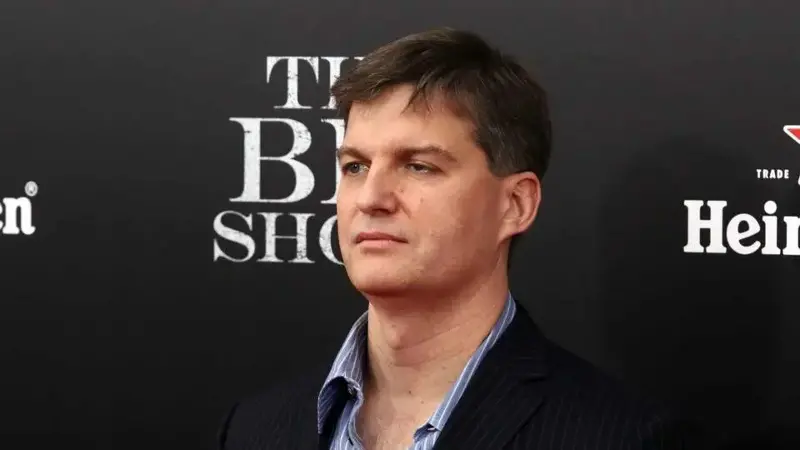
Michael Burry, the hedge fund manager famed for predicting and cashing in on the 2008 financial crisis, clarified that he is not retired, but focused on his paid newsletter after shutting Scion Asset Management in early November.
Burry's incredible navigation of the Wall Street collapse in 2008 was detailed in Michael Lewis' book called ‘The Big Short: Inside the Doomsday Machine’, which was also made into 2015's ‘The Big Short’ movie starring Hollywood stars Ryan Gosling, Steve Carell and Christian Bale.
According to a Reuters report, the legendary investor has shifted full attention to his paid newsletter on Substack, called ‘Cassandra Unchained’, after repeatedly expressing scepticism about the artificial intelligence boom led tech stock valuations.
Burry did not respond to Reuters queries, it said.
Michael Burry's Cassandra Unchained: What is it?
Cassandra Unchained is Michael Burry's paid newsletter on Substack. It is focused on economic trends, markets and stocks. Notably, the investor's words and bets are keenly watched and discussed by traders for signs of possible future market bubbles.
Burry gained notoriety as the hedge fund portfolio manager who bet against the US housing market in 2008, using a financial instrument known as the credit default swaps (CDS). In his prediction, he identified irregularities that would ultimately trigger the 2008 financial crisis. The broader market's subsequent collapse due to the subprime mortgage crisis shot the investor to worldwide fame — he made $100 million from his bets in 2008 as his portfolio held the insurance against those bonds.
Addressing his move away from investing on the Substack, Burry wrote: “I am not retired”, adding that the blog now his “full attention”.
The report said that as of 24 November, the blog has over 21,000 subscribers who pay $39 per month for access to Burry's insight. The schedule hints at one or more posts each week, it added.
There are two posts already on the blog — “Foundations: My 1999 (and part of 2000)” and “The Cardinal Sign of a Bubble: Supply-Side Gluttony”. The latter is where Burry discussed his distrust in the AI boom and why he views it as a bubble.
Why did Michael Burry shut Scion Asset Management?
Data on the US Securities and Exchange Commission (SEC) website, showed that Scion Asset Management terminated its registration status on November 10, 2025. The company was founded in 2013.
More recently in 2025, Burry raised alarms about performance inflation by AI and tech companies. Last week he also called bearish stances on Wall Street favourites Nvidia and Palantir, cautioning that AI has pushed this year's markets rally.
And in a social media post on 10 November, he highlighted how extending the useful life of assets in an artificial way can boost the company's earnings. He called this move ‘one of the more common frauds of the modern era.’
Burry, in his take on big tech companies buying semiconductor chips or servers from Nvidia, said that these equipment with a two to three-year product cycle, should not result in the extension of useful lives of computing equipment.
“Yet this is exactly what all the hyperscalers have done. By my estimates they will understate depreciation by $176 billion 2026-2028. By 2028, Oracle will overstate earnings 26.9%, Meta by 20.8%, etc. But it gets worse. More detail coming November 25th. Stay tuned,” Burry stated on X.
(With inputs from Reuters)