



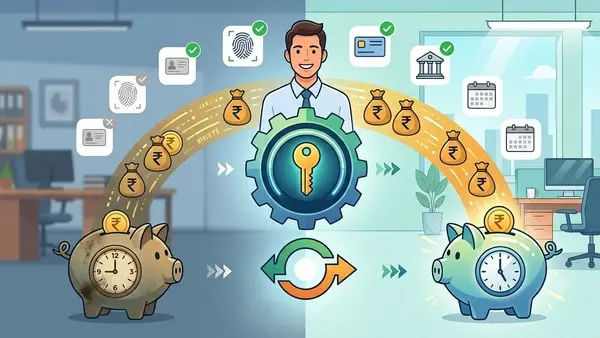
However, the transfer is not unconditional. EPFO's member FAQs make it clear that the auto-transfer facility works only when prescribed eligibility criteria are fulfilled. Any mismatch in KYC details, Aadhaar linkage or employment records can delay the process.
Who is eligible for automatic EPF transfer?
According to EPFO, members with a fully KYC-compliant UAN seeded with Aadhaar generally do not need to file a transfer claim after switching jobs. The automatic transfer is triggered after the first month's contribution from the new employer is credited.
The facility is available only if:
- The UAN is linked with Aadhaar.
- KYC details, including Aadhaar, PAN and bank account, are complete and verified.
- Both PF accounts are linked to the same UAN.
- The establishments are covered under EPFO and satisfy the prescribed conditions.
Employees working in exempted PF trusts may continue to follow a different transfer process depending on the nature of the transfer. EPFO's FAQs state that transfers between two exempted establishments are carried out offline.
What can delay the transfer after a job switch?
Even where the transfer is meant to happen automatically, employees should ensure that their records are complete before changing jobs.
EPFO advises members to verify that:
- Their UAN has been activated.
- Aadhaar, PAN and bank account are seeded with the UAN.
- The mobile number linked to the UAN is active for OTP authentication.
- Employer-approved e-KYC is available.
- The previous employer has updated the date of exit.
- Personal details in the Member Profile are correct and verified.
Employees can review their employment records through the Unified Member Portal by logging in with their UAN and checking the Service History section. Verifying these details soon after joining a new employer can help identify discrepancies before they delay the transfer.