



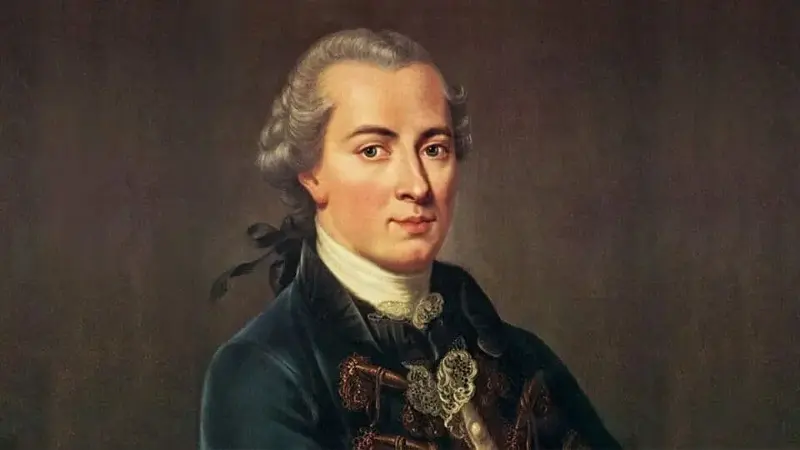
“Have courage to use your own understanding” — Immanuel Kant
The quote expresses the idea of independent thinking, trusting your reasoning, questioning assumptions, and developing wisdom through personal judgment rather than blind dependence.
This idea was expressed by Immanuel Kant in his 1784 essay ‘What Is Enlightenment?’. The original German phrase is “Sapere Aude,” meaning “Dare to know” or “Have courage to use your own understanding.” Kant used this phrase as the motto of the Enlightenment movement, encouraging people to think for themselves rather than relying entirely on authorities.
Meaning of the quote
Kant's words emphasise intellectual independence and personal responsibility. He believed that many people remain mentally dependent on others because it is easier to let authorities, traditions, or social norms make decisions for them. He argued that true enlightenment occurs when individuals have the courage to think critically and use their own reason. The quote is not a rejection of learning from others; rather, it encourages people to evaluate information carefully and form their own conclusions. It promotes confidence, curiosity, and rational thinking in everyday life.
Why this quote resonates
The quote remains highly relevant in today's world, where people are constantly exposed to opinions through social media, news, and public figures. It reminds us not to accept everything at face value. Instead, we should question, analyse, and verify information before believing it. Students, professionals, and leaders benefit from independent thinking because it helps them make informed decisions and develop original ideas. The quote inspires self-confidence and encourages people to become active thinkers rather than passive followers.
How you can implement this
Asking questions instead of accepting information blindly.
Verifying facts from reliable sources.
Thinking critically before making decisions.
Being open to different viewpoints while forming your own opinion.
Taking responsibility for your choices and actions.
Developing confidence in your ability to reason and learn.
Reading widely to expand your understanding of the world.
When you practise independent thinking, you become more capable of solving problems, making sound judgments, and contributing meaningfully to society.
Who was Immanuel Kant?
Immanuel Kant was a German philosopher and one of the most influential thinkers of the Enlightenment era. He was born on 22 April 1724 in Königsberg, Prussia (now Kaliningrad, Russia), to Johann Georg Kant and Anna Regina Reuter Kant. He studied at the University of Königsberg, where he later became a professor. Kant never married and had no children, dedicating his life to scholarship, teaching, and philosophical inquiry.
He revolutionised philosophy by exploring how human beings acquire knowledge, understand reality, and make moral decisions. His ideas emphasised the importance of reason, individual freedom, and intellectual independence. He is best known for his groundbreaking work, Critique of Pure Reason (1781), which transformed modern philosophy. Other notable works include Critique of Practical Reason and What Is Enlightenment? His famous motto, “Sapere Aude” (Dare to Know), encouraged people to think independently. Kant's contributions continue to influence ethics, politics, law, education, and philosophy worldwide.