



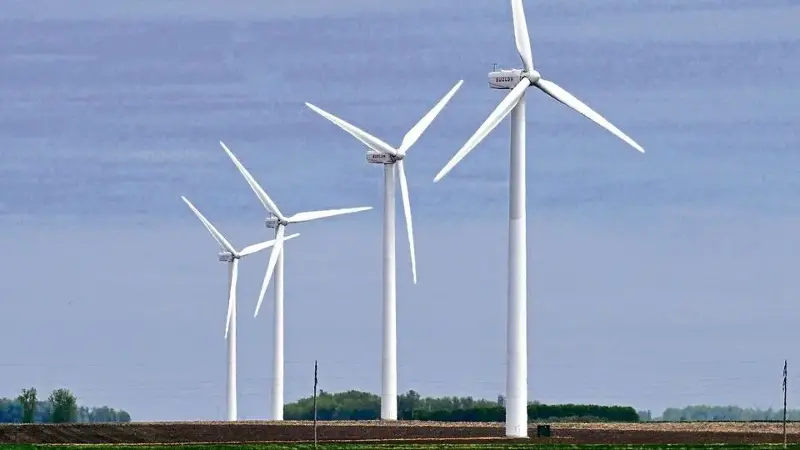
New Delhi: India’s push to localize wind turbine components may hinge on a crucial fix: making the specialty steel that goes into gearboxes for turbines cheaper to source. The ministry of new and renewable energy has recommended lowering the 15% basic customs duty on this high-grade steel in the upcoming Union Budget, two people aware of the proposal said.
Currently, the import duty on special grade steel used in gearbox manufacturing is 15% while that on gearboxes is 7.5%, making imported gearboxes more attractive for buyers than the ones locally produced.
The proposal aims to correct the inverted duty structure that discourages domestic manufacturing, even as India imports nearly 100% of its specialty steel requirements and has mandated greater localization of wind turbine components to cut reliance on overseas suppliers.
Although gearboxes for turbines are manufactured in India, turbine makers find it less expensive to import them rather than develop or buy domestic ones made from imported specialty steel. About 60% of the gearboxes in the wind power sector are imported currently.
Specialty, or special grade, steel is a high-value, performance-driven category with enhanced properties achieved through precise alloying and processing for critical applications such as aerospace, defence, automotive and power generation. India's major gearbox makers include Flender Drives Pvt. Ltd (Winergy), ZF Wind Power Coimbatore Pvt. Ltd; an arm of ZF (ZF Friedrichshafen AG), German technology and manufacturing major and NGC Transmission, Chennai and Shanti Gear.
A Niti Aayog report on component manufacturing for wind power space, released in March last year, had highlighted constraints in local manufacturing of these components and showed gearbox comprises 12% of the overall cost of the wind turbine generators. As of March 2024, India had a total gearbox manufacturing capacity of 8GW, the report said.
"There have been demands for removing customs duties on raw materials (including specialty steel) to boost domestic manufacturing of components such as gearboxes. India already manufactures gearboxes, however a few players continue to import amid competitive import pricing. Lower prices of components may support the growth of the renewable energy capacity addition in the country," said one of the people mentioned above. "A recommendation has been made to the finance ministry for rate rationalization of specialty steel," the person added.
Cut import dependence
The government has mandated enhanced localization of wind turbines in a bid to reduce import dependence. India imports gearboxes and other wind turbine components from China. The ministry of new and renewable energy has proposed mandatory use of locally-produced components for wind turbines, including gearboxes used in government-backed and utility scale projects, with prototype testing of locally-made components in 2027.
M.P. Ramesh, former director general of National Institute of Wind Energy, said although Indian companies manufacture gearboxes, they are largely of around 3MW capacity and are yet to become major suppliers of 5-10MW gearboxes.
Aditya Pyasi, the chief executive officer (CEO) of Indian Wind Turbine Manufacturers Association (IWTMA) said the higher cost of specialty steel makes gearbox imports more viable for turbine makers.
“India manufactures gearboxes and also exports them, but there are turbines for which gearboxes are imported/assembled, given the high cost of local manufacturing owing to raw material costs. As specialty steel, a key component of gearbox is totally imported and not manufactured in the country, a reduction in duty would be helpful," Pyasi said. "There is also a need for duty rationalization of other raw materials, including resin input materials, to boost local component manufacturing."
Narayan Kumar, the CEO of Kshema Power & Infrastructure Co. Pvt. Ltd was of the view that a cut in customs duty on specialty steel may lead to a cost reduction of 5-7% of the overall cost of the tower of the windmill.
"It would bring about stability and confidence among the players that prices would come down. Prices of commodity (minerals such as iron ore) based materials like specialty steel have been volatile globally, this will provide some succour to the end customers," he said, adding that although gearboxes don't comprise a major portion of the cost, they make the core of the drive train with the generator, hence are critical. The drive train helps converting rotational energy of the wind turbine into electrical energy.
Industry players said lower prices of Indian gearboxes may also help in better capitalization of the country's products in the export market. India exports around 50% of its wind turbine gearbox manufacturing.
India is a major manufacturer of wind turbines, with the presence of several global and Indian companies such as Suzlon Energy, Siemens Gamesa Renewable Power Pvt. Ltd, and GE India Industrial Pvt. Ltd, with the annual production capacity of the over 17GW wind turbines. These companies export wind turbines and blades to Australia, Brazil, Europe, the US and other countries.
Now, the government is looking to ensure an indigenous component supply chain, including gearbox, generators and power converters.
The recommendation for a duty cut on specialty steel coincides with the slow progress in the production-linked incentive (PLI) scheme to develop the specialty steel sector in India. Last month, the steel ministry announced the PLI 1.2 scheme for specialty steel, including super alloys, alloy forgings, stainless steel (long and flat) and titanium alloys. Incentive rates range from 4% to 15%, applicable for five years starting FY26, with disbursal beginning in FY27.
Mint had earlier reported that India is preparing to ease rules for the import of certain types of specialty steel and the government plans to temporarily suspend quality-control rules for about 55 steel products for a one-to-three-year period.
Ramesh of the NIWE also cautioned against unrestricted imports of specialty steel upon lowering of the customs duty. "In case the government lowers customs duty on specialty steel, it should also put a cap on imports based on the requirement by the industry, and it must track the end use of the imported product. Government should take an estimated quantum for gearbox production by companies and allow specialty steel import at lower duties based on that requirement. This will be a win-win situation for all (gearbox makers and steel manufacturers)," he said.
According to IWTMA, India requires 80,000 tonnes of special grade steel annually in the wind turbine space. Queries mailed to the new and renewable energy and finance ministries remained unanswered till press time.