



The US and India will hold a fresh round of trade negotiations on Tuesday, as Washington moves to integrate New Delhi into Pax Silica, an alliance to counter China in chips, critical minerals, and AI infrastructure.
The two countries are actively engaged on the much-anticipated trade deal, new US ambassador to India Sergio Gor said on Monday. “Both sides continue to actively engage. In fact, the next call on trade will occur tomorrow. Remember, it is the world's largest nation; so it's not a easy task to get this across the finish line, but we are determined to get there,” Gor said in his first address after taking charge in New Delhi.
The US was India’s largest trading partner for the fourth straight year in 2024-25, with bilateral trade valued at $131.84 billion.
Tariff hit to exports
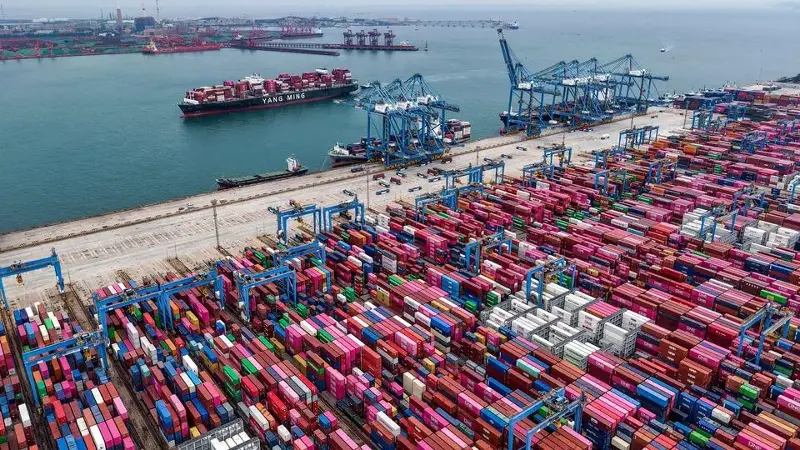
India’s exports to the US have been impacted in the current fiscal year due to the steep 50% tariff imposed by the US. Exports held up at first despite a 10% duty, rising from $8.4 billion in April to $8.8 billion in May, before easing slightly in June and July, according to commerce ministry data.
The impact became clearer in August, when exports fell to $6.8 billion as tariffs were increased in quick steps, reaching 50% by the end of the month. In September, the first full month under higher tariffs, exports dropped further to $5.5 billion, the lowest level of the year. However, exports picked up again, touching $6.3 billion in October and $6.9 billion in November, showing that exporters began to adjust to the higher duties.
India's overall goods exports rose to $38.13 billion in November 2025, the highest for the month in the past decade, extending the recovery seen after the pandemic years.
Earlier, on 9 December 2025, US Trade Representative Jamieson Greer told the US Senate that India had put forward the “best offer the US has ever received”, as his deputy, Rick Switzer, met India’s commerce secretary, Rajesh Agarwal, on 10 December to advance trade negotiations.
Gor added that both countries will also continue to work closely on other areas including security, counter-terrorism, energy technology, education and health.
"I also want to share with you today a new initiative that the United States launched just last month. Called Pax silica. Pax silica is a US-led strategic initiative to build a secure, prosperous and innovation-driven silicon supply chain. From critical minerals and energy inputs to advanced manufacturing semiconductors, AI development, and logistics," Gor said.
While noting that Japan, South Korea, the UK and Israel has joined the organization last month, he said: “Today, I'm pleased to announce that India will be invited to join this group of nations as a full member next month.”
The alliance gains significance as major economies including the US and India have been looking at diversifying the global supply chain and technologies for these critical and emerging sector currently dominated by China.
Gor vouched for the friendship between Prime Minister Narendra Modi and the US President Donald Trump: “I can attest that his friendship with Prime Minister Modi is real. The United States and India are bound not just by shared interests, but by relationship anchorage at the highest levels. Real friends can disagree, but always resolve their differences in the end.”
Noting that the Indo-US bilateral ties can be the "most consequential global partnership of this century", the ambassador said: “No partner is more essential than India.”
“In the months and years ahead, it is my goal as ambassador to pursue a very ambitious agenda. We will do this as true strategic partners, each reigning strength, respect, and leadership to the table.”
Last week, US commerce secretary Howard Lutnick claimed a pivotal trade deal stalled because Prime Minister Narendra Modi declined to personally call President Donald Trump to finalize the pact, a claim New Delhi dismissed as inaccurate. The diplomatic friction comes as Trump "greenlit" a bipartisan sanctions bill that could trigger punitive tariffs of as much as 500% on countries, including India, that continue to purchase Russian oil and uranium.