



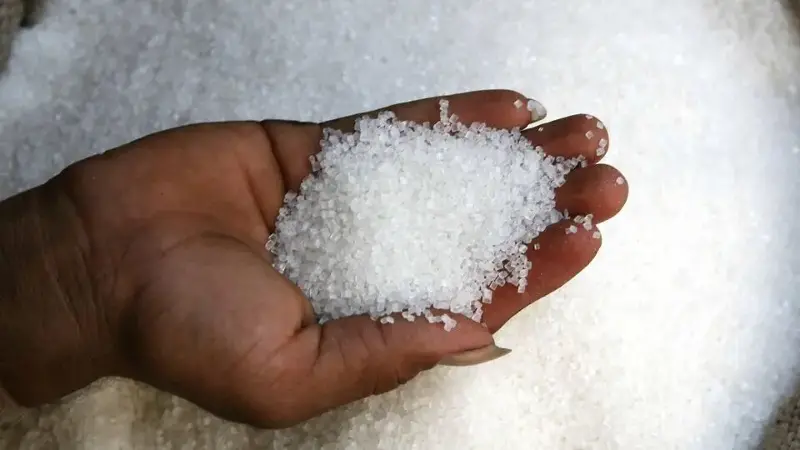
New Delhi: India has allowed limited exports of organic sugar in a calibrated move to promote premium agri-exports, while keeping tight control over domestic sugar supplies.
In a notification on 29 December, the Directorate General of Foreign Trade (DGFT) allowed export of organic sugar under HS codes 17011490 and 17019990, with immediate effect, subject to an annual ceiling of 50,000 tonnes. The move partially relaxes restrictions imposed in October 2023, when organic sugar exports were placed under the “restricted” category as part of broader supply management measures in the sugar sector.
The decision reflects the government’s attempt to differentiate between bulk sugar exports—which are closely regulated due to domestic availability and price considerations—and niche, premium segments such as organic sugar that largely cater to the overseas markets.
Organic sugar accounts for a small share of India’s overall sugar output but commands higher realizations and faces steady demand in markets such as the US, Europe and parts of Asia, driven by rising consumption of organic and clean-label food products.
“By allowing limited exports, the government is seeking to give organic sugar producers and exporters access to global markets without opening the door to unrestricted shipments, which could complicate domestic sugar management," said Binod Anand, secretary general of the Confederation of NGOs of Rural India and a member of the government’s committee on minimum support price (MSP). "The export cap also provides policymakers with the flexibility to review volumes annually based on production trends, stock positions and domestic price movements.”
The notification clarifies that exports will be governed by procedures under the Foreign Trade Policy (FTP) 2023 and modalities prescribed by the Agricultural and Processed Food Products Export Development Authority (Apeda), indicating continued oversight on certification, allocation and shipment approvals.
For exporters, the move offers a predictable, policy-backed window to service existing overseas buyers and build long-term contracts in premium markets. More broadly, it aligns with India’s wider strategy of encouraging exports of higher-value agricultural products, even as it maintains a cautious stance on bulk commodity shipments.
The order will remain in force until further review, the notification said.
The industry has welcomed government's move to open up the exports. “The government’s decision to permit the export of 50,000 tonnes of organic sugar this financial year is a welcome and forward-looking step for the Indian sugar sector," said Deepak Ballani, director general, Indian Sugar & Bio-Energy Manufacturers Association (Isma). "By moving organic sugar out of the restricted list and setting a defined export quota, policymakers have opened up a new avenue for Indian producers and millers.”
Currently, organic sugar production in India is limited, with only a small number of certified mills and exporters operating, and the policy is expected to boost expansion and investment in organic cultivation and processing, Isma said.
Experts said organic sugar export volumes before the curbs were also limited as the commodity is a niche category.
The government's move also aligns with the broader backdrop of India managing its sugar balance sheet. The government has been calibrating export quotas based on comfortable domestic stocks and evolving market dynamics, such as surplus production and diversion towards ethanol. The government has allowed 15 lakh tonnes of sugar exports in the October-September sugar season (2025-26) to balance stocks and support mill liquidity, while avoiding excessive pressure on domestic prices. So far, export deals of about 150,000-200,000 tonnes have been signed.
As per Market Research Future analysis, India's organic sugar market was estimated at $69.8 million in 2024 and $80.17 million in 2025. This is projected to grow to $320 million by 2035, at a compound annual growth rate (CAGR) of 14.8% over the decade.
Organic sugar is different from brown sugar in both production and regulation. As the name suggests, it is made from organically-grown sugarcane and processed under certified organic standards, without synthetic fertilizers or pesticides. Brown sugar, on the other hand, is usually refined white sugar with molasses added back for colour and flavour and does not require organic certification, making it a mass-market product, rather than a premium export category.
India has rapidly emerged as a global leader in organic farming, ranking second worldwide in terms of organic agricultural land, and the leader in terms of the number of producers engaged in organic cultivation as of January 2025, as per the Indian Brand Equity Foundation (IBEF), registered under the commerce ministry.
India’s organic food market was at about $1.91 billion in 2024 and is expanding at a robust CAGR of over 20%, projected to reach $10.8 billion by 2033, as per the IBEF report.
The growth of organic farming in India is being driven by a combination of policy support, technology adoption, collective farming models, rising market demand and sustainability goals. The government continues to promote organic agriculture through flagship schemes such as the Paramparagat Krishi Vikas Yojana and the Mission Organic Value Chain Development for the North Eastern Region, which provide subsidies, training and market linkages to help farmers shift to organic practices.
Certification frameworks under the National Programme for Organic Production and Participatory Guarantee Systems are strengthening traceability and enabling premium pricing.