



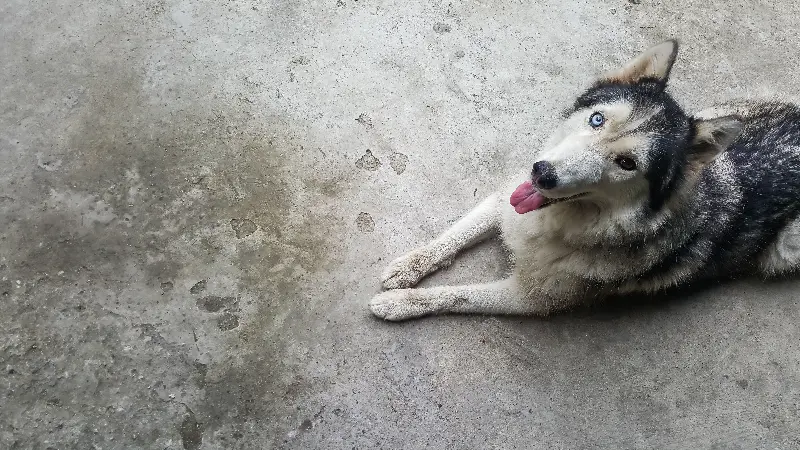
Sometimes, people are against the idea of adopting a dog that requires extra care, but one woman has shared why doing exactly that was the best decision.
In a TikTok video shared by owner Aimee (@aimee_juno), a three‑legged husky called Peggy appears first as a tiny puppy fast asleep in her bowl of food—before growing into a more confident, happy dog, despite her disability.
The text on screen explains that Aimee first saw Peggy in Romania and was warned repeatedly not to adopt her. But ignoring the doubt turned out to be “one of the best things” that ever happened to her. “We thought long and hard about rescuing her due to her missing leg but honestly from the moment I laid eyes on her, I knew she was ours,” she wrote in the caption.
Peggy’s past remains unclear. She may have been a street dog, where injuries, infections, and untreated conditions are common, or she may simply have been born with a deformity. But, whatever her story, her adopter was determined to give her a safe, stable life—and Peggy, in turn, is thriving.
The U.K.’s leading veterinary charity, The People’s Dispensary for Sick Animals (PDSA), explains that amputation can sometimes be the best option for animals when injuries, infections, or fractures cannot heal. Although the decision is upsetting for owners and the surgery is major, most pets adapt remarkably well to life on three legs. Removing the damaged limb often improves their quality of life by eliminating ongoing pain.
Recovery takes time, and pets may initially feel confused or unsteady. With patience, support, and a safe environment, they quickly learn new ways to balance, move, and return to their usual playful selves. Even after they have healed, three‑legged pets need long‑term attention to weight management, muscle strength, and joint health to ensure they stay mobile and comfortable.
How To Help Your Pet Recover From an Amputation
The PDSA has provided the following tips for owners helping their pet recover from an amputation, which is life‑changing surgery:
- Keep them indoors: Limit movement until the wound heals and they regain confidence on three legs. Supervise outdoor time in a secure area.
- Support their balance: They may fall, wobble, or try using the missing limb. Offer help with toileting, grooming, and getting around.
- Add steps or ramps: Make furniture or favorite resting spots easier to reach.
- Use praise and treats: Encourage independence by rewarding small successes.
- Prevent boredom: Offer gentle, low‑impact games while they rest and recover.
Peggy’s journey is a reminder that the pets who need us most often give the greatest love in return. What began with hesitation and warnings from others has grown into a bond built on trust, resilience and a second chance.
Watching her thrive on three legs, full of personality and determination, shows just how much care and compassion can transform a life.
And for her owner, bringing Peggy home wasn’t just the right choice—it became one of the most-meaningful decisions she ever made.
Correction 01/23/26, 7:36 a.m. ET: This article was updated to reflect that the tips previously attributed to Purina are now credited to PDSA.