



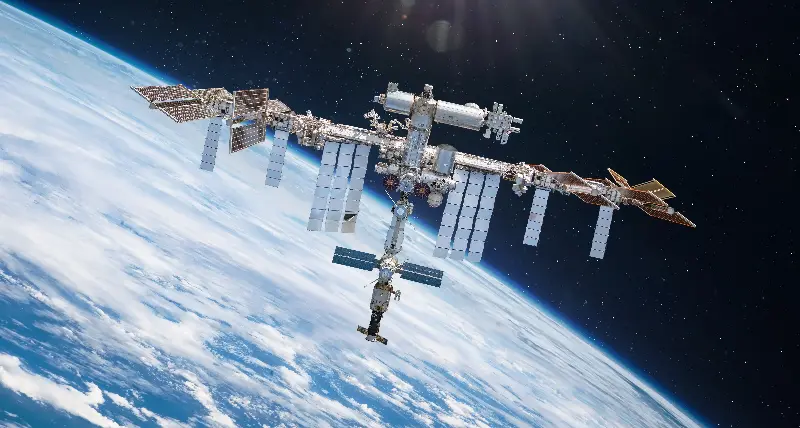
The astronauts on NASA and SpaceX’s Crew 11 mission are being returned to Earth later this week, according to an update from the space agency.
This is the first time a mission on the International Space Station has ended early due to medical reasons in its more than 25-year history.
It was announced last week by NASA that a planned spacewalk scheduled for Thursday was postponed due to a “medical concern” with a crew member living and working aboard the orbital laboratory. At a news conference on January 8, NASA administrator Jared Isaacman called it a “serious medical condition.”
NASA did not name the crew member to maintain their medical privacy, but it clarified that the matter only involved one person.
In an update shared on Friday, NASA said that procedures to get the astronauts back to Earth would begin on Wednesday this week, with splashdown scheduled to happen in the early hours of Thursday morning.
Newsweek has contacted NASA via email for comment.
Who Is in Crew 11?
Crew 11 is the team of astronauts that are part of the SpaceX Dragon’s 12th flight to the International Space Station through NASA’s Commercial Crew Program, and the 11th crew rotation mission of SpaceX’s human space transportation system.
The mission launched on August 1, 2025, and a number of the astronauts were set to “study plant cell division and microgravity’s effects on bacteria-killing viruses, as well as perform experiments to produce a higher volume of human stem cells and generate on-demand nutrients,” according to NASA.
In a press briefing on January 8, NASA administrator Jared Isaacman said that over the past five months the crew “contributed to the ongoing operations of the space station, conducted extensive scientific research, completed the majority of their mission objectives and upheld the standards of professionalism for which astronauts are known.”
The crew includes NASA astronauts Zena Cardman and Mike Fincke, JAXA (Japan Aerospace Exploration Agency) astronaut Kimiya Yui, and Russia’s space agency Roscosmos cosmonaut Oleg Platonov.
Cardman, a Virginia native, is serving as commander, and on arrival at the space station became a flight engineer of Expeditions 73/74 for a long-duration science expedition aboard the orbiting lab.
She has previously supported real-time station operations and lunar surface exploration planning, and her research has focused primarily on geobiology and geochemical cycling in subsurface environments, from caves to deep sea sediments.
Fincke, from Pennsylvania, is the veteran of three spaceflights: Expedition 9 in 2004, Expedition 18 in 2009, and STS-134 in 2011, and being part of Crew 11 marked his fourth trip to the space station.
He has served as a pilot for the Crew 11 mission, and after arriving at the space station, began serving as an Expedition 73 flight engineer.
Fincke is married to Renita Saikia, and they have three children, a son called Chandra and two daughters named Tarali and Surya.
Why Can’t the Medical Concern Be Treated at the Station?
During the press briefing on January 8, Dr. James Polk, chief health and medical officer at NASA Headquarters said that at the International Space Station there is a “very robust suite of medical hardware.”
However, he added that the station does not have “the complete amount of hardware that I would have in the emergency department, for example, to complete a workup of a patient.”
He said, in this particular case, the medical incident was “sufficient enough that we were concerned about the astronaut” and that he wanted to ensure the full “workup” was completed, which he said was best done “on the ground where we have the full suite of medical testing hardware.”
Polk also reiterated that the astronaut in question is “stable,” and that this is “not an emergent evacuation,” but that the situation leaves “lingering risk and lingering questions as to what the diagnosis is,” meaning there is “lingering risk for that astronaut on board.”
Asked at the January 8 news conference for more details, NASA administrator Isaacman said: “This was a serious medical condition; that is why we’re pursuing this path. [The] Crew member’s stable. As we mentioned, we’re not electing an emergency deorbit. But obviously, as we’ve already communicated, the capability to diagnose and treat this properly does not live on the International Space Station. And I think there’s pretty broad agreement across our our experts here on the ground as well as the crew members in space. So I think there’s complete alignment around that around that point.”
When Are They Due To Return?
Based on an update shared by NASA on Friday, Crew 11 is set to land back on Earth in the early hours of Thursday morning, although this is subject to a number of factors like weather, recovery team readiness and spacecraft readiness.
According to the schedule shared last week, on Wednesday, the SpaceX Dragon will undock from the International Space Station at around 5 p.m. Eastern Time (ET).
It is expected that by 2:15 a.m. ET. on Thursday, NASA’s return coverage will begin, with the astronauts arriving back at around 3:40 a.m. ET, before a news conference at 5:45 a.m. ET.