



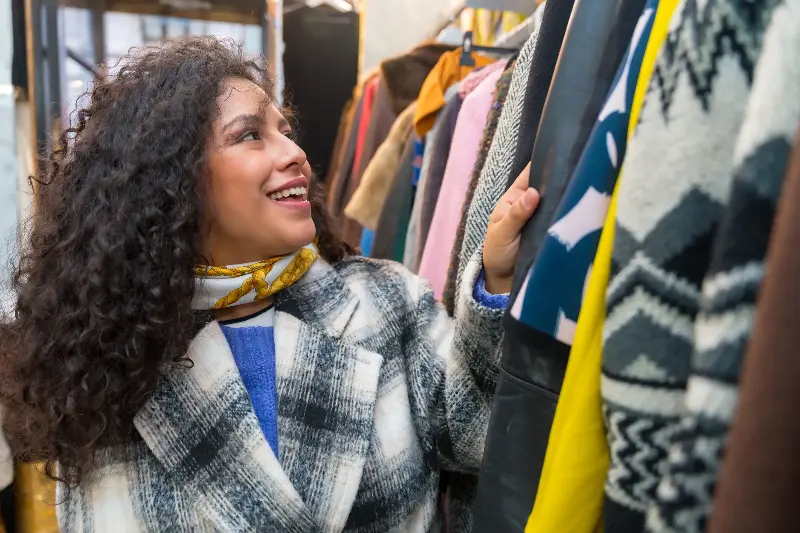
A woman has sparked a viral debate after claiming thrifting is “spiritually unhygienic.”
The social media user, @theitgirllex, shared her take on Threads, where it quickly gained traction and has since garnered more than 949,000 views.
“Am I they only one who feels like thrifting is spiritually unhygienic?” she asked, opening the door to an outpouring of mixed reactions.
Some users dismissed the idea outright. “Yes you’re the only one,” commented Claire. Aasha wrote: “Calling thrifting ‘spiritually unhygienic’ is the most disgusting thing I’ve ever heard. Thrifting keeps clothes out of landfills and helps people afford what they need.”
Others, however, resonated with the sentiment or offered their own interpretations.
View on Threads
“I feel the opposite, every time I buy something new it always feels… different but every time I thrift something it feels like giving a product a second chance,” wrote Chris.
“I can see where you are coming from. Feel the energy of the item. And then simply take it to the cleaners,” added Ebony.
Another viewer argued that emotional histories behind secondhand items can be positive: “Personally, I feel buying expensive things is spiritually unhygienic. Some expensive things were made in distress, anger, resentment, insecurity etc. I like to collect vintage needlepoints and decor and I always find it interesting that when I do buy those things from thrift stores or people sometimes the owners tells me how much that painting meant to them… The fact that they are willing enough to give me the history is spiritually fulfilling. So I think it depends and the intentions! I get what you mean though.”
Others noted that they “cleansed” items after purchasing them second-hand.
“The gag is you’re not entirely wrong. You have to be mindful when buying things second-hand. Thrifting as a whole isn’t spiritually unhygienic but you do need to wash and cleanse appropriately,” one user said.
Another commenter shared their own sensitivity to energies in thrifted goods: “I can actually feel the energy of items at thrift stores. I remember I got this purple purse. I still have it. I think it was from an elderly lady. Either way. Whoever puree it was. Really wanted someone to have it and take care of it. I don’t pick up anything at the thrift store that gives me bad energy.”
Alexis agreed with the original poster to a degree, writing: “I agree with you. Any time I get home from work I always wash my work clothes even if they aren’t ‘dirty’ because of the energy. I feel like an ex’s hoodie holds energy… not just fast fashion or thrifting but really any garment. Not sure if unhygienic is the right word to use but I see what you getting at.”
Thrifting Popularity
In the U.S., the second-hand apparel market grew by 14 percent in 2024, seeing its strongest annual growth since 2021, and is expected to reach about $74 billion by 2029.
Fast-Fashion and Environmental Harm
The fashion industry accounts for around 10 percent of global carbon emissions, making it one of the world’s major polluters, according to Earth.org.
Globally, about 92 million tonnes of textile waste are produced annually, and in the U.S. alone, the average consumer discards approximately 37 kg of clothing each year.
The production of new clothes is resource-intensive: for example, making a single pair of jeans can consume thousands of litres of water.
Spirituality and Cleansing
Some spiritual or metaphysical traditions hold that objects may carry emotional or energetic “residues” from prior use–intentions, feelings, or environments in which they were created or used.
Common cleansing methods include: airing items in fresh air or sunlight; using herbs (e.g. sage), sound (bells, singing bowls), or crystals; and setting intention or affirmations regarding the object’s future use.
While there is no standard scientific measurement for “energy” in this sense, many spiritual frameworks emphasise mindful use, conscious intention, and the symbolic transformation of an object’s role in one’s life.
Experts Weigh In
Experts say concerns about “energy” attached to objects are not new, but they don’t necessarily support the idea that thrifting is spiritually risky.
Ray Hopkinson, founder of Swayed Studio PR, told Newsweek: “The idea that used clothing is ‘spiritually unhygienic’ overlooks the fact that we already share so many intimate spaces in modern life, from the public transport and Ubers that might carry us, to Airbnbs, to the countless public places we move through side by side. And while I deeply respect that our spiritual perspectives differ, it’s common practice to treasure the objects passed down through our families, holding their histories with care.”
Energy healer Kathy Sanderson, founder of Healing from Within, told Newsweek that she has always been a supporter of thrifting.
“I’ve always loved thrifting. I grew up at car boot sales, and when my daughter was born, buying secondhand and using the free sites meant I could stay at home with her while we lived on one income,” Sanderson said.
Even her engagement ring was purchased on eBay, and when it arrived, she checked the energy of the item and found it “completely calm,” requiring no cleansing.
According to Sanderson, objects can sometimes carry emotional residue, but that doesn’t make thrifting “spiritually unhygienic.”
She said energy can be shifted easily through intention, fresh air, herbs, sound, or crystals. More importantly, she emphasised that buying second-hand keeps useful items out of landfills.
For many people, she added, thrifting is not only sustainable but also a practical and meaningful way of living.
Newsweek reached out to @theitgirllex for comment via Threads. We could not verify the details of the case.
Do you have any viral videos or pictures that you want to share? We want to see the best ones! Send them in to [email protected] and they could appear on our site.