



Two previewed technologies, coming soon to vehicles globally, offer one similar feature, naturalness. Nissan’s autonomous Pro Pilot self-driving technology and Mercedes-Benz’s steer-by-wire change the conversation surrounding the implementation of advanced technology-driven driving..
Neither car company’s technology is an industry first. Instead, they improve the execution of what is already on the market.
For Mercedes-Benz, that means making the electronic linkage that replaces the mechanical one in its large vehicles an aspect that requires zero consideration for drivers while they’re on the go.
Nissan intends to offer customers door-to-door autonomous drive technology that will first debut in robotaxis in Japan later this year.
Both technologies were offered in extended demonstration form to select journalists this spring.
“Radically new technologies can be intimidating for consumers to accept, much less actually spend their own money on,” Ed Kim, AutoPacific’s president and chief analyst, told Newsweek. “The best way to gain consumer acceptance of a new technology is personal experience. New ideas can be scary, but personally experiencing those new ideas can remove that fear of the unknown and potentially lead to interest and adoption.”
He continued: “Of course, making new technologies easy to understand and user friendly is a crucial component of making consumer comfortable with them. Autonomous drive technology is a great example; many may find the idea of a self-driven vehicle as terrifying and unnerving, but personal experience with autonomous drive technology tends to put minds at ease and even increase interest in the technology.
AutoPacific’s Future Attribute Demand Study data shows strongly increasing demand for hands-free driving features as awareness grows through growing deployment of these features in new vehicles or in some cities in the form of robotaxi. , Between 2024 and 2025, the data show a 21%-point increase in demand for hands-free highway driving assistants by in-market consumers.
Steering By Wire Without Hesitation
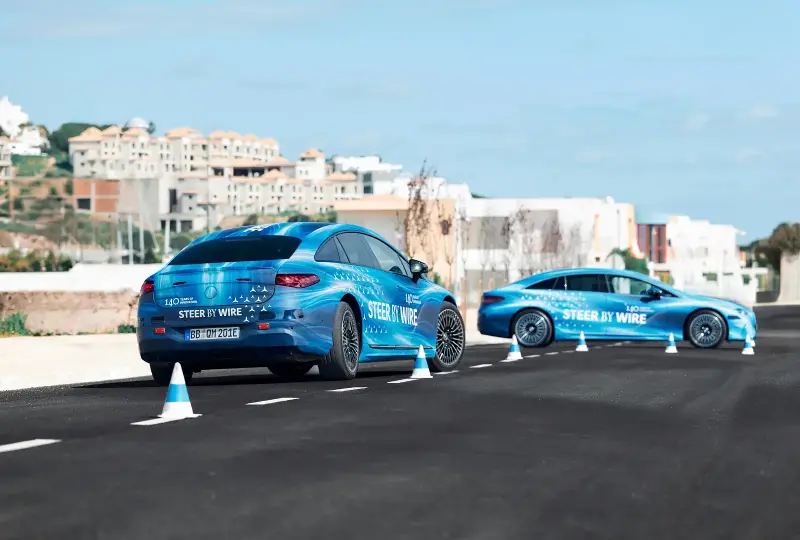
Mercedes-Benz allowed drivers to autocross steer-by-wire specially equipped EQS Sedans at relatively high speed, putting the technology through its paces in a more aggressive ecosystem than it would traditionally operate in.
The sedans were equipped with a yoke steering wheel, a setup that has received mixed reviews from users in applications in Lexus and Tesla vehicles. The apparatus is often cited as being difficult to use in regions where roundabouts are prominent and because the timing between the driver input to turn and activation of the wheels to turn is delayed.
In the Mercedes it was easy to use because the timing that is a concern in those other brands’ vehicles doesn’t exist. The input to execution gap is too narrow to discern, even when driving in a manner that requires quick reactions and operational precision.
It’s also taken the numbness out of driving that so many similar systems offer. Nissan’s premium arm, Infiniti, offered steer-by-wire technology in its Q60 sports coupe that suffered from that issue.
AI Removes Operational Trepidation
Nissan had an advanced Pro Pilot Ariya battery-electric SUV transport media members around the busy Ginza district of Tokyo on a navigation-prescribed path for 40 minutes. The area is known for its heavy vehicle and pedestrian traffic.
After programming the route into the navigation system, Nissan’s Executive Chief Engineer Tetsuya Iijima put the Ariya in drive and the ride was underway.
While there are streets that follow a traditional grid system in Tokyo, Nissan decided to showcase the tech in more challenging circumstances, with the vehicle guided down side streets that jut off mains at strange angles, onto eight-lane roads with heavily used crosswalks, and around corners where quick merging is essential.
The point-to-point autonomous drive system was flawless, using AI to anticipate pedestrian and vehicle movements while the car’s suite of technology allowed it to move in traffic with ease. Acceleration and deceleration were prompt but measured. There is no better, more natural-feeling system on the market in North America or Europe.
Nissan will bring the system to market first in robotaxis as part of its larger Wayve and Uber partnership. Iijima said to look for it in vehicles soon after that as the company plans to bring several new-generation and first-time-to-market vehicles to showrooms over the next three years.