



We have all been there—setting rules for our pets, only to break them because they are just too cute to resist. From bedtime battles to vacation planning, these five signs reveal when your furry friend is secretly calling the shots.
Newsweek spoke to veterinarian Dr. Julie Hunt, who emphasized that there is nothing wrong with spoiling your pet—showering them with love is what makes your bond so special.
These signs simply show how deeply pets are woven into our routines and, in many cases, how they have cleverly helped orchestrate them.
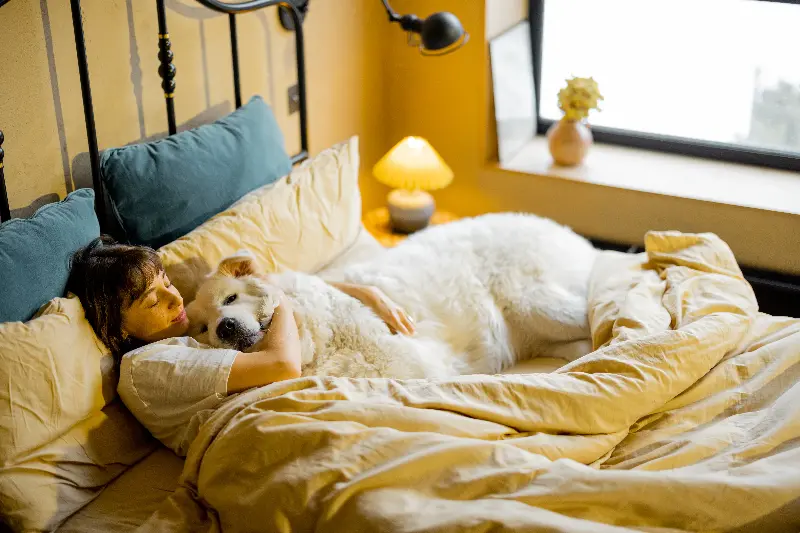
1. Your Pet Takes Up More of Your Bed Than You Do
The American Academy of Sleep Medicine says that nearly 46 percent of Americans sleep with their pets, and younger generations are even more likely to do so.
Hunt, who works for Embrace Pet Insurance in Cleveland, Ohio, said that it is only right for pets to have the best sleeping location in your home. But, sometimes, being close to their owner means they are taking up more of the bed than the humans.
2. You Choose Where To Shop or Eat Based on Pet Access
“Your pet loves to be with you!” Hunt said: “So, you’ve gathered a mental list of all the stores that you can shop where your pet is welcome and all the restaurants with patios where your pet can hang out with you.”
If you’ve ever picked a restaurant because it has a dog-friendly patio, you are not alone. A Better Cities for Pets™ survey found 49 percent of pet parents are more likely to visit businesses that welcome pets.
3. Your Pet Has Convinced You It Needs Gourmet Meals
PetfoodIndustry reports that 31 percent of dogs eat wet food and 16 percent enjoy homemade meals. Hunt said: “You’re probably already buying high-quality pet food, but your pet has convinced you that, to eat, it needs to have more than just what’s straight from the bag or can.
“Your pet may have convinced you that it needs a few spoonfuls of canned food on top of its dry food to eat, or that you have to add some human food on top of the pet food to stimulate its appetite,” Hunt added. “All this extra effort is supposed to convince a pet, who is often at a healthy weight or even may be overweight, to eat its meals.”
Indeed, social media is full of clips showing dogs and cats turning their noses up at food made for them. Take this feline, for example—it refused to eat anything but Popeyes. Then there is Abby, the German shepherd, who doesn’t actually have gourmet meals, but her owner has to pretend to add a fancy flair just to keep her happy.
4. Your Pet Prefers Hand Feeding Over a Bowl
Hunt said that some pets may feel like they are too good to eat out of a bowl. So, their doting owners may hand-feed them instead. While this may seem extreme, the American Kennel Club (AKC) doesn’t discourage it. There are benefits, but it is important for owners not to do this for every meal.
The AKC states hand feeding can help slow down fast eaters and creates opportunities to practice basic obedience skills during meals. It can also reduce guarding resources behavior, as hand-feeding reinforces that you control valuable items.
It is also an excellent way to help shy or fearful dogs become more comfortable with people, especially when family and friends gradually participate in the process.
5. Your Pet Dictates Your Travel Plans
A TrustedHousesitters survey revealed 56 percent of U.S. pet owners travel less since getting a companion animal, and 57 percent plan trips around pet-friendly accommodations.
Hunt said: “Your pet misses you dearly when you travel and can’t take it along. But when you start planning your trips or vacations around your pet—such as only choosing destinations you can drive to because you can’t fly with them—they may have the upper hand.”
The Bottom Line
While it might feel like your dog is running the household, it is not because they are plotting a power grab. The VCA animal hospital website says it is an old-school belief that canines are locked in a battle for dominance and one that is outdated and unsupported by science. Forcing dogs into submission or trying to “eat first” doesn’t build respect—it can damage trust and even lead to behavioral issues.
In reality, canines behave the way they do for reasons such as genetics, socialization, fear, resource availability, and even health—not because they are trying to overthrow you.
Owners are encouraged to practice science-backed training methods like positive reinforcement, conditioning, and desensitization effectively teach good manners, prevent behavior problems, and strengthen the bond between pets and their owners.