



Adopters often bring home a puppy with a picture in their mind of who that dog will become—their size, personality and energy level—but as a pup grows into unexpected traits, behaviors and appearances, owners may find themselves needing to let go of the dog they imagined.
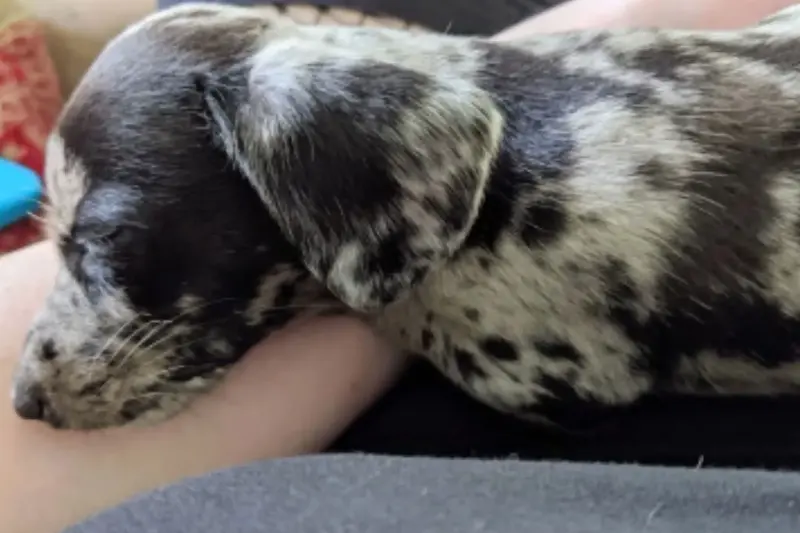
That was the case for one owner, Cassandra, who believed she had adopted a small dog, Ollie. She was told Ollie was a dachshund before bringing him home, and his early features seemed to match. But as he grew, his appearance changed—most notably, his ears.
Cassandra, who posts as bygollymisterollie, began questioning her dog’s breed, pointing out that he increasingly resembled a Chihuahua rather than the dachshund she thought she had adopted. His larger-than-life ears made her question: “What IS this?”
While Ollie’s changing appearance came as a surprise, pet expert and owner of Canine Camp Getaway, Janice Costa, told Newsweek it highlights a deeper experience many pet parents face: adjusting to the difference between the dog they expected and the dog they actually have.
But to Costa, that surprise does not mean disappointment.
“Parent the dog in front of you, not the dog you thought you were going to have,” Costa said.
The best way to avoid disappointment is not to focus on the dog someone thought they were bringing home, but to learn what the dog in front of them needs to thrive.
Mixed Breeds Can Surprise Owners
Costa said Cassandra’s experience is not unusual, especially when it comes to mixed-breed dogs.
Breed labels can shape how adopters view dogs, but research from the University of Florida’s Shelter Medicine Program has shown that identifying a dog’s breed based on appearance alone can be challenging. For mixed-breed dogs, those labels may shape expectations about a pet’s size, temperament and needs before adopters ever bring them home.
Mixed-breed dogs can inherit different combinations of traits from their various breeds, meaning their adult size, appearance and personality may not always be easy to predict.
Costa knows firsthand how expectations can change. Her first canine as an adult was described as a collie mix, but as the dog matured, it became clear she was actually a high-drive working-line Belgian Malinois mix.
“She was way more dog than I’d ever handled, or had the skills to handle,” Costa said.
Fortunately, Costa found an experienced trainer who has worked with Belgian Malinois. She learned how to better understand and support her dog’s needs.
The experience taught her that breed labels can offer some insight, but they do not always predict exactly who the dog will become.
Let Go of the Dog You Imagined
For many owners, a puppy comes with a vision of the future: the activities they will do together, the personality their dog will have and the role that pet will play in their family.
But when a dog grows into something different, owners may initially feel overwhelmed or disappointed by the change. The key is not allowing those expectations to prevent them from building a relationship with the dog in front of them.
Costa compared it to parenting, explaining that people do not expect every child to have the same interests or personality. The same should be true for dogs. Be the owner of the dog in front of you, not what you had expected.
An owner who hoped for a relaxed companion to cuddle with on the couch may instead discover they have a high-energy dog who needs more exercise and mental stimulation. In that case, owners may benefit from exploring activities such as training games or dog sports.
Someone who expected a small dog may need to adjust to a larger one by purchasing different supplies and learning how to safely manage them. Typical outgoing, social dogs could be shy or cautious.
“You can take classes and create opportunities for safe socialization, and your dog may come out of their shell,” Costa said. “But they may never be that outgoing therapy dog-type dog you were planning for.”
That does not mean the dog cannot become a loving, loyal companion.
“It just means they may not be the social diva you thought you were getting,” she said.
Costa added that owners who struggle after a dog does not match their expectations should remember that the relationship is not defined by the dog they imagined, but by the one they choose to understand and support.
Breed Is Only Part of the Picture
For people looking for very specific traits, Costa said choosing a purebred dog from a responsible breeder may offer more predictability.
“If you want the specific traits of a golden retriever or a German shepherd or a Maltese, it makes sense to go and get a purebred dog of that specific breed,” she said. “Mixes can be all over the place.”
However, even dogs with predictable breed backgrounds are still individuals and do not always “fit the mold.” A dog’s genetics, early experiences and individual personality all play a role in who they become.
The goal, Costa said, should not be forcing a dog to match an idea of what it was supposed to be, but helping it become the best version of itself.
“I believe that if you’re going to get a dog, you have to be flexible enough to know that each dog is its own dog,” Costa said.
Can a DNA Test Help?
Canine DNA tests can offer insight into a pet’s ancestry, which may help owners research potential breed traits and better understand their dog’s needs. But these tests should not be treated as a guarantee of personality or behavior.
“It might give you some workable insights, but ultimately, once you get a dog, you have to commit to the dog you have, and learn together,” she said.
As for Ollie, the dachshund label wasn’t completely off. His DNA test revealed he is 50 percent mini dachshund and 50 percent Chihuahua, but 100 percent still the perfect dog for Cassandra.
For Costa, that is the larger lesson. A breed label may tell part of a dog’s story, but it does not define the entire animal.
“Getting any dog means accepting their individual strengths and weaknesses, and helping them become the best dog they can be,” she said. “Without asking them to become a totally different dog than they are, which isn’t fair to them.”
Whether a puppy grows up looking exactly as expected—or completely surprises their owner—the goal remains the same: building a relationship with the dog that is actually there.