



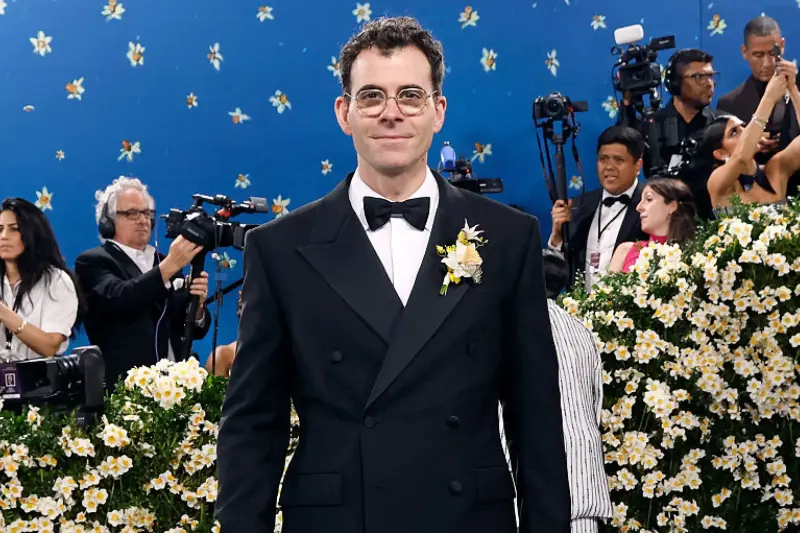
The head of Instagram has issued a stark warning as he predicts “one major shift” shaping the platform as the world moves into 2026.
Adam Mosseri (@mosseri) shared a text post on his Instagram grid voicing concern over what he sees as a growing loss of authenticity online, as feeds become increasingly saturated with AI-generated content. He warned that the internet is heading toward “a world of infinite synthetic content,” where what once made creators stand out may no longer be unique.
In his post, Mosseri said the biggest risk facing Instagram is failing to evolve quickly enough as technology accelerates. Looking ahead to 2026, he suggested that authenticity itself is becoming infinitely reproducible. He argued that the qualities that once gave creators influence—being real, forming genuine connections, and having a voice that couldn’t be replicated—are now available to anyone with access to the right AI tools. Newsweek reached out to Meta’s press office for comment via email.
“The key risk Instagram faces is that, as the world changes more quickly, the platform fails to keep up. Looking forward to 2026, one major shift: authenticity is becoming infinitely reproducible. Everything that made creators matter—the ability to be real, to connect, to have a voice that couldn’t be faked—is now accessible to anyone with the right tools,” he shared.
Instagram embed will be rendered here
Mosseri went on to suggest that deepfakes and AI-generated media are becoming increasingly sophisticated, to the point where photos and videos can be indistinguishable from content captured in real life. He noted that while the internet once shifted power away from institutions and toward individuals by allowing anyone with a compelling idea to find an audience at virtually no cost, AI now threatens to blur the line between what is real and what is manufactured.
Mosseri has led Instagram since 2018, after previously serving as Facebook’s vice president of News Feed. He joined Facebook in 2008 and played a key role in shaping how content is ranked and distributed across the company’s platforms.
Concerns about AI-generated content are not unfounded. Recent research shows a sharp increase in synthetic media across social platforms.
According to industry research from social media agency Amra & Elma, roughly 71 percent of images on social media platforms are now created using AI technologies.
Mosseri’s comments quickly sparked debate in the comment section, where creators, business owners, and long-time users weighed in on what authenticity actually means in an algorithm-driven ecosystem.
“Now we have established that being authentic is key…. How about we get back to authentic reach ??? I would love if the people who chose to follow me saw my content,” said Ryan Shedrick, a weight loss content creator.
Many commenters echoed Shedrick’s frustration, pointing to Instagram’s algorithmic shift away from chronological, follower-first distribution. Instead, content is now heavily recommended based on predicted interest, meaning posts are often shown to non-followers before reaching a creator’s existing audience.
While Instagram has said this discovery-based system helps creators grow, users argue it has reduced visibility among their own followers and made consistent reach feel increasingly out of their control.
“Authenticity always wins,” said Cindy Waldman.
Others were more blunt about their feelings toward artificial intelligence on the platform.
“Respectfully, all ai is slop. We don’t want it,” said Kira Coviello.
Small business owners and marketers also chimed in, emphasizing the growing value of personal storytelling.
“I have been saying this all year to the small business owners I work with. We can no longer be afraid of showing ourselves or sharing imperfect moments, because those are the things that matter more than ever. AI can make perfect images or videos but it’s can’t replicate your personal story or journey and that’s what people are interested in,” said Martha Keith.
In her broader remarks, Keith said she is genuinely concerned about the direction AI is heading and wishes platforms like Instagram would take stronger action beyond simply labeling AI-generated content. She added that while this technological shift may be inevitable, 2026 should be a turning point where people commit to showing up as real humans and boldly sharing their own stories, because that kind of authenticity continues to cut through the noise in ways AI cannot replicate.
Some users argued that the problem goes beyond AI altogether.
“The real issue is that you took the social out of social media. It used to be fun. Even the most mature people were on there laughing, using funny face filters, and not taking themselves so seriously. It was a place to be free from the weight of the world. A little escape. Now it feels like work,” shared Courtney Adeleye.
Social media strategist Shannon McKinstrie offered a more strategic perspective on what authenticity should look like moving forward.
“I’ll say what I’ve been telling my clients…In 2026, ‘authentic content’ isn’t about oversharing beyond what you’re comfortable with. It’s about creating what isn’t already everywhere. AI can write captions and create content but what it can’t do is live your life or have your unique experiences. THAT’s the advantage now,” she said.