



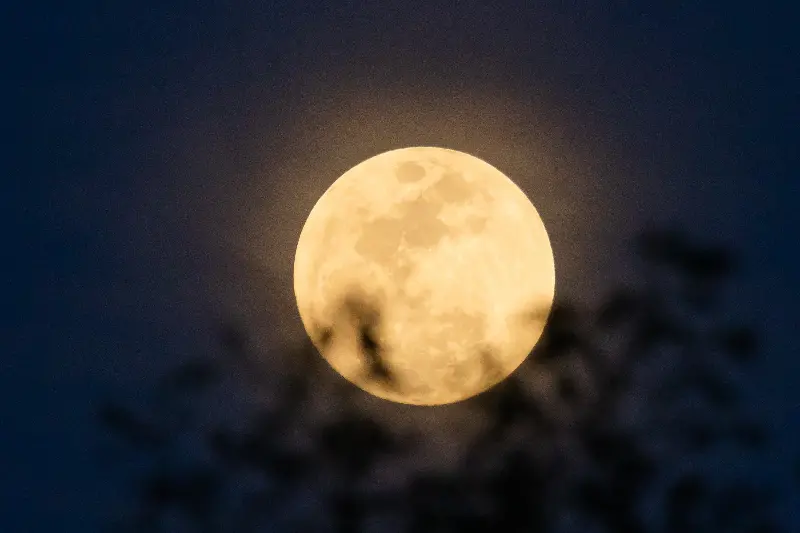
More than half a century after astronauts last set foot on the lunar surface during Apollo 17, the United States is preparing to send humans back to the Moon.
At the center of that effort is Artemis II, the first crewed mission in NASA’s Artemis program. While Artemis II will not land astronauts, it marks a critical step toward future missions that aim to return humans to the lunar surface for the first time in more than 50 years.
When astronauts from Apollo 17 departed the lunar surface in December 1972, they left behind footprints, rover tracks and scientific instruments—many of which remain undisturbed more than 50 years later. To the naked eye, the Moon appears unchanged since that final mission. But beneath its seemingly static surface, subtle transformations have been quietly reshaping Earth’s closest celestial neighbor.
New Craters
The most significant changes to the Moon since the Apollo era come from space itself. Without an atmosphere to burn up incoming debris, the lunar surface is continuously struck by meteoroids.
Data from NASA’s Lunar Reconnaissance Orbiter (LRO), which has been mapping the Moon since 2009, reveal that thousands of new small craters have formed in recent decades. In some cases, scientists have identified before-and-after images showing fresh impact sites and the bright ejecta patterns they leave behind.
“Since its launch in 2009, NASA’s Lunar Reconnaissance Orbiter (LRO) has discovered more than 200 new impact craters,” a NASA spokesperson told Newsweek. “Our LRO has observed landslides on the walls of some craters and other changes.”
Space Weathering
Even where no large impacts occur, the Moon’s surface is far from static. Scientists describe an ongoing process known as “space weathering,” driven by micrometeorite impacts, solar radiation, and extreme temperature swings.
Over time, these forces churn and darken the lunar soil—called regolith—gradually altering its texture and reflectivity. While astronaut footprints from the Apollo missions are still visible today, they are expected to degrade over thousands to millions of years.
Moonquakes Beneath the Surface
Though often described as geologically “dead,” the Moon is not entirely inactive. Instruments left behind during the Apollo missions detected seismic activity known as moonquakes.
These quakes can be triggered by tidal forces from Earth or by temperature fluctuations as the lunar surface heats and cools. Some shallow moonquakes have been strong enough to slightly shift surface material, though their effects are minimal compared to earthquakes on Earth.
Ongoing analysis of Apollo-era seismic data continues to provide insight into the Moon’s internal structure.
Update 4/1/26, 4:33 p.m. ET: This article was updated with comment from NASA.
Tardigrades on the Moon
One of the Moon’s most unusual recent changes did not come from natural forces, but from a crash. In 2019, Israel’s Beresheet spacecraft impacted the lunar surface while carrying thousands of tardigrades—microscopic organisms known for their ability to survive extreme conditions.
The cargo was intended as a kind of biological archive. Because tardigrades can enter a dehydrated, dormant state, some scientists say it is possible that a fraction of them survived the crash itself.
However, researchers stress that this does not mean the Moon now hosts active life. Without liquid water, tardigrades cannot revive, grow or reproduce. At most, they may persist in a frozen, inactive state.