



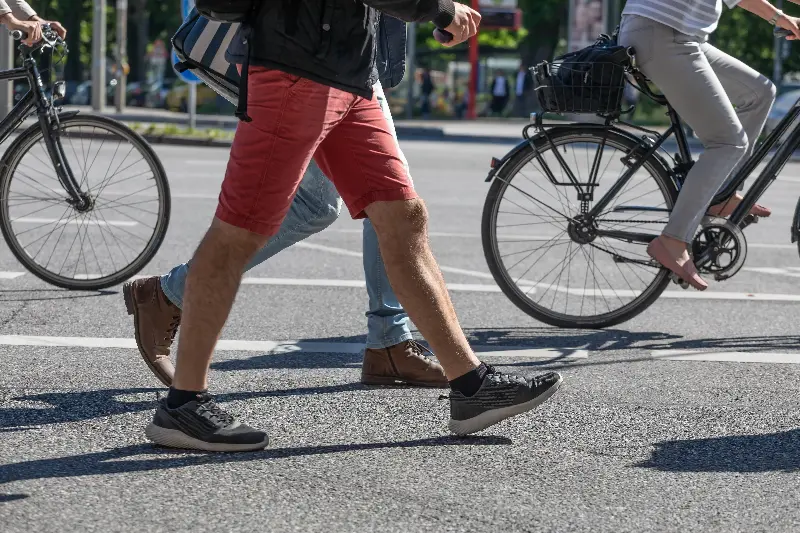
Cycling has long enjoyed a reputation for being one of the most-efficient ways for humans to move—and new data suggests that nothing has changed.
More than five decades after Scientific American first compared a coasting cyclist to some of the planet’s most-efficient animals and even jet planes, Forbes notes the numbers still hold up: the bicycle remains the world’s most energy‑efficient mode of human transport.
And with 112 million Americans riding a bike at least once in 2024, according to PeopleForBikes, Newsweek spoke with Willie Swift, a performance physiologist from Human Powered Health in Boston, Massachusetts, to find out why cycling feels so effortless continues to grow.
Why Pedaling Feels Easier
Swift explained that walking simply demands more from the body.
He said: “At leisure speeds on a flat surface, pedaling is objectively easier than walking because it requires less energy for a similar type of activity; however, all of this would change if you were to accelerate, or if there’s an incline involved.
“As anyone that’s tried to ride a bike up a steep hill can attest, there are certainly times that pedaling and keeping a bike upright can feel much harder than walking!
“But, with cycling, the amount of power required to keep the bike upright is much less than the minimum energy required to propel your entire body weight forward with each step while you walk. If you’re already coasting on a bike, you can apply little to no power to keep the bike moving on a flat surface.”
Which Is Better for Your Health—Walking or Cycling?
When it comes to overall health benefits, Swift was clear: both activities are excellent. He described cycling and walking as “low-impact activities that can have a great impact on your physical and mental health,” adding that most people would benefit from doing both.
Cycling offers an easy entry point for beginners and allows riders to cover significantly more ground. It also gives the option of either gentle leisure rides or high‑intensity interval sessions that can elevate heart rate and support metabolic health.
Walking, meanwhile, stands out for its accessibility. As Swift noted, all you need are shoes and appropriate clothing, making it one of the easiest forms of daily movement to maintain. Its simplicity means it can be naturally integrated into routines—commutes, errands, or short breaks throughout the day.
The Downsides of Walking and Cycling
Cycling’s biggest barrier, Swift said, is cost and safety. A bike, helmet, clothing, and access to safe routes can be expensive or difficult to find—especially for those living in dense urban areas. These factors alone can deter would‑be riders.
Walking’s primary downside is time. Swift said that, because there’s a limit to how hard you can push yourself while still walking and not transitioning into a run, it takes significantly longer to achieve meaningful cardiovascular benefits. For many people, this time commitment can be difficult to maintain consistently.
The Bottom Line
Pedaling often feels easier than walking because it requires less energy to maintain motion, particularly on flat surfaces and at leisurely speeds. But, when it comes to health, both activities offer meaningful benefits. Cycling delivers speed and intensity; walking delivers accessibility and routine. As Swift put it, the best approach is simple: do both.