



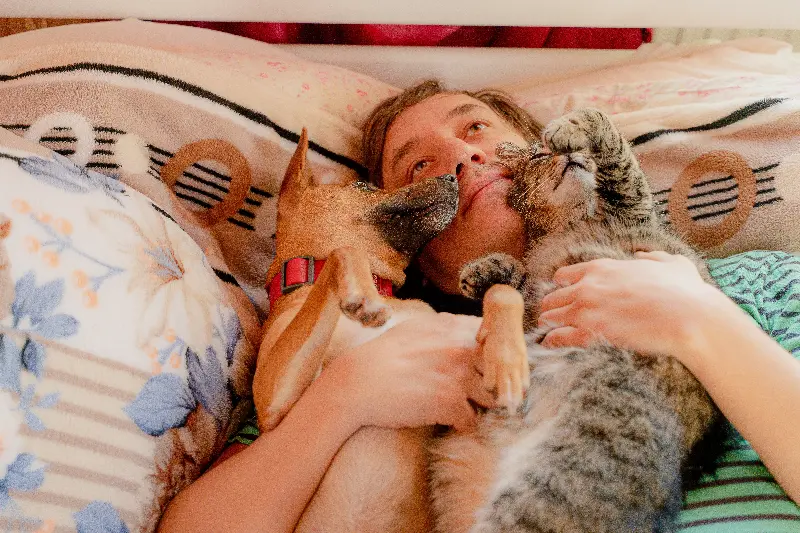
When owners walk through the door, they’re often met with an enthusiastic dog but cats rarely greet people with the same fanfare. So how can you tell if your feline actually loves you?
Although cats tend to be far more subtle than dogs, veterinarians say that doesn’t mean the affection isn’t there. Newsweek spoke to Dr. Liza Cahn of Embrace Pet Insurance, who shared 10 clear signs that a cat may feel just as bonded to its owner as any loyal pup—just in quieter ways.
“In vet school, we learn repeatedly that ‘cats are not just small dogs,’” she told Newsweek. “They are a unique species in terms of anatomy, basic needs, health concerns, social behaviors, and communication style.”
Research supports that the cat–human bond often looks different. A May 2022 YouGov poll found fewer cat owners reported a sense of “unconditional love” from their pets compared to dog owners, yet a higher proportion said their cats helped reduce stress and anxiety. Many also cited their cat’s entertainment value and ability to make them laugh.
Based in Washington, Seattle, Cahn outlined the subtle body language cues and behaviors that show a cat feels deeply connected to its person.
1. Relaxed Body Language
A relaxed stance, a softly curved upright tail, gentle swishing, or half‑closed eyes can signal affection—but interpreting these cues depends heavily on context, so owners should observe the whole environment and keep interactions calm and predictable.
“This is one of the most profound ways cats express love, as it’s a direct sign of deep trust and contentment,” Cahn said. She noted that a loose, comfortable posture signals a cat feels safe around its owner.
2. Purring
“Purring may occur when a cat feels safe and relaxed, often while being petted or enjoying your close presence,” she said.
Cahn warns that cats also purr when anxious or in pain, owners should read the behavior alongside body language to distinguish contentment from distress.
3. Slow Blinking
Slow blinking, often called a cat’s version of a kiss, is another subtle sign.
“This behavior may be easily missed or simply mistaken for a sleepy cat, but when your cat looks at you deliberately and softly closes and opens their eyes, they are communicating that they feel safe and at ease with you.
“Many cats will appreciate it if you reciprocate by slow blinking back,” she said.
4. Grooming You
Cahn said: “This is a sign that they consider you a true member of their family.”
Light licking is a bonding behavior, though owners can redirect it to a toy if needed; gentle brushing or petting is a good way to reciprocate.
5. Head‑Butting
It might sound rough, but cat owners know it couldn’t be further from the truth. Cahn explains: “Head butting, or bunting, is a primary way cats show affection and claim ownership. Cats have scent glands on their cheeks, forehead, and chin… they are depositing their scent and marking you as their territory and part of their family.”
6. Kneading
Cahn said kneading, which is also known as “making biscuits,” is rooted in kittenhood. It signals comfort and security, and owners may want to keep a blanket nearby and maintain regular nail trims.
7. Meowing
A cat’s meow is primarily directed at humans, not other cats, and can reflect needs or emotional states ranging from hunger to affection.
She said: “The tone, length, and frequency of your cat’s meow may indicate needs or emotions, from hunger to companionship.”
8. Sleeping on You
Choosing to sleep on or against a person is one of the strongest signs of trust, as cats are at their most vulnerable when resting.
9. Play
Cahn said: “When your cat initiates play with you, they are actively choosing to share their enjoyment, which is a deep sign of a loving bond.”
She explains that playful cats often adopt an animated posture, such as crouching, pouncing, or rolling on their back, and their ears will be forward and alert, signaling interest. Their pupils may dilate from excitement, and their tail might twitch or swish back and forth.
10. Bringing “Presents”
A cat’s “gift” is rarely a neatly wrapped surprise—more often, it’s a dead rodent. While it can be gruesome, Cahn said to accept with gratitude.
“A cat bringing you presents is a sign of affection, though it is often misunderstood,” she said. “You can praise them for the intention, then safely ‘dispose’ of the gift.”
Owners can channel this instinct more safely with treat‑hiding games or interactive feeders.