



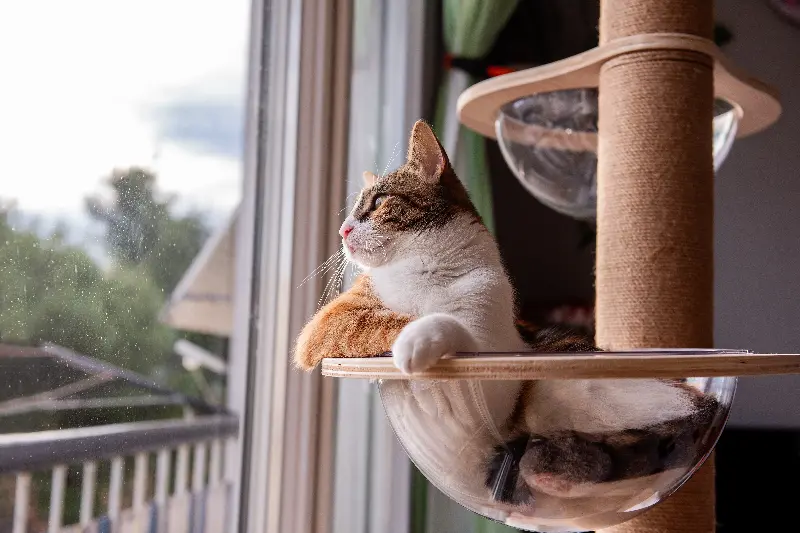
Living in a small apartment doesn’t mean you have to rule out owning a cat. In fact, according to experts most cats adapt remarkably well to compact living spaces.
What Makes a Cat ‘Apartment‑Friendly’
Dr. Ann Hohenhaus, senior veterinarian and director of pet health information at Schwarzman Animal Medical Center (AMC), and host of the monthly podcast Ask the Vet, explains that one of the biggest advantages of choosing a cat for a small home comes down to size.
“If you have a small space, a cat doesn’t take up much space compared to a Great Dane,” she said.
Cats also naturally gravitate toward high perches, which makes vertical space just as valuable as floor space. A tall cat tree can instantly expand an apartment’s usability from a feline perspective.
“Cats like being up high because they feel safe when they have an ability to survey their kingdom for threats,” she said.
Creating the Perfect Apartment Set‑Up for a Cat
While small homes require some creative arranging, a roomy litter box and clear separation between food and toileting areas remain essential.
“Litter boxes and feeding areas should be as far apart as practical,” she said. The formula is simple: you need a litter box for each cat, plus one. For a single cat, that means two boxes—sometimes a challenge in tight spaces.
Placement matters too. Hohenhaus suggests placing a cat tree by a window so the cat can watch the outside world. But she also stresses safety: “If you are going to open your windows, then they must have tight fitting screens to protect your cat from high rise syndrome.”
Which Breeds Are Best for Small Apartments
Surprisingly, breed isn’t a major factor. “I don’t believe breed plays much of a role in finding the ideal apartment cat,” she said.
With only 20 percent of cats in the U.S. coming from breeders, most are domestic, mixed‑origin cats—and they generally adjust well to apartment lifestyles.
How Do Rescue Cats Adapt to Small Apartments
Rescue cats often thrive indoors, but not always. Hohenhaus notes the rare case of an outdoor‑accustomed adult cat becoming unhappy when confined: “Those cats should be returned to their colony or former area of residence because they will be miserable trapped inside.”
When a cat originates from someone’s backyard, the caregiver can still support it outdoors with food, water, and shelter.
Signs Your Apartment Isn’t Working for Your Cat
According to Hohenhaus, behavior is the clearest indicator of discomfort.
“An unhappy cat will not eat, hide, or use the litter box, or use every opportunity to try and escape,” she said. Although she also noted that some cats, especially those from shelters or life outdoors, may take a month or more to settle in.
For people unsure whether their home is suitable, fostering can be a low‑pressure way to test compatibility. “You give a needy cat a temporary home and if it works out you get a long-term buddy,” she said.
If it doesn’t work out, rescue groups can help rehome the cat. Outdoor‑origin cats may even be better placed back in their colony or in rural environments such as barns where they can roam freely yet safely.
Do you have funny and adorable videos or pictures of your pet you want to share? Send them to [email protected] with some details about your best friend and they could appear in our Pet of the Week lineup.