


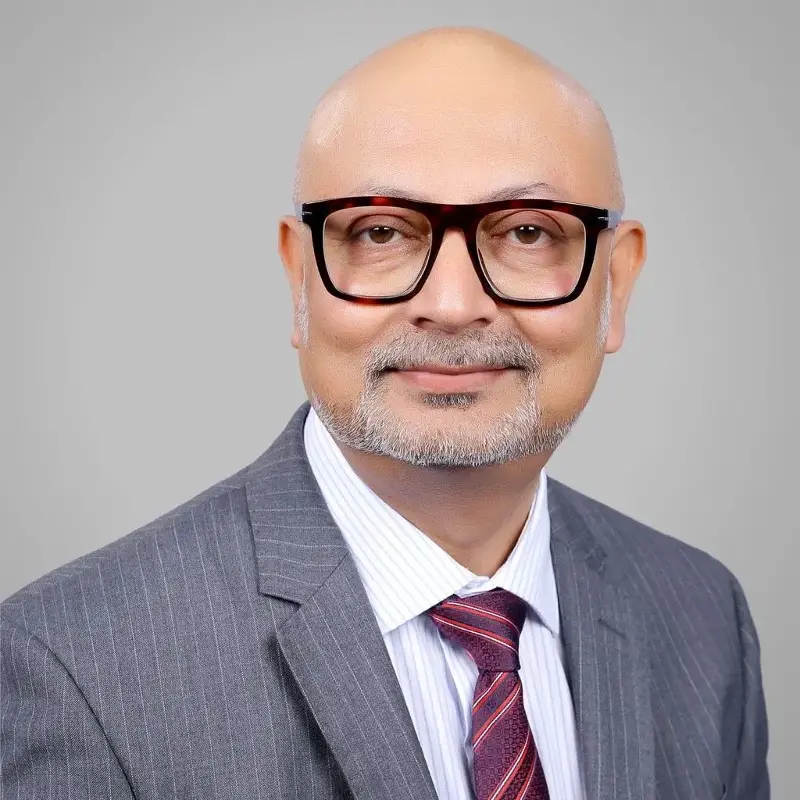
India, Jan. 6 -- Supriyo De, Managing Director, Palsgaard India
As India's food and beverage sector evolves with growing demand for health-focused, clean-label and innovative products, ingredient suppliers are enhancing their technical presence in the region. Palsgaard has strengthened its India footprint with the launch of a new Application Centre in Navi Mumbai, aimed at supporting local manufacturers across multiple food categories. In this interview with NUFFOODS Spectrum, Supriyo De, Managing Director, India, talks about the role of the new facility, its impact on product development, and Palsgaard's growth and innovation plans for South Asia. Edited excerpts;
The new Application Centre marks a significant milestone for Palsgaard's operations in India. Could you share what strategic role this facility will play in your long-term growth plans for the Indian and South Asian markets?
We're delighted to have expanded our operations in India following the launch of our commercial offices at the same site earlier this year. Our Navi Mumbai application centre allows us to provide even better support for customers in the bakery, dairy, ice cream, chocolate, confectionery, and lipid sectors.
There has been longstanding customer demand for our emulsifiers and stabilisers in South Asia, and this development represents an important step in our plans for India and the wider region. It brings our state-of-the-art industrial facilities and cutting-edge support services closer to local manufacturers and makes it easier to deliver tailored solutions that will satisfy their exact requirements. As such, our new application centre in Navi Mumbai also plays a key role in our global approach of always being close to our customers regardless of where they are based and where they operate.
With pilot plants designed to replicate real-world production conditions, how will this centre help Indian food manufacturers accelerate product development and improve formulation efficiency?
The centre gives customers a low-risk way to carry out industrial pilot tests and upscale recipes, with our experts there to provide hands-on formulation support. For Indian and South Asian manufacturers, the key benefits of having a centre in Navi Mumbai are that it supports faster turnaround and allows for a more collaborative approach.
India's food sector is evolving rapidly, with rising demand for clean-label, plant-based, and functional products. How is Palsgaard tailoring its emulsifier and stabiliser solutions to align with these local market trends?
We have a huge portfolio of vegan-friendly emulsifiers and stabilisers that can be used to meet different market requirements, including cleaner and leaner labels. In the plant-based space, we offer solutions for dairy-free milks, yoghurts and ice cream as well as for egg-free cakes. For example, our Palsgaard(R) AcidMilk 310 is a clean-label stabiliser system for plant-based yoghurts. It has various benefits, including tackling water separation, providing a smooth and creamy consistency, and ensuring the yoghurt has the desired texture and mouthfeel.
The Navi Mumbai application centre now means we're able to provide direct support to find the exact solutions manufacturers need for their products - whether that means cost reduction, clean-label reformulation, improved sensory qualities or a longer shelf life.
Palsgaard has a strong legacy of combining innovation with sustainability. What specific sustainability practices or technologies have been integrated into the Navi Mumbai centre's operations?
We've introduced a number of sustainability measures. We use energy-efficient processing tools, controlled-load mixers, ovens and chillers. The LED lighting, timed HVAC usage and equipment run-scheduling help reduce the overall energy load. We also follow low-water-use protocols, which are particularly important for cleaning cycles in dairy, bakery and confectionery trials. Local sourcing of non-critical consumables reduces the logistics footprint as well.
We run resource-efficient pilot trials too. They're designed to minimise raw-material and energy usage by using small-batch pilot equipment, allowing customers to optimise formulations with significantly lower food waste, fewer trial batches at their factories and reduced carbon footprint from unnecessary re-runs.
In addition, the centre adheres to Palsgaard's global Environmental, Social, and Governance and Health, Safety, and Environment standards.
Collaboration seems central to Palsgaard's approach. How will the new centre enhance partnerships with local customers, and what kind of technical support or co-development opportunities can clients expect?
We have local experts at the Navi Mumbai centre who truly understand the regional market and work hand-in-hand with customers during product development. They help to solve challenges with both product reformulations and entirely new recipes, covering everything from achieving the perfect mouthfeel to cutting production costs.
Looking ahead, how does Palsgaard plan to expand its footprint and strengthen its R&D or application development capabilities in India over the next few years?
We always look at what consumers are talking about, the latest food trends, and specific local needs, and then work on finding the perfect solution. That might meandeveloping new formulation approaches. It can also mean adjusting existing emulsifiers or inventing new ones from scratch alongside Nexus, which is our specialised research and development company.
As we work with Indian and South Asian manufacturers in the years ahead, we'll be ready to constantly adjust and adapt our solutions to ensure we can get ahead of evolving local demands.
Shraddha Warde