



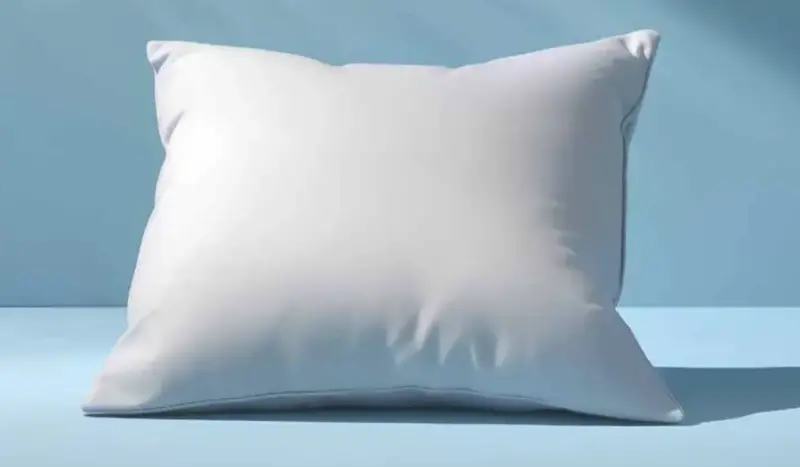
Best Pillow for Better Sleep
Choosing the best pillow for better sleep is one of the simplest ways to improve your nightly rest. Many people wait until their pillow looks worn out or starts to smell, but few realise how much it affects comfort, posture and overall well-being. Since we spend about a third of our lives sleeping, the pillow we use plays a major role in supporting the head and neck, maintaining spinal alignment and helping us wake up refreshed instead of stiff or tired.
A good pillow does much more than cradle your head. It reduces muscle tension, improves breathing, prevents snoring and supports healthy sleep posture. Because there are so many shapes, materials and designs available today, choosing the right pillow may feel confusing. This guide breaks down why pillows matter, the types you will find in stores and how to choose the best pillow for better sleep based on your sleep style and personal needs.
How the Best Pillow for Better Sleep Supports Your Body
A pillow’s main purpose is to support your head, neck and spine while you sleep. When your spine is aligned, your muscles relax and your breathing stays smooth. If the pillow is too high or too flat, your neck bends at an uncomfortable angle, which can lead to strain, tossing and turning, tension headaches and even disrupted breathing.
Comfort is also essential. Everyone has different preferences based on body size, sleeping position and health concerns. A well-chosen pillow cushions pressure points, improves circulation and supports a deeper, more restful sleep. The best pillow for better sleep provides enough support to maintain alignment while still feeling comfortable.
A Guide to Pillow Materials and Types for Better Sleep
Modern pillows come in many materials, each with unique strengths. Understanding these types helps you choose the best pillow to improve sleep according to your needs.
Memory Foam Pillows for Better Sleep
Memory foam softens with heat and pressure, moulding to your head and neck for personalised support.
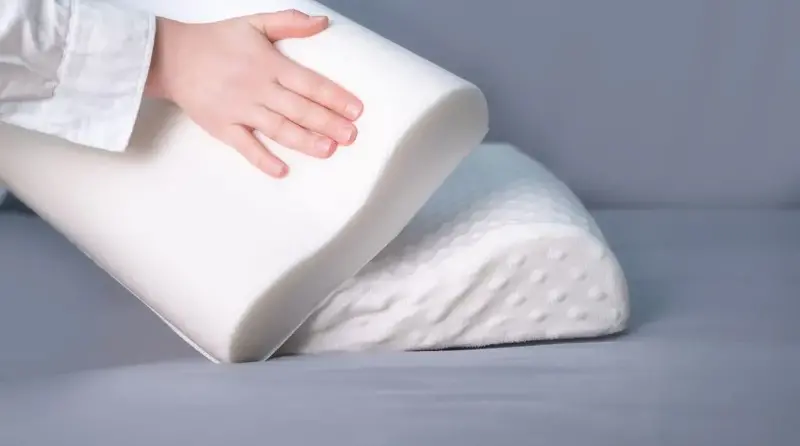
Preparing for sleep, woman arranges pillows for comfort. Neck pillows for comfortable travel by plane, car, or bus.
Pros:
-
Excellent contouring
-
Even weight distribution
-
Supports spinal alignment
Cons:
-
Retains heat
-
May release an initial odour
-
Block foam feels firm for some sleepers
Types:
-
Block memory foam: Uniform support but less breathable
-
Shredded memory foam: More adjustable and better airflow
Some memory foam pillows have contoured shapes for added neck support.
Latex Pillows for Support and Cooling
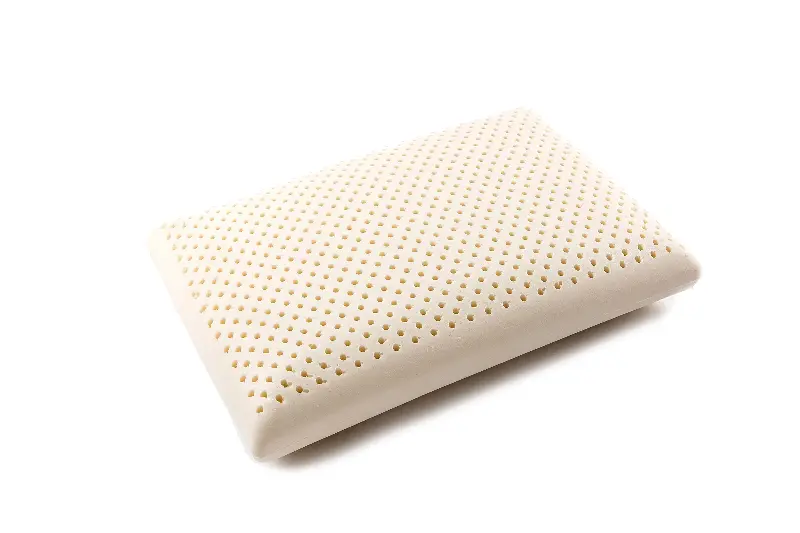
Latex pillows are responsive, supportive and naturally cooler than memory foam.
Pros:
-
Sleeps cooler than memory foam
-
Very durable
-
Naturally resistant to mould and dust mites
-
Great for allergy-sensitive sleepers
Cons:
-
Higher loft may not suit stomach sleepers
-
Natural latex can be costly
Latex comes in block or shredded forms. Dunlop latex is denser and more durable; Talalay latex feels lighter and airier.
Feather Pillows
Feather pillows use the outer feathers of ducks and geese, giving them more structure than down.
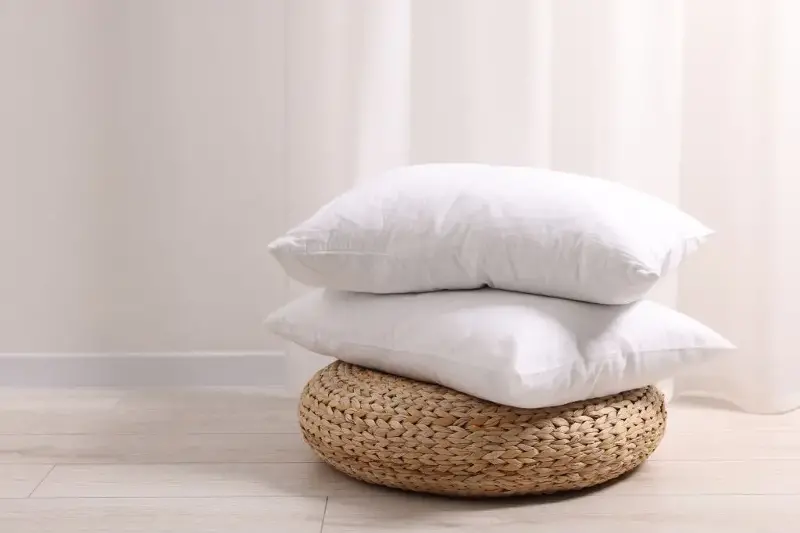
Soft pillows on wicker pouf in room, space for text
Pros:
-
Soft, mouldable
-
Affordable
-
Supportive compared to down
Cons:
-
Flatten over time
-
May poke through fabric
-
Potential allergens
They suit back and side sleepers due to their loft and shapeability.
Down and Down-Alternative Pillows
Down consists of the soft, fluffy undercoating beneath a bird’s outer feathers. It feels plush, light and luxurious.
Pros:
-
Very soft and airy
-
Easily moulded
-
Excellent for back and stomach sleepers
Cons:
-
Expensive
-
Can trigger allergies
Down alternative uses polyester microfibre to mimic down’s softness without allergens. It is more affordable, easier to maintain and offers a variety of firmness levels.

decorative light pillows made of natural fabrics to decorate the home and create coziness. generative AI
Polyester Pillows
These budget-friendly pillows, often called poly-fill, are lightweight and hypoallergenic.
Pros:
-
Affordable
-
Easy to clean
-
Available in all firmness levels
Cons:
-
Flatten quickly
-
Not breathable
-
Prone to lumping
Suitable for all sleep positions depending on firmness.
Buckwheat Pillows
Filled with buckwheat hulls, these pillows are firm, heavy and offer excellent airflow.
Pros:
-
Very supportive
-
Highly breathable
-
Extremely durable (up to 10–20 years)
-
Adjustable loft
Cons:
-
Heavy
-
Can be noisy
-
Too firm for some sleepers
Ideal for back and stomach sleepers.
Gel Pillows
Gel pillows help hot sleepers stay cool. Many combine gel with memory foam or latex.
Pros:
-
Cooling
-
Hypoallergenic
-
Keeps shape well
Cons:
-
Can feel firm
-
Higher price point
Best for back and stomach sleepers.
Cotton Pillows
Cotton fill is natural, breathable and hypoallergenic.
Pros:
-
Light and odourless
-
Easy to clean
-
Suitable for those sensitive to synthetic materials
Cons:
-
Can become lumpy
-
Flattens over time
-
Does not contour to the head
Works for all sleep positions.
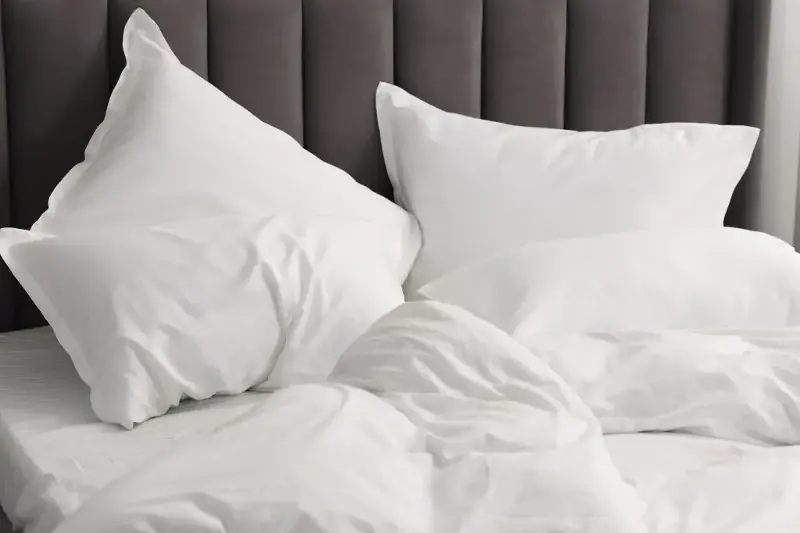
Many soft pillows on bed at home
Microbead Pillows
These pillows contain tiny polystyrene beads that mimic a soft bean bag.
Pros:
-
Conforms well to the head and neck
-
Promotes airflow
-
Good pressure relief
Cons:
-
Can emit chemical odours
-
May lose shape over time
-
Can tear and leak
Suitable for side, stomach and even back sleepers.
Wool Pillows
Sheep’s wool offers durability and temperature regulation.
Pros:
-
Breathable and moisture-wicking
-
Naturally allergy-friendly
-
Warm in winter and cool in summer
Cons:
-
Can feel dense
-
May clump over time
-
Less contouring compared to foam
Suitable for all sleep positions depending on firmness and loft.
Bamboo Pillows
Bamboo pillows often pair shredded foam with a bamboo-viscose cover.
Pros:
-
Moisture-wicking
-
Hypoallergenic
-
Cooling
Cons:
-
Can be heavy
-
Not easy to wash
-
May release odours initially
Best for back sleepers.

A Beautiful young woman on bed
Choosing the Right Pillow
There is no one-size-fits-all pillow. Your ideal choice depends on several personal factors.
Loft and Firmness
-
Loft: The height or thickness of the pillow
-
Firmness: How much the pillow compresses under your weight
Correct loft keeps your neck aligned without tilting upward or downward. Correct firmness prevents your head from sinking too deeply.
Sleep Position
Back Sleepers
-
Need medium loft and medium firmness
-
Should avoid pillows that raise the head too much or flatten overnight
-
Conforming materials like memory foam offer excellent support
Side Sleepers
-
Need high loft and firm support to fill the gap between head and shoulder
-
Shredded memory foam, down or down alternative can help maintain height and shape
-
A firmer pillow helps prevent sinking and misalignment
Stomach Sleepers
-
Need low loft (5 cm or less) and a soft, compressible pillow
-
Down or down-alternative works well
-
Firmer pillows strain the neck
Allergies and Sensitivities
Choose hypoallergenic pillows such as latex, polyester or down-alternative. Use protective covers to guard against dust mites and mould.
Temperature
Hot sleepers should look for cooling materials: latex, buckwheat, gel-infused foam or natural-fibre covers like cotton or bamboo.
Durability and Maintenance
-
Latex and memory foam last several years.
-
Polyester and feather pillows flatten more quickly.
-
Check whether the pillow is machine-washable or needs special care.
How to Find Your Ideal Pillow Height
Try this simple towel test to determine your personal pillow height.
-
Stack four folded towels into a square.
-
Lie on them as if they were a pillow.
-
If your head tilts upward, the stack is too high—remove a towel.
-
Repeat until your neck feels neutral and supported.
-
Measure the height of the towel stack. This is your Back Sleeping Measurement.
-
Repeat while lying on your side. This is your Side Sleeping Measurement.
Back sleepers usually need 10–15 cm; side sleepers may need 10–17 cm, depending on shoulder width.
Use your measurements as a reference when shopping.
When to Replace Your Pillow
Most pillows need replacing every 1–2 years. Replace sooner if your pillow becomes:
-
Lumpy
-
Flat
-
Discoloured
-
Smelly
-
Unable to spring back when folded
If you wake with neck stiffness that improves during the day, your pillow may no longer offer proper support.

No more work. Top view on a young woman lying in bed while taking a break from work and sleeping tight at home.
Invest in Your Rest
Your pillow may seem simple, but it has a major impact on your sleep quality and overall health. Choosing the right one is a small yet powerful act of self-care that pays off in better rest, improved mood and enhanced well-being.
Take time to understand your sleep habits. Test different pillows. Pay attention to how your body feels in the morning. The perfect pillow is not a luxury—it is a necessity. Once you find it, you’ll sleep more comfortably and wake more refreshed.
Sleep is where we restore ourselves for the day ahead. And the right pillow? It is the unsung hero of every great night’s rest. PRIME