



The Energy & Fatigue Series
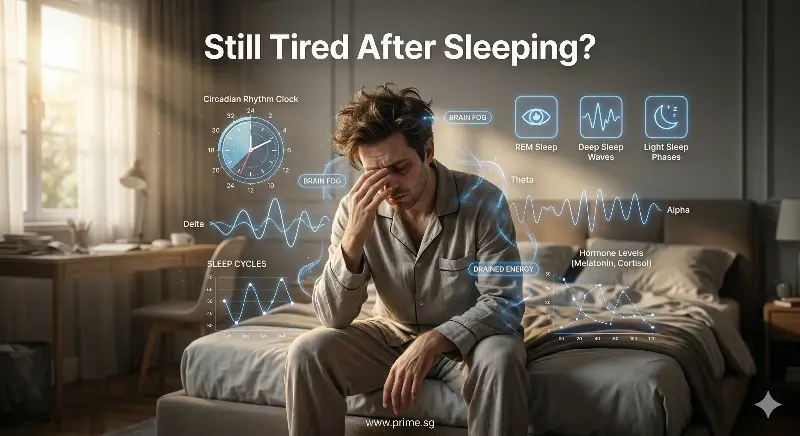
Feeling tired after sleeping despite getting 7–8 hours may signal deeper issues with sleep cycles, stress hormones, or metabolic balance.
Still tired after sleeping?
You went to bed early.
You got your 7–8 hours.
And yet, you wake up feeling like you barely rested at all.
If you’re still tired after sleeping, you’re not alone.
Many people today are not sleep-deprived—they’re rest-deprived.
Sleep is not the same as recovery
We often assume more sleep equals more energy.
But recovery depends on what happens during sleep:
- Deep sleep (physical repair)
- REM sleep (mental recovery)
- Stable sleep cycles
If these are disrupted, you may still feel tired after sleeping.
5 reasons you’re still tired after sleeping
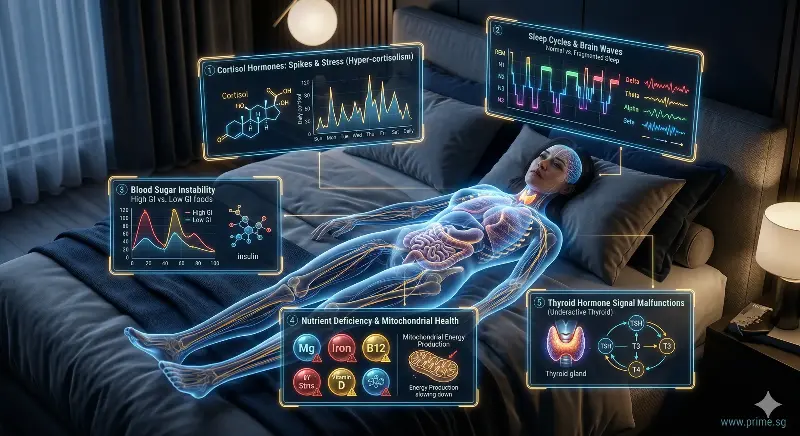
Persistent fatigue after sleep may be linked to disrupted hormones, poor sleep quality, blood sugar fluctuations, nutrient deficiencies, or hormonal imbalances.
1. Stress hormones are out of sync
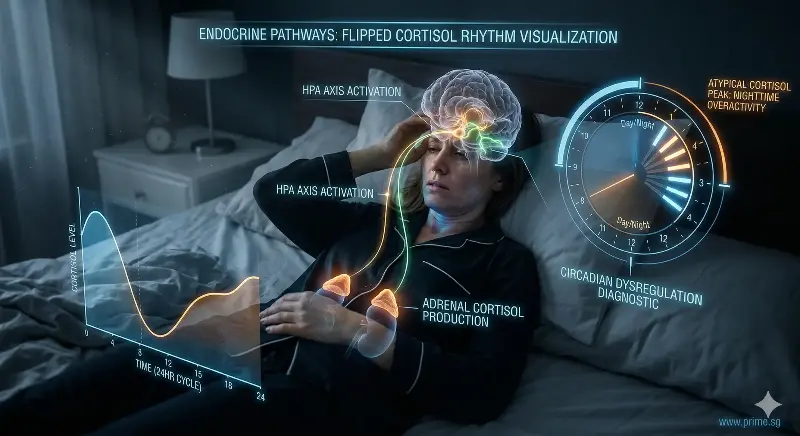
When cortisol rhythms are disrupted by chronic stress, you may feel tired after sleeping but restless or alert late at night.
Cortisol should rise in the morning and fall at night.
Chronic stress can flip this pattern.
👉 Result: tired after sleeping but wired at night.
2. Poor sleep quality
Even if you sleep long enough, frequent waking or light sleep reduces recovery.
You may not remember waking—but your body does.
3. Blood sugar fluctuations
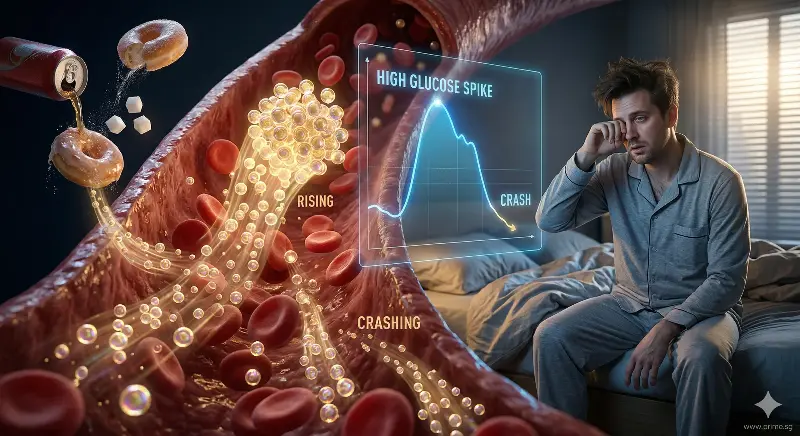
Blood sugar spikes and crashes overnight can disrupt sleep stability and contribute to waking up tired and sluggish.
A diet high in refined carbs and low in protein can cause overnight spikes and crashes.
This can leave you feeling tired after sleeping.
4. Nutrient deficiencies
Low levels of iron, vitamin B12, vitamin D, or magnesium can contribute to fatigue despite sleep.
5. Hormonal imbalances
Conditions like thyroid issues, perimenopause, or andropause can affect energy levels.
The hidden problem
Sleep is meant to reset your body.
But if your systems are out of balance, that reset doesn’t happen.
So you wake up:
- tired
- foggy
- unrefreshed
How to stop feeling tired after sleeping
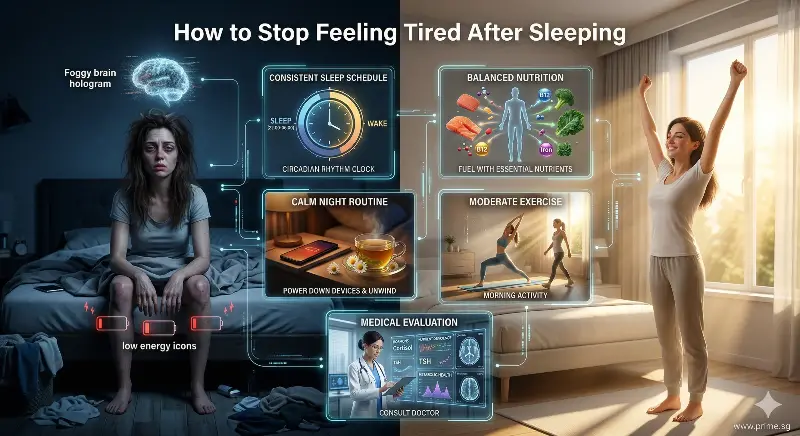
Simple Habits to Stop Feeling Tired After Sleeping
1. Keep a consistent sleep schedule
Regular timing improves sleep quality.
2. Support your nutrition
Focus on protein, whole foods, and essential nutrients.
3. Reduce night-time stimulation
Limit screens, caffeine, and stress before bed.
4. Move—but don’t overdo it
Too much intense exercise can worsen fatigue.
5. Check underlying causes
If fatigue persists, consider evaluating:
- hormones
- deficiencies
- metabolic health
When to pay attention
If you’re consistently still tired after sleeping, don’t ignore it.
It may be your body signalling a deeper issue.
Final thought
Feeling tired after sleeping isn’t just about needing more rest.
It’s about whether your body is truly recovering.