


The East Indian community—known to be the original Christian inhabitants of Mumbai—also established settlements in the surrounding islands of Salsette and Thane. With Konkan coastal roots, the community found its origins when Portuguese missionaries converted the farming and fishing Koli folk by way of increasing the number of Christians along the coast. What makes their cuisine distinct compared to most other micro-cuisines as well as Konkani coastal food at large, is the focus on meat-based dishes drawing from Portuguese and Maharashtrian influences.
Additionally, slow-cooking methods and the use of clay pots also characterise the food from its Goan or Mangalorean counterparts. Much like most micro-cuisines across the country, East Indian food is also distinguished by traditional breads that are eaten as snacks or as accompaniments to curries, stews and other side dishes. Contrary to the larger majority of Catholics within Maharashtra and Goa who prefer to eat pao, East Indian breads are essentially ‘handbreads’ or those prepared within kitchens that are catering to a smaller volume of eaters.
Bhokache Orias

Image Credits: Wikimedia Commons
A semi-sweet, doughnut-like bread made using a mix of powdered lentils such as urad dal, chana dal, all-purpose flour and jaggery—the bhokache orias—also known as bhokyachi wadai, worias or waria, derives its name from the hole (bhoka in Marathi) in the centre. Considered to be a significant culinary feature at East Indian weddings, the deep-fried bread is known to be prepared in large batches for serving with green chutney, sorpotel, lonvas and pickles. Recipe variations are also known to add spices such as cumin and pepper for additional flavour.
Fugiyas
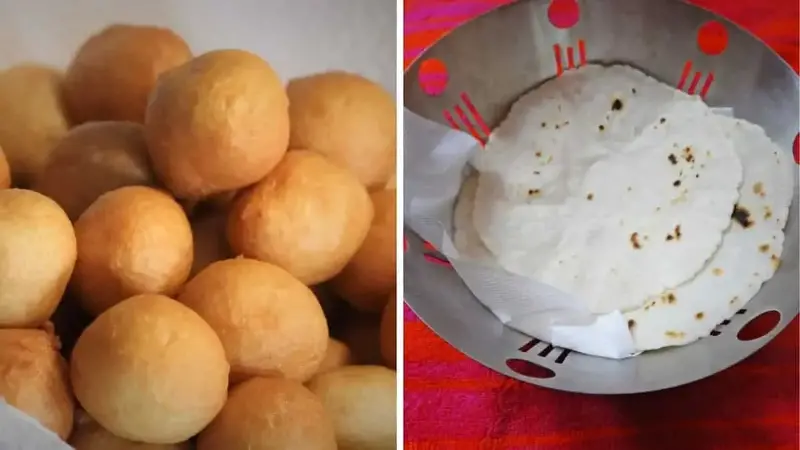
Fugiyas or foogyas are considered to be the most popular and identifiable bread of the community. Deep-fried until golden-brown, these hollow, slightly sweet balls are made using a fermented whole wheat flour batter in combination with toddy, eggs, sugar and yeast. These morsels are generally paired with spicy meat curry preparations such as the sorpotel or vindaloo—and are served during special occasions, wedding events or feasts. Derived from the Marathi word fugga which means balloon, these treats are also eaten as a tea time snack independent of any sides; and are also known to have savoury variants.
Also Read:
Bottle Masala: Know Everything About This East Indian Spice Blend
Chitaps
A rice-based bread which is best described to be a lacy, handkerchief-like preparation—chitaps or East Indian polas are made using a mixture of rice flour and coconut milk. Their slightly chewy texture differentiates them from the Mangalorean neer dosa, despite being cooked on a flat skillet or griddle. Paired with mutton curries or coconut-based dishes, what also makes these crepes special is that they’re also enjoyed with fillings such as potatoes, minced meat as well as a combination of coconut and jaggery. Some variations of the chitaps also add a pinch of turmeric powder to give the crepe an unmissable golden yellow hue.
Apas
The best way to describe the apas or appas is that they’re a variation of the Maharashtrian rice flour bhakri. The unleavened bread also draws from the Kerala or Goan appam—in that it has a soft centre with lacy edges. These gluten-free breads were historically made using a type of red or raate rice and coconut is relished with a chicken khudi or shrimp curry (zavla)—where the dough for the apas is created by cooking the rice flour in hot water to make a dough called khoi. The soft texture of the apas also make them a sought-after speciality for breakfast and snacking, where it is eaten with chutney or pickle.
Pangi

Image Credits: PixaHive
Unlike the Gujarati panki—the East Indian pangi is griddle-cooked over a banana leaf in ghee, instead of being steamed. Paired with a prawn pickle or balchao curry, the rice-flour based bread is crisp on the edges with a slightly chewy centre. Like most other traditional breads from within the community, the pangi also has a slight sweetness to it from the use of jaggery, which is combined with rice flour, milk and cream to form a soft dough. The pan-toasted method for the unleavened bread also makes it ideal to relish when still warm, for textural integrity—thus making it limited in its scope as a homemade creation.