



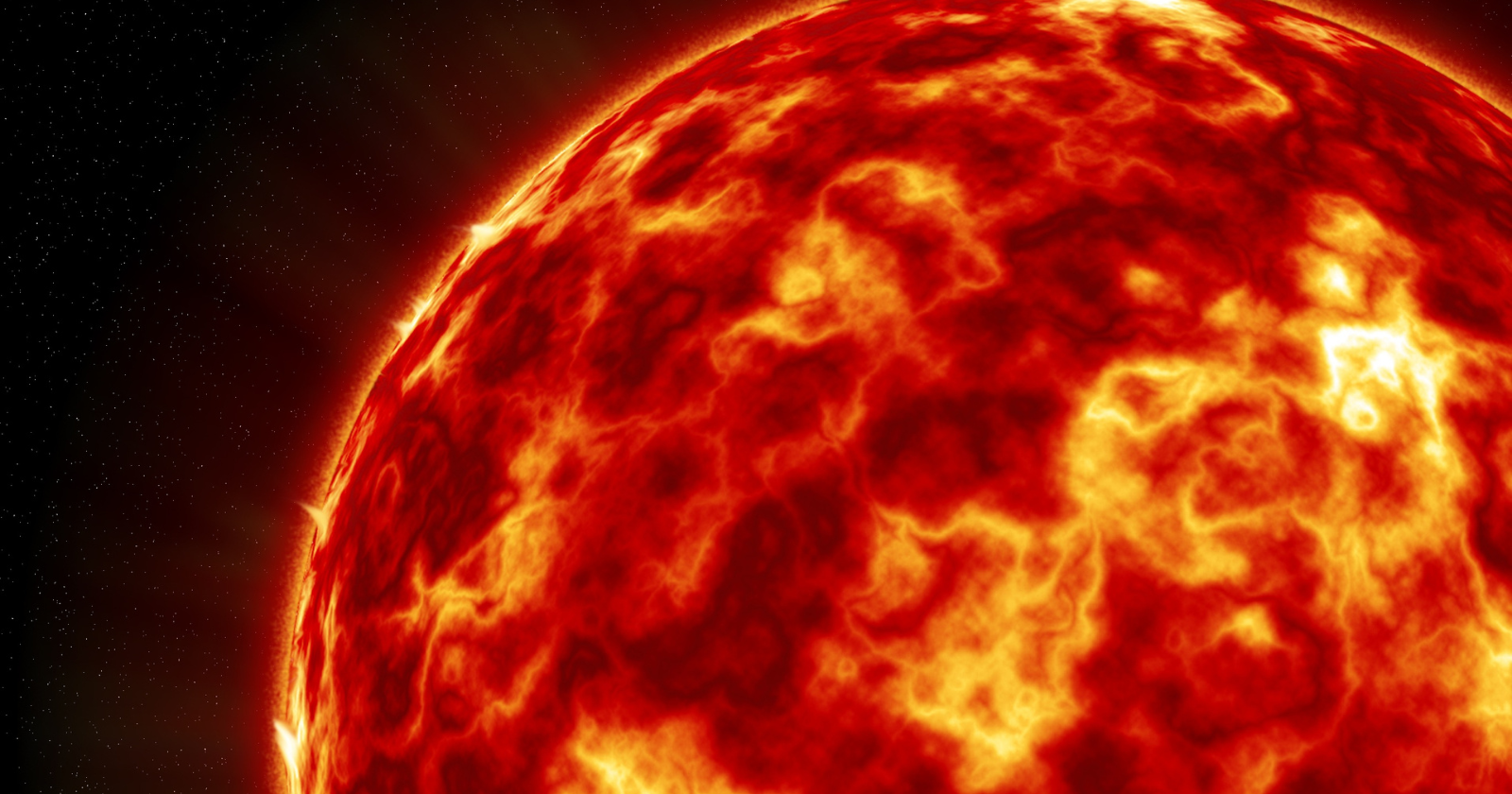
The specific numerical fact that essentially every high-school astronomy textbook published in the specific interval between approximately 1970 and the present has cited as the single most-substantial summary statistic about the mass distribution of the solar system is that the Sun contains 99.86 percent of all the mass in the entire solar system. The specific implication of that specific decimal-point-precision figure is one that essentially every subsequent astronomy student who has encountered it has, on some level, failed to fully absorb. The four gas giants (Jupiter, Saturn, Uranus, Neptune), the four terrestrial planets (Mercury, Venus, Earth, Mars), the substantial and progressively-increasing catalogue of confirmed planetary moons (currently exceeding 400 as of 2025 for the specific combined Jovian, Saturnian, Uranian, Neptunian, Martian, and Earth systems), the substantial millions of asteroids in the specific main asteroid belt between Mars and Jupiter, the substantial billions of Kuiper Belt objects beyond Neptune, the substantial hundreds of billions of comets in the specific Oort cloud extending outward to approximately 100,000 astronomical units, and the specific interplanetary dust that permeates essentially every cubic kilometre of space between the specific gravitational boundaries of the Sun’s heliosphere — added together, and then combined into a single hypothetical astronomical object — would total approximately 0.14 percent of the Sun’s mass. That specific fraction is, on the standard fractional-arithmetic conversion, approximately one seven-hundred-and-fourteenth. The specific statement that the combined non-solar mass of the solar system is less than one seven-hundredth of the Sun is therefore, on strict mathematical grounds, accurate.
The single most-remarkable single feature of the specific stellar system that produced the specific evolutionary conditions under which the specific chemical processes of terrestrial biology eventually generated the specific human observers currently writing about it is that essentially all of its matter is concentrated in a single object, and essentially all of the remaining matter is concentrated in a specific single second object — the planet Jupiter — that itself contains approximately 71 percent of everything that is not the Sun. As detailed in NASA’s institutional summary of the specific Sun’s mass, composition, and dynamical role within the solar system, the specific solar mass is approximately 1.989 × 10³⁰ kilograms — approximately 333,000 times the mass of the Earth, approximately 1,047 times the mass of Jupiter, and approximately equal to the combined mass of every other star of similar size in the substantial 25-light-year radius surrounding the specific G2-type main-sequence star that our planetary system happens to orbit. The Sun’s diameter is approximately 1.39 million kilometres — approximately 100 times the diameter of Earth, approximately 10 times the diameter of Jupiter, and sufficient to contain the substantial equivalent volume of approximately 1.3 million Earth-sized planetary bodies packed into its interior. And yet the specific density of the Sun (approximately 1.41 grams per cubic centimetre) is approximately one-quarter the density of the Earth (approximately 5.51 grams per cubic centimetre), because the Sun’s substantial mass is composed almost entirely of the specific two lightest chemical elements in the periodic table: approximately 73 percent hydrogen and approximately 25 percent helium, with approximately 2 percent of the total mass distributed across the specific heavier chemical elements (oxygen, carbon, iron, and others) that constitute essentially all the material of the terrestrial planets.
The specific breakdown of where the remaining 0.14 percent of solar system mass actually lives is, per NASA Goddard Space Flight Center’s National Space Science Data Center institutional planetary fact sheet documenting the specific measured masses of every major solar system body, substantially uneven in ways that essentially no popular presentation of the 99.86-percent figure adequately conveys. Jupiter alone contains approximately 1.898 × 10²⁷ kilograms of mass — approximately 318 Earth masses, and approximately 0.095 percent of the total solar system mass. In percentage terms of the non-solar mass, Jupiter alone contains approximately 71 percent. Saturn adds approximately another 21 percent of the non-solar mass (approximately 95 Earth masses, approximately 0.028 percent of the total). The remaining two gas giants (Neptune at approximately 17 Earth masses and Uranus at approximately 14 Earth masses) collectively contribute approximately 7 percent of the non-solar mass. The four gas giants together — Jupiter, Saturn, Uranus, and Neptune — therefore contain approximately 99 percent of everything that is not the Sun. The specific four terrestrial planets that comprise the substantial majority of the specific material that most humans think of when they use the word “planet” (Mercury, Venus, Earth, and Mars) collectively contribute less than one percent of the non-solar mass. All the moons, all the asteroids, all the comets, all the dwarf planets, and all the interplanetary dust — collectively — contribute a fraction so small that it can only be measured in the sixth or seventh decimal place of the total mass calculation.
How this happened
The specific reason the solar system’s mass is distributed in the specific way it is distributed traces directly back to the specific mechanism by which the solar system was originally formed approximately 4.6 billion years ago. Per the Vaia physics textbook’s specific summary of the mass concentration in the solar system and its physical basis, the current standard nebular hypothesis of solar system formation holds that a specific substantial molecular cloud of interstellar gas and dust (composed primarily of hydrogen and helium remaining from the specific Big Bang, with trace heavier elements produced by earlier generations of stars that had exploded as supernovae and progressively distributed their nuclear-fusion products through the surrounding interstellar medium) began, at some specific gravitationally unstable moment approximately 4.6 billion years ago, to collapse under its own weight. The centre of the collapsing cloud accumulated approximately 99.86 percent of the total available mass and eventually reached sufficient density and temperature to initiate the specific hydrogen fusion reaction that has, across the subsequent 4.6 billion years, produced the substantial electromagnetic radiation that current human observers refer to as sunlight. The remaining 0.14 percent of the collapsing molecular cloud formed a rotating disc of gas and dust around the newly-formed Sun, from which the specific planetary bodies subsequently coalesced through a substantial 100-million-year process of progressive gravitational accumulation. The specific reason the four inner planets are substantially small and composed primarily of heavier elements while the four outer planets are substantially large and composed primarily of hydrogen and helium is that the specific temperature gradient across the early protoplanetary disc allowed heavier compounds (silicates, iron, water ice) to condense at greater distances from the Sun than the specific volatile hydrogen and helium gases could remain in solid form.
What the number actually means
The specific cosmological implication of the specific 99.86-percent figure that essentially every subsequent astronomy student who has encountered it has, on some level, failed to fully absorb is that the specific solar system is, in essential respects, one very large star with an approximately negligible collection of solid material orbiting it. As reported in Sikho.ai’s summary of the specific implications of the Sun’s overwhelming mass dominance for the physical structure of the solar system, the specific gravitational hierarchy this mass distribution creates is one in which essentially every other object in the specific 100,000-astronomical-unit sphere of the Sun’s gravitational influence is constrained to orbit the Sun by an overwhelming gravitational asymmetry from which no substantial escape trajectory is possible for any material object without the specific application of substantial external propulsion. The specific human artefacts that have, across the accumulated 68 years of human space exploration, been launched with sufficient velocity to eventually escape the Sun’s gravitational influence (Pioneer 10 and 11, Voyager 1 and 2, and New Horizons) constitute the substantially first material objects that human beings have ever produced that will not, on any timescale less than the specific age of the universe, eventually return to orbit the star that produced the specific atoms of which they are composed. The specific 99.86-percent figure is, in essential respects, the specific reason the human species is currently confined to a single planetary body orbiting a single star. The specific 0.14 percent of solar system mass that includes the specific planetary body on which the specific human species has evolved is, on the standard scale of stellar systems, approximately equivalent to the specific rounding error that would be produced by the specific arithmetic operation of adding together the specific masses of every object in a typical stellar system without checking the calculation twice.