



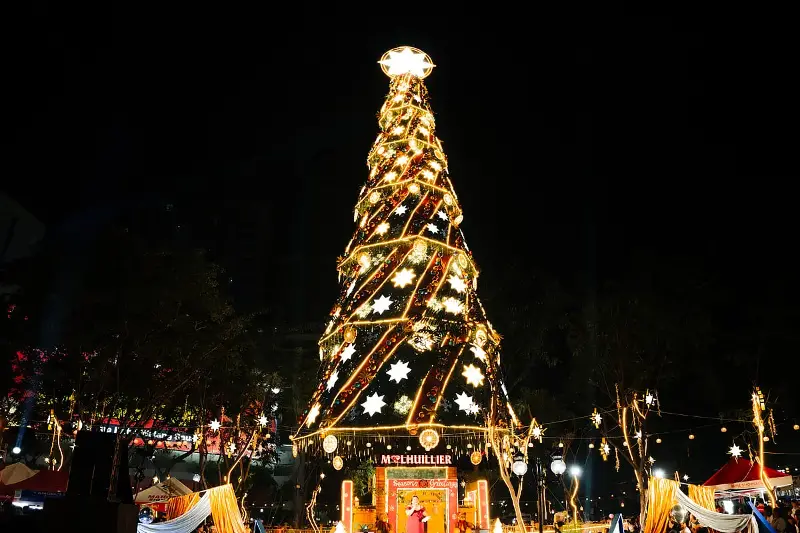
At the heart of Cebu, thousands of Sugbuanons gathered shoulder to shoulder, waiting for the first spark of the M Lhuillier Tree of Hope. The evening was warm, and the crowd was dense, yet people stayed patient. Cars barely moved around the circle, horns in melody, engines humming. In that stillness, people breathed.
They paused. They remembered. They hoped.
When the tiny bulbs slowly began to light up, one after another, the tree came alive, its glow spreading outward like a soft embrace. At that moment, it illuminated more than the Fuente circle. It touched the weary hearts of Cebuanos who spent the past months enduring disaster after disaster, quietly carrying pain, loss and fear. Tonight, they came hoping that the tree’s light might give them even the smallest spark to begin again.
Sept. 30, 2025 was supposed to be ordinary. Mothers humming their babies to sleep, workers dragging their tired feet home from another draining shift, families ending their day with routine comfort. Then the earth shook violently. A magnitude 6.9 earthquake struck Bogo City. It was sudden and unforgiving.

The month ended in horror. Houses trembled. Walls cracked open. People ran from their homes as the ground thundered beneath them. Children screamed. Adults cried out for help. Darkness swallowed everything. Dust filled the air as homes, once filled with laughter, collapsed into rubble.
The aftermath was worse than anyone imagined. News broadcasts showed scenes that broke hearts across the country. A father cried as he recognized the lifeless body of his daughter, covered in dust and blood. A mother kneeling over her son, whispering apologies she wished she could have said earlier. Families holding one another tightly as rescue teams searched for survivors.
For many, regret hit harder than the quake itself.
“I should have stayed home.”
“I should have held them longer.”
“I should have saved them.”
Days passed, but every tremor, every aftershock, reopened the wounds of that particular evening.
Trauma did not end with the quaking ground. Tuesday, Nov. 4, 2025, before the sun rose again, Typhoon Tino tore through Cebu. The floods came fast, unrelenting, sweeping away years of hard-earned investments, homes, and cherished memories.
Families climbed to rooftops. Parents clung to their children. Properties vanished. Memories drowned. Lives were stolen again. Lifetimes of care, effort, and love disappeared in an instant. Survivors were left to wonder, “If everything can be taken in an instant, can we still find joy?”
That question echoed through evacuation centers, through darkened streets, through the quiet rooms of homes left standing but empty. How can you still celebrate Christmas when the people who gave your life meaning are no longer beside you?
Yet even in grief, even in the exhaustion of starting again, Cebuanos rose. Some say resilience is our greatest strength and others say it is the burden we never asked to carry. Maybe both are true.
Because despite everything, Cebuanos still look for light, even the smallest one.
This year, the M Lhuillier Tree of Hope stands not just as a Christmas display, but as a symbol of honor, remembrance, and healing. It shines for the families who lost loved ones, for the workers who rebuilt broken roads and cracked walls, for the children who survived, and for every Cebuano, who continues to hold on. It shines for everyone who feels their spark fading.
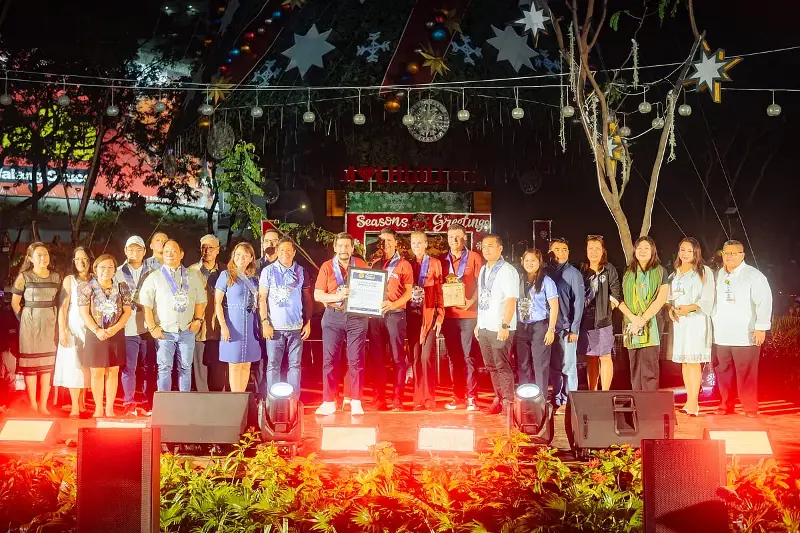
As the lights of the M Lhuillier Tree of Hope glimmered above, people looked up. Some with soft smiles, others with tears, but all carrying the same quiet prayer, “May we find hope again.” Because sometimes hope does not arrive loudly. Sometimes it begins with a single light in the dark. A reminder that even after storms, even after heartbreak, there is still a reason to continue, to smile, and to believe.
And tonight, the lights of the M Lhuillier Tree of Hope reach every heart, reminding us that hope never fades. (PR)