



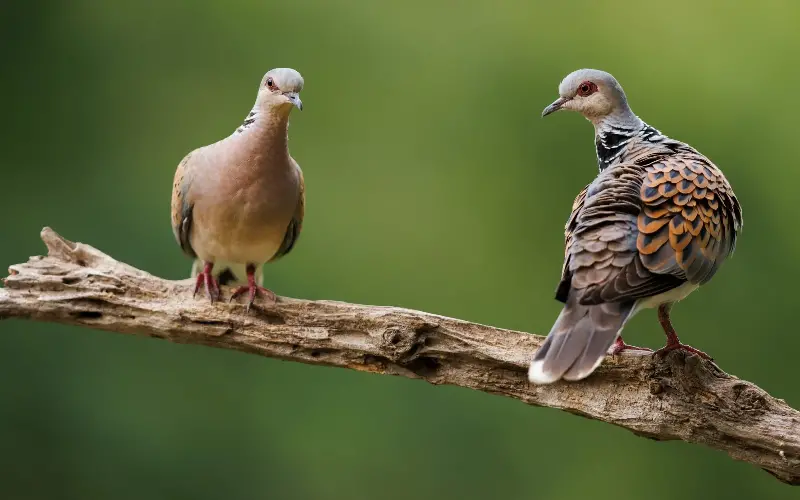
Turtle doves are being pushed closer to the brink of extinction in England by invasive deer eating their hedgerow habitats.
Muntjac deer, which stand 20 inches tall and are originally from Asia, have been blamed for fuelling the collapse in numbers of the bird, which have existed in England for centuries.
Natural England warned in a recent report that an explosion in the deer population, which also includes a rise in the number of non-native fallow deer as well as Muntjac, had contributed to a crisis for rare bird habitats.
Turtle doves are Britain’s fastest-declining bird species, with the population falling 99pc since the 1960s from around 125,000 pairs to just over 2,000 pairs.
The migratory species rely on dense, thorny scrub such as blackthorn and hawthorn to nest. However, this habitat is being destroyed by deer, which eat saplings and stop woodland and scrub naturally regenerating.
Mark Nowers, who runs the RSPB’s Operation Turtle Dove, which seeks to stop the species becoming extinct, said hungry deer were a major problem.
He said: “When we do advisory visits to farms to help them improve conditions for turtle doves, we look to find out if the farms or land holdings have any scrub, we look at its condition, and see if it’s good.
“If there are deer impacts in the area, we talk to the farmers about deer management.”
Muntjac deer weigh up to 18kg and eat up to 8pc of their body weight a day. Mr Nowers said: “Muntjac browse off fresh regrowth inhibiting natural regeneration, which is the key issue.”
A 2009 report by the Parliamentary Office of Science and Technology put the Muntjac population at 150,000 but experts believe it has grown since then.
Michael Ankar, of the Norfolk Deer Initiative, said: “Nobody knows how many muntjac there are. There are a lot more than any figures quoted, and there’s no reliable survey figures available.
“It is of paramount importance to protect scrub habitat for the turtle doves by reducing their numbers.”
Richard Negus, who is employed by farmers to restore hedges in areas where there are turtle doves, said overpopulation of deer was “disastrous for farmland bird species, including the endangered turtle dove”.
He added: “It is not hyperbole to state that deer are as much to blame for Britain’s habitat loss crisis as the growing curse of house building in rural areas.”
The turtle dove is an integral part of British folklore and is often used as a symbol of love because it mates for life. The term turtle dove is cockney rhyming slang for love and the species features in William Shakespeare’s poem, The Phœnix and the Turtle.
The species is also famously referenced in the English Christmas carol The Twelve Days of Christmas, thought to originate during the Georgian period.
Muntjac deer were imported into Britain by Herbrand Russell, the 11th Duke of Bedford, during the late Victorian period for his private collection. However, the deer escaped and started multiplying.
The 11th Duke also helped to introduce grey squirrels, which have devastated the red squirrel population by aggressively driving them out of woodland.
As well as turtle doves, ravenous non-native deer also pose a threat to other rare birds, including nightingales and willow warblers, which also rely on hedgerows and scrubby habitat.
David Simmonds MP, a member of the Conservative Environment Network, called for more people to eat deer meat to help address the problem.
He said: “Part of the reason for growing deer numbers is that people don’t see venison as a viable choice for dinner. The Government should amend its procurement policies so venison is served in schools and prisons.”
Herbicides that kill weeds are also posing problems for turtle doves, which eat weed seeds. The species is hunted in places like Morocco when they migrate to Africa in the autumn, which contributes to their endangered status.