



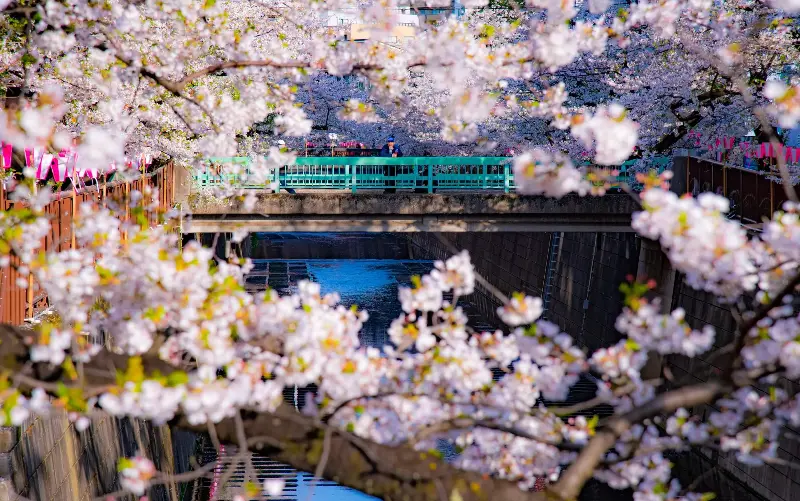
Tokyo is the world’s definitive megacity and it floors everyone at the first meeting. Every neon alley, hole-in-the-wall restaurant, rooftop, stack of tiny apartments and train carriage thrums with the energy of its 37 million residents. You understand immediately you will never experience it all, not a fraction of it, not in a lifetime. But that’s what makes it so relentlessly magnetic.
Each neighbourhood in Tokyo’s patchwork sprawl is distinct in identity and atmosphere. Bright lights and towering skyscrapers in Shinjuku, high-fashion couture in Aoyama, Harajuku’s teenage trend tribes and the old-school kimono shops and temples of Asakusa all make their contribution.
Global voraciousness for the Japanese capital has hit a fever pitch of late – a record-breaking 42.7 million visited last year – and yet the city barely notices, continuing to run as smoothly and safely as ever. Strangers still sit shoulder-to-shoulder wolfing down ramen, salarymen still sing karaoke with loosened ties, deals are being struck, music videos are being filmed, incense wafts over temple steps. Here’s how to see the best of it without getting overwhelmed.
For further Tokyo inspiration, see our guides to the city’s best hotels, restaurants, budget restaurants, shopping, nightlife, things to do and things to do for free.
In this guide:
How to spend your weekend
Day one: morning
Start the day at Tokyo’s oldest Buddhist temple, Senso-ji, located in the eastern Asakusa district. Wander beneath large red gates, through a seasonal market and past tiered temple roofs before copying locals as they clap hands, toss coins and burn incense at the main altar.
Afterwards, explore Asakusa’s narrow lanes, lined with tea houses, local restaurants and kimono stores. Don’t miss nearby Kappabashi Dori (also known as Kitchen Street) – a magnet for restaurateurs and chefs due to its kitchenware shops. For lunch, head to Sometaro, an understated restaurant in an old wooden house where shoes are slipped off at the door and okonomiyaki (savoury pancakes) are cooked at low tables with built-in hot plates.
Afternoon
After lunch, take a leisurely 20-minute stroll (or five-minute train) across the Sumida River in the direction of one of the city’s most famed attractions: the blue-white latticed façade of Tokyo Skytree, the world’s tallest freestanding broadcast tower. Head up to one of two observation decks in ear-popping lifts to take in a bird’s eye view of Tokyo’s urban sprawl (on a clear day, keep an eye out for the sight of Mount Fuji in the distance).
To explore Tokyo’s greener side, head next to Ueno Park. The park – which dates back to the 19th century – comes to life in spring, as more than 1,000 cherry trees burst into pink bloom, attracting packed crowds of springtime revellers. It’s also a perfect one-stop culture shop, as it’s home to a string of museums (Tokyo National Museum among them) plus temples, shrines, lotus ponds and even a zoo with celebrity panda residents.
Late
A visit to Tokyo is incomplete without at least one sunset cocktail in a skyscraper: head to the 31st floor of The Tokyo EDITION Toranomon, a chic foliage-packed space designed by Kengo Kuma with sweeping city views. Here, sip a plum and yuzu margarita on window-side sofas in the buzzy Lobby Bar – or, if the weather is warm, nab a table outside on the terrace of Tom Aiken’s Jade Room.
Head for dinner at Kaikaya By The Sea in Shibuya – a colourful, lively restaurant where charismatic staff serve an array of fresh fish dishes. I recommend the house special tuna jaw, maguro no kama.
Day two: morning
Keen to spot some future fashion trends? Head to Harajuku and disappear among the colourfully dressed teens, while exploring the fashion boutiques and waffle cafés that line bustling Takeshita Dori street. Then reclaim a sense of inner calm by following a wide forest-lined pathway just behind the station that leads to one of Tokyo’s most serene spots: Meiji Jingu, an elegant Shinto shrine, complete with tall wooden torii gates and tree-filled courtyards. If you’re lucky, you might catch sight of a wedding procession: look out for the billowing white kimono of a Shinto bride.
Afternoon
Refuel alongside fashionable locals with lunch at Maisen, a short walk from Harajuku. Here, melt-in-the-mouth tonkatsu breaded pork cutlets steal the show, served in an atmospheric former public bathhouse. Shopping should be next on the list: wander up nearby Omotesando, an elegant sloping boulevard lined with architect-designed fashion flagships, from the glass bubble façade of the Herzog & de Meuron-designed Prada Building to the tree-inspired form of the Tod’s Omotesando Building by Toyo Ito.
Pause for a breather at the Kengo Kuma-designed Nezu Museum: walk along its serene bamboo and stone entry path before perusing its Japanese heritage treasures (from tea tools to swords). For a moment of inner-city calm, I enjoy wandering the museum’s gardens, exploring the pathways to find ponds, stone lanterns and tea houses.
Late
For dinner, book a table at Kufuku, located in a 70-year-old Japanese house in the eastern Ueno district. Perfect for design and food lovers alike, it serves up an array of modern French dishes with a distinct Japanese edge. On my visits, highlights have included a flavour-packed roasted aged duck with orange confiture – and salad resembling an abstract painting, with 25 vegetables plus kombucha and sake sauce.
Finish the evening by indulging in that celebrated national pastime: karaoke. For a local experience, head to Uta Hiroba near Shibuya Station where you can rent a small private room with a large screen, some percussion and a drinks menu which can be ordered on a telephone – before belting out classic pop hits.
When to go
Japan prides itself on its distinct four seasons, making Tokyo a year-round destination. Springtime cherry blossoms and the autumnal leaves are clear highlights of the calendar, for Japanese and tourists alike (and the busiest time to visit).
The summer months of July until mid-September are less busy but often overwhelmingly hot and humid. The first wintry few months of the year are typically bone-chillingly cold, despite crisp sunshine and blue skies – although Mount Fuji views across the city and hot spring onsen bathing help make up for temperatures.
It’s best to avoid national holidays such as the first week of the New Year, when everything shuts down, and Golden Week (which normally spans the end of April and early May) when domestic travel is busiest.
Where to stay
Luxury living
The slick yet serene Aman Tokyo spans the top six floors of a 38-storey skyscraper in the business district Otemachi. The minimal interior taps into Japan’s design heritage with its wood, paper and stone, while tall partitions create loose boundaries between the lobby, lounge, restaurant and bar. The spa spans two floors and an epic 2,500 square metres.
Designer digs
Looking for a hotel with impressive design credentials? Join the city’s fashion crowds in the jungly plant-packed lobby at Tokyo EDITION, Toranomon, at the apex of a shiny tower in the revitalised business district Toranomon. The hotel fuses the creative flair of Ian Schrager (Studio 54 founder) with the organic minimalism of cult architect Kengo Kuma – to seductive effect.
Budget beauty
Stylish OMO5 Tokyo Otsuka blends a no-frills concept with contemporary design. Housed in a former office building and renovated by architect Tatsuro Sasaki, the hotel is inspired by yagura – a type of Japanese-style wooden scaffolding. Each of the 125 clean-lined and compact rooms have aromatic cedar wood frames, complete with raised beds and tatami-style flooring.
Know before you go
Essential information
Tourist board information: for Tokyo: gotokyo.org, and for Japan: seejapan.co.uk
Emergency fire and ambulance: 119
Emergency police: 110. For English-language assistance with police, call (minus international code) 03 3501 0110 (office hours)
British Embassy: No 1 Ichiban-cho, Chiyoda-ku (0081 3 5211 1100; ukinjapan.fco.gov.uk). Foreign Office advice: gov.uk/foreign-travel-advice/japan
The basics
Flight time: London to Tokyo flights currently take at least 13 hours 45 minutes
Currency: Japanese yen; £1 = 211 yen at the time of writing
International dialling code: +81
Local laws and etiquette
Japan is famously a minefield of often unspoken rules for foreigners. From handling chopsticks to getting into taxis, almost every aspect of daily life is governed by rigorous etiquette. While exceptions are made for foreigners, here are a few tips to avoid turning your visit into a one continuous faux pas:
- There is no culture of tipping, so don’t try to tip in taxis or in restaurants (unless you want them to come running after you to give the money back). Service charges tend to be added in more high-end establishments such as international luxury hotels.
- And never try to open the door of taxis yourself – they are always automated. Getting in on the wrong side is also a no no..
- It’s frowned upon to talk on your mobile on public transport.
- Never wear shoes on tatami mat floors.
- It’s regarded as bad manners to blow your nose in public.
- When receiving business cards, accept with two hands (and optional bow), and don’t immediately put it away in your pocket but leave it out to admire for a while.
- In a Japanese onsen (hot spring), remove all clothes and wash at the low taps before entering the baths.