



Classical music and jazz. They’re like jealous siblings who deep down love each other, but just can’t stop rowing in public. At least, that’s how it used to be. In recent decades they’ve been indulging in a very prolonged kiss-and-make-up. For a while this love-in was a bit one-sided. Jazz was allowed into the temples of classical music, but not vice-versa.
Now it seems the welcome is being returned. Ronnie Scott’s jazz club in London, whose history of hosting the greatest names in jazz stretches back to 1959, is launching a classical music series. It will take place every Monday night, in the club’s swanky refurbished first-floor space Upstairs at Ronnie’s.
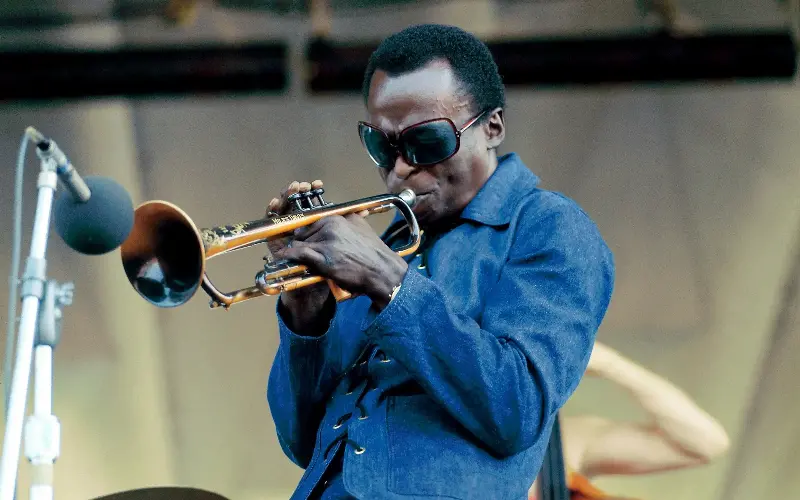
So why would classical musicians want to appear in a jazz club? It’s easy to see what jazz gets from being welcomed into classical concert halls: respect, something the great jazz musicians have always yearned for. Duke Ellington and Miles Davis both disliked the term “jazz”, which was burdened with the disreputable origins of the art form in “rent parties” and brothels. It suggested the music was good for dancing and parties and not much else. Jazz was often the subject of moral panics among white American cultural commentators, who liked to link the horrors of voodoo and illicit sex with this dangerously intoxicating music.
Against that, black musicians were determined to assert jazz’s claim to be a musical form as deserving of respect as any other. Duke Ellington raised jazz pieces from the three-minute miniature to the scale of symphonic suites. John Coltrane elevated jazz still further, to the level of a spiritual exercise. The jazz pianist Billy Taylor spoke for many of his confreres when he declared “Jazz is America’s Classical Music. It is both a way of spontaneously composing music and a repertoire, which has resulted from the musical language developed by improvising artists.”
But he put his finger on a problem when he added, “Many Americans have been consistent in their bias against it. They believe that western-European classical music is superior to any other in the world, and therefore the only music that warrants serious and intensive study.”
The thing that makes classical music superior, in the eyes of many, is the fact that it’s enshrined in works, laboured over patiently by a genius anxious to get every last detail perfect, and fixed for ever in musical notes. There’s something reassuringly solid about classical music. You can buy a copy of Beethoven’s 3rd symphony and carry it round in your pocket. Against that solidity, jazz musicians like Billy Taylor strive to assert the equal validity of something worryingly evanescent – an improvisation, which happened one night in one place, and then vanished forever.
Also the word “improvisation” seems to indicate something free-and-easy, and so it is. It is also a supreme effort, which aims at transcendence in the moment. As the jazz writer Ralph Ellison put it, “Each musician when he takes a horn in his hand… when he begins to ad lib on a given composition with a title and improvise a new creative melody, this man is taking the place of a composer. He is saying, “Listen, I am going to give you a new melodic conception on a tune you are familiar with. I am a composer.”
So at its best, improvisation is something that blazes as brightly as the most carefully honed symphony. But in Western culture, the idea of the written “work of music”, constructed according to an elaborate “theory of music” worked out over centuries, has a colossal prestige, which tends to pull every other form of music into its orbit.
Jazz has yielded to this pull, to a degree. Many jazz musicians are not content for jazz to be America’s very own, special kind of classical music. They want their music to be classical in a different sense, i.e. more like classical music. And so we have the spectacle of jazz musicians like Wynton Marsalis composing concertos and symphonies, and jazz pianists like Vijay Iyer and Brad Mehldau fashioning variations on themes by Robert Schumann and Bach.
I have to admit to being bothered by this “classicisation” of jazz. The idea of “finished perfection” is alien to jazz, but once it starts to flirt with classical music it’s bound to cast its insidious spell. Jazz should be risky, untidy at the edges, dare I say even a little bit louche. I have a twinge of anxiety that classical music’s respectability and orderliness might seep from the classical series Upstairs at Ronnie Scotts down to the basement club where that exciting, somewhat disreputable thing called jazz takes place.
But let’s look on the bright side. Perhaps the influence might flow the other way. Classical music was actually full of improvisational freedom right up to the time of Beethoven and beyond; it was only the ever-expanding tyranny of the written note which killed it. Ronnie Scott’s has a roster of lively young classical musicians lined up, who are surely open to new ideas. Perhaps the spirit of jazz in those hallowed walls will inspire them to take classical music in a new direction – towards freedom.