



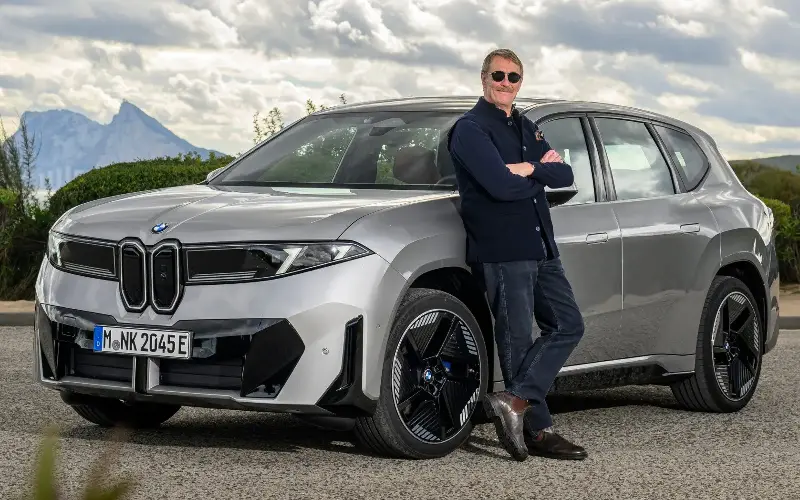
BMW is very excited. So excited, in fact, that my teeth ache after hours of earnest technical and design briefing on the iX3, the SUV vanguard for its neue klasse electric architecture which will underpin 40 new models over the next two years.
Neue klasse refers to the impact of BMW’s epochal range of saloons produced between 1962 and 1972, which rescued the company from its Fifties financial crisis. Wieldy, with amazing engines, these well-proportioned saloons are the lodestone for this fundamental revamp of BMW.
What’s neue, pussycat? An advanced battery propulsion system with cylindrical cells like so many Duracells, for a start. And an OSX (10) operating system, a Panoramic iDrive dashboard display and a new software-based ride and handling system (all of which I’ll explain).
It’s 20 per cent cheaper to build, the battery is 20 per cent more energy dense than its predecessor, the electrical operating systems work on an 800-volt architecture which speeds energy flows, reduces weight and allows 30 per cent faster charging. In addition, the 108.7kWh (usable) battery pack with its high nickel construction is 10 per cent lighter than the old iX3, which all adds to a virtuous circle of performance, efficiency and range.
Battery cars get better
The outgoing iX3, BMW’s best-selling car, was built in China, cost about £65,000 and had a battery range of 286 miles. This new one is produced in Hungary, costs £58,755 (some 10 per cent less) and has a range of 500 miles. Who says battery cars aren’t getting any better?
In Germany this is seen as, if not the last throw of the dice, at least a time for the premium makers to stand up and be counted in the new world order of electric cars in which China’s hidden subsidies, cost advantages and control over the raw materials for battery production have allowed its car firms to undercut everyone. And now the Chinese are moving into premium cars, typically the preserve of Germany.
BMW is counting on its style, technological efficiency and great ride and handling to appeal to buyers, but in a world of cost-per-mile road charging, proliferating speed controls and self-driving cars, do people still care about such attributes?
There’s not much to remind you of the svelte neue klasse 1502 saloon of the 1970s in this 2,285kg, 463bhp/476lb ft, 130 mph, four-wheel-drive family SUV. As well as being large, wide and powerful, it is also slippery, with a drag coefficient of 0.24. And if it looks a bit like the love child of a Toyota Yaris Cross and a Chinese Range Rover rip-off, then it’s a step forward given the appearance of recent BMWs.
Inside job
The interior is well appointed, nicely finished and the seats are wonderfully supportive and comfortable. But it’s worth noting that the test car came in at more than £80,000 with all its extras, so the iX3 isn’t quite such good value. Another gripe is the width of the sills, which means you tend to polish them with the back of your trousers when you climb out.
The rear seats are wide, plush and there’s head and leg room to spare. It will carry a very respectable 520 litres with the rear seats up, 1,750 litres with them folded and there’s a 58-litre “frunk” under the bonnet. The maximum towing capacity is two tonnes.
Panoramic iDrive
Where Mercedes-Benz chose a door-to-door glass facia for its rival CLA saloon, which divides opinion, BMW has what it calls Panoramic iDrive, a polygon central touchscreen flanked by furniture-style recycled fabric which looks and feels classy rather than glassy.
Most of everything is operated via the screen, but there’s also a car-wide but narrow screen under the lower edge of the windscreen which displays a choice of widgets and an incredibly annoying alien-type voice-control Avatar which interrupts every conversation containing the word BMW. It does come with more useful stuff such as the car’s speed, satnav directions and so on. This Panoramic iDrive also gives the impression that you are sitting lower than you actually are, which is a neat trick.
Rocket ship
With 463bhp and as much torque as the tyres can handle, the iX3 is a bit of a rocket ship. Floor it while overtaking and there’s a rush of scenery, trees and street lights and you’re past and then slowing because you’ve probably breached 100mph in the process. But there’s excellent body control, a remarkable feat of chassis management using what is basically a passive strut front and multi-link rear suspension.
That’s correct; no ingenious dampers, no active anti-roll bars, simply using the two electric motors to decelerate the car and the brakes to rotate it into a bend then control it during cornering.
Christian Thalmeier, the head of dynamics on the project, asserts that only 2 per cent of an EV’s braking is performed by the friction brakes. The rest of the retardation comes from the motors dragging the car as they become generators to recharge the batteries. It’s that trait which he and his team uses to balance the car through a corner and stabilise it if grip is reduced.
It’s remarkable, effectively doing more with less. Fast or slow, the ride quality is pretty good (on the standard 20-inch wheels and tyres) and the braking is brilliant, balancing front and rear motor regeneration so that at slow speeds only the rear motors almost imperceptibly haul the vehicle to a halt. It’s a tour de force; Thalmeier and his team have done a fantastic job.
Not everything is brilliant, however. The accelerator mapping can occasionally be a bit abrupt, causing a few twitches on a wet Andalusian mountain road, but again, basic good proportions, geometry and weight distribution won the day.
The Telegraph verdict
If you are wondering why a family SUV requires so much power and performance, I have to agree. But this is the core of the new iX3 range, although high-performance versions and a cheaper two-wheel-drive model with a smaller battery arrive later. A new EV saloon called the i3, which is the electric version of the new 3-series, uses the iX3’s tech.
This remarkable car shows BMW’s engineering and development talents at their best and challenges the Chinese as well as German rivals to match them. Don’t believe the promised ranges and stay off the options list and you’ll be driving a remarkable and good value neue car.
The facts
On test: BMW iX3 50 drive M Sport
Body style: five-door SUV 4x4
On sale: now, first deliveries March 2026
How much? from £58,755
How fast? 130 mph, 0-62 mph in 4.9sec
How efficient? from 4.11 miles per kWh. 3.2 m/kWh on test
Electric powertrain: 108.7kWh lithium-ion NMC battery, AC motors front and rear, four-wheel drive
Range: 500 miles (WLTP), 348 miles on test
Charging: 11kW on-board charger; DC charging up to 400kW with 20-80% in 21 min
Maximum power/torque: 463bhp/476lb ft
CO2 emissions: 0g/km (tailpipe), 24g/km (CO2 equivalent well-to-wheel)
VED: £10 first year, £620 next five years, then £195
Warranty: three years/unlimited mileage, eight years/100,000 miles on battery
The rivals
Mercedes-Benz CLA, from £45,615
Good to drive with a terrific ride quality, this new breed of electric Mercedes has equally advanced battery-cell technology to the BMW, giving 484 miles of range in this rear-wheel-drive saloon. The tech also features in this year’s GLB and GLC SUVs.
Tesla Model Y Performance 4x4, from £61,990
Recently revamped, although the bodywork changes are slight. Quick, going from zero to 62mph in only 3.3 seconds, but feeling a bit dated inside while the ride and handling compromise isn’t as good as the new breed of German rivals.