



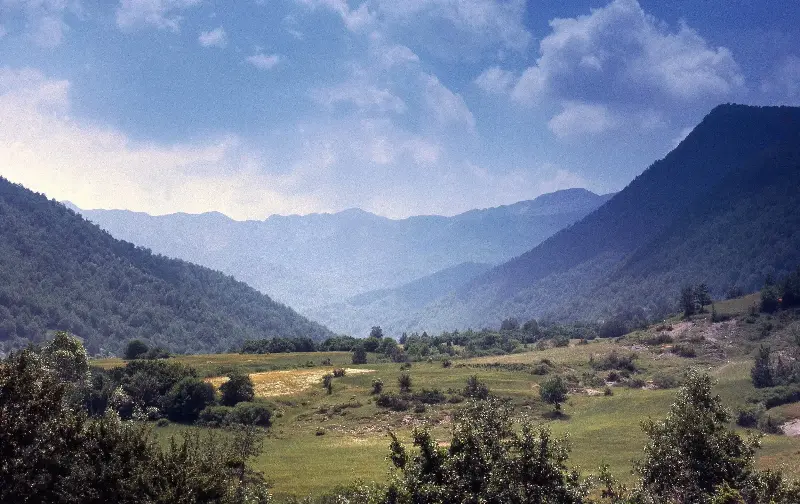
A mass poisoning of wild wolves in one of Italy’s biggest national parks has prompted an urgent investigation.
Ten wolves have been found poisoned to death in the space of a few days in the National Park of Abruzzo, Lazio and Molise, which straddles those three regions in central Italy.
“Wolves and bears are symbols of this territory and we take killings like this very seriously. We’ve opened an investigation into the illegal killing of wild animals,” Luciano D’Angelo, a chief prosecutor in the region, said.
“Initial studies suggest the wolves were poisoned. We are working to find out exactly what sort of poison was used.”
The poisonings took place near the villages of Pescasseroli, which is a hub for hikers, mountain bikers and nature lovers, and Alfedena. Five dead wolves were found in each location.
“This is not just about the loss of the individual animals. In Alfedena it looks like we have lost the whole pack,” Luciano Sammarone, the director of the national park, told the newspaper Corriere della Sera.
“There will be wide-ranging consequences for the ecosystem. Poisoning is a horrendous way of killing because it is so indiscriminate. It can kill wolves but also foxes, other wild animals, and domestic dogs.”
Wolves were hunted almost to extinction in Italy by the 1970s but were then given official protection.
Since then, numbers have gradually increased to an estimated 3,500 wild wolves roaming the Apennines, the mountain chain that runs the length of the country, and the Alps.
In the European Union as a whole, there are estimated to be around 20,000 wild wolves, with the largest concentrations in Italy, Romania, Bulgaria, Greece, Poland and Spain.
The increase in wolves means greater conflict with sheep, goat and dairy farmers.
Many landowners try to prevent wolf attacks by installing electric fences and using large breeds of dogs, such as the shaggy white Maremmano-Abruzzese, which have been bred over the centuries to fight off predators.
Farmers whose livestock are killed by wolves are paid compensation by the authorities.
“I feel very disappointed because this is one part of the country where the most effort has been made to reduce conflicts between big predators and farmers,” said Piero Genovesi, the director of the Institute for Environmental Protection and Research.
“The national park pays market rate compensation to landowners who lose livestock, both within the park and on its borders.”
Europe’s wolf population has rebounded so successfully that the EU last year voted to downgrade the level of protection for the species.
Members of the European Parliament in Strasbourg changed the wolf’s status from “strictly protected” to “protected” in a vote of 371 to 162, with 37 abstentions.
Environmental groups criticised the decision as politically motivated rather than scientifically grounded.
“This is a sad day for biodiversity and wild animals,” said Léa Badoz from the Eurogroup for Animals.
Jutta Paulus, a Greens MEP, said the campaign to reduce the wolves’ protection “ignores scientific evidence and attacks legislation, which has been proven to work for decades, for no clear gain other than the scoring of cheap populistic points”.
The push to relax wolf protection was supported by Ursula von der Leyen, the EU Commission president, whose beloved pony Dolly was killed by a wolf in 2022.
In December, the German government backed legislation to allow the regular hunting of wolves in order to manage the species.
“The return of the wolf to Germany and Europe is a success of species conservation policy, but its increasing spread has also led to conflicts with livestock farming and with parts of the population,” said Stefan Kornelius, a government spokesman, shortly after the cabinet approved the draft law.
There are 209 known wolf packs in Germany, according to the environment ministry.